Directing
Filmmaking - Directing
-
The Filmic Equivalent of a Haiku: Erick Oh on his Sundance VR Film Namoo

One of the most understated pieces at Sundance’s New Frontier this year was Namoo, an animated short by Baobab Studios and director Erick Oh. Baobab has been pushing the boundaries of top-tier animated virtual reality since its founding in 2015, with its short immersive films growing in depth, length, and complexity and leading to a slew of awards and spun-off properties including feature films and series. Erick Oh is an award-winning director and animator from South Korea and based in California who’s worked at Pixar and with Tonko House and whose work has shown at Annecy, Anima Mundi, and other festivals. […]
-
“We Think the Audience is Smarter Than Us”: Kirsten Johnson On Making Another Personal and Original Film With “Dick Johnson is Dead”
There are few directorial debuts as sui generis as Kirsten Johnson’s Cameraperson. A kind of experimental documentary, its premise was simple: it collected unused fragments from her long and storied career as a cinematographer, mostly for non-fiction works, among them Citizen Four, Fahrenheit 9/11, The Oath, and more. There was no story, there was no clear mission statement or theme, and the viewer was left to intuit meaning between the fragments arranged seemingly at random. And it was a success, quickly ushered into the Criterion Collection and taking her from a name among non-fiction auteurs to a name auteur herself. […]
-
A Decade of Hope: A.D. Calvo on Loneliness, Passion and 10 Years of Filmmaking
2010 began with hope, as I wrapped a small indie that looked like it might have legs. But the film soon faded into obscurity and hope faded with it. Two more efforts received little attention, and my heartache grew. But optimism sprung up again in 2015 when I collaborated with indie veteran, Mike S. Ryan, and the first film we made together got into Toronto. It felt like things were turning a corner. With barely a breath, we jumped into another. And for a moment, I saw through rose-colored glasses. Sadly, however, like with most small films, they too faded […]
-
To Kid or Not To Kid: How Do You Make a Web Series from a Feature Film?
I read once that Marshall Curry always thinks of his audience when developing his next film. And then I also know that other directors say, “Make a good film and people will find it.” Or as my old comedy boss at the BBC once told me: the audience don’t know what they want until you give it to them. There is a sense of truth in all of these statements, but Curry’s has stayed with me. As soon as I started developing my film To Kid or Not To Kid — the first English-language film about the decision to […]
-
“Amy Heckerling Should be Thought of as a John Hughes!”: Words of Wisdom from the SCAD Savannah Film Festival’s Wonder Women Directors Panel
Once again, this year’s not-to-be-missed event at the 22nd edition of the SCAD Savannah Film Festival (October 26-November 2), the nation’s largest university-run film fest, was the Wonder Women Panel Series. Now in its third year, these always informative discussions highlight female power in the cinematic arts, from directing, to producing, to writing, to the below-the-line crafts. And for me one of the standouts was Wonder Women: Directors, featuring seven ladies behind the lens currently upending every preconceived notion about chick flicks in impressively eclectic ways. Taking place on a laidback, late Tuesday morning at a packed Gutstein Gallery, and […]
-
“You Give The Other Artist You Work With Individual Space To Be Free”: Ira Sachs On Writing Frankie With Mauricio Zacharias
Ira Sachs will get a lot of the credit for his latest film, Frankie, an ensemble drama with an all-star cast anchored by top-billed Isabelle Huppert, playing an international movie star whos been diagnosed with terminal cancer. Many will call it “Ira Sach’s Frankie” and single him out as its main creator. But just as the film isn’t only about Huppert’s character (Brendan Gleeson, Marisa Tomei, Greg Kinnear play her blended family), Frankie is not just about Sachs. Only one of his features, his 1996 debut The Delta, has been written solo. And four of the rest, Frankie included, have […]
-
“If You Really Want To Make Something You Get Creative”: Experimental Documentarians Talk About Thinking Outside The Box At IFP Week 2019
Documentaries don’t have to play by the rules of fiction films. Take a non-fiction hit like Won’t You Be My Neighbor?: It doesn’t merely tell a linear story so much as jump around subjects, with Fred Rogers’ life as a basic foundation. (Compare/contrast with the forthcoming Tom Hanks-starrer A Beautiful Day in the Neighborhood, which zeroes in on one slice of his career.) But some documentaries go way out there. The IFP 2019 panel “Out of Bounds” rounded up four creatives — two filmmakers, one editor, and a producer tasked with helping people like them find funding and distribution — […]
-
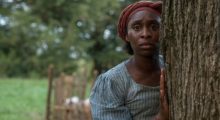
“Certainly Show Business Has Made Me Very Angry At Times”: Kasi Lemmons Talks Directing Harriet At IFP Week 2019
When Kasi Lemmons got the job of directing Harriet, a biopic about the abolitionist Harriet Tubman, she didn’t get to choose her star: That was already done for her. Cynthia Erivo, the Tony- and Grammy-winning performer and scene-stealer of Steve McQueen’s Widows, had been cast a year before the acclaimed director and actress had come on. But it didn’t take long for her to agree with the casting. “As I was doing my research, I got this picture of his woman, who is tiny, and strong, and fast, and who uses her voice to communicate, and who is a formidable […]
-
“Just Keep Asking”: True Crime Filmmakers Talk About Pushing A Classic Genre In New And More Ethical Directions At IFP Week 2019
True crime has been having a moment, as they say, for a while now. In a way it’s never not been having a moment, but the genre has rapidly evolved in the digital age, when more information is available to more people, when conspiracy theorists run wild on Reddit and 4chan, and when there’s simply more content being produced. All this means not only more crime content, but also shows and movies that are more thoughtful, more creative, and even more conscious of ethical or moral quandaries that may crop up in the process of covering true crimes. The panel […]
-
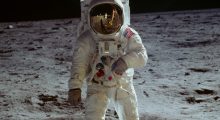
“Technology Has Come A Long Way”: Todd Douglas Miller And E. Chai Vasarhelyi On Going Big With Apollo 11 And Free Solo At IFP Week 2019
Documentaries have been making bank at the box office the last couple years, which is heartening for anyone worried the blockbusters are the only game in town. Still, you don’t necessarily have to see small, intimate fare like Won’t You Be My Neighbor?, RBG and Three Identical Strangers on a giant screen. You can’t say the same about Free Solo and Apollo 11. One finds cutting-edge cameras hanging alongside mountain climber Alex Honnold; the other unearths 65mm footage of the eponymous spaceflight. Both played IMAX theaters, and they were an even better fit on the world’s biggest screens than the […]