Transmedia
Filmmaking - Transmedia
-
“If the Content is Sh*t, It Will Still be Sh*t in VR and AR”: Virtual Reality and Hard Truth at the 2018 FilmGate Interactive Media Festival

The Virtual Reality Portal at the FilmGate Interactive Media Festival, which this year overlapped with Art Basel in downtown Miami, featured a wealth of new discoveries alongside some stellar high-profile projects. Among the three-dozen or so interactive works on display were a pair that made for great companion pieces. The first was Lynette Wallworth’s “psychedelic documentary” Awavena, an inner trip that I’d just missed experiencing at IDFA DocLab (and which made me wish that every VR experience came with a hammock). The second, Eliza McNitt’s Sundance-premiering outer trip Spheres, also had perhaps the widest target audience of any of the […]
-
A Sneak Peek at the 6th FilmGate Interactive Media Festival
The upcoming FilmGate Interactive Media Festival (November 30th – December 6th) will mark its sixth year of bringing the immersive arts to South Florida. A quick glance through the lineup shows it’s the most impressive edition yet. Divided into four programs — Miami @ Play, Festival Panels, Interactive Installations, and the Virtual Reality Portal (with its 35-plus interactive experiences to choose from) — not to mention the many parties (this is Miami after all), the 2018 edition may just make the folks in town that same week for Art Basel look 20th century passé. Starting with the panels (on December […]
-
In With The New at The 31st International Documentary Film Festival Amsterdam
This edition of the International Documentary Film Festival Amsterdam (November 14th-25th) — now in its third decade, but also marking its inaugural year under the exciting new leadership of Syrian documentarian Orwa Nyrabia — offered one of the most binge-worthy lineups I’ve experienced in all my years covering the world’s largest doc fest. Of the nearly two-dozen films I managed to catch both in Amsterdam during my stay (once again guests were put up at the lovely — and couldn’t get more convenient — Hotel NH Carlton, which doubles as the fest’s headquarters) and online, not one disappointed. Indeed, veteran […]
-
“Silent Solidarity” and Portraying Sexual Violence on Screen: Jayisha Patel on Her TIFF Short Circle
London-based director Jayisha Patel has amassed an impressive resume in a remarkably short period of time. Since 2014 Patel’s documentary shorts have screened LAFF, SXSW, NYFF, the Berlin International Film Festival and beyond, racking up numerous awards along the way. Her latest VR project — Notes to My Father, the world’s first live-action 360-degree documentary on sex trafficking, commissioned by Oculus — premiered at Sundance. Her most recent short, the Berlinale-premiering Circle, a sensitive portrait of an adolescent rape survivor caught in the endless loop of India’s gender-based violence, made its Toronto debut this week. Currently an artist in residence […]
-
“We Need to Strive for a Better, More Inclusive, Emerging Tech Landscape”: Paisley Smith on her VR Project Homestay and Advocating for Women in VR/AR
For the past eight years London’s Open City Documentary Festival has been dedicated to “celebrating the art of non-fiction,” and the upcoming 2018 edition (September 4-9) looks to be doing so in a creatively cutting edge way when it comes to immersive media. In addition to a wide-ranging Expanded Realities exhibition (divided into three themed sections, A New Lens, Motion and Sonic), OCDF will present a full day (September 7) Expanded Realities symposium featuring deep-thinking speakers tackling some of the most pressing issues affecting new media-makers today. One discussion I’m especially looking forward to is the “Barrier to Entry: Accessibility […]
-
Tribeca 2018: Michael Muller on Sharks, Fear, and Into the Now
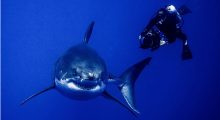
If you don’t know Michael Muller‘s name, you do know his work. His posters for Deadpool 2 are the most creative bit of film advertising in the current market, and he’s also shot artwork for Marvel films like Captain America: Civil War, Dr. Strange, and Guardians of the Galaxy, Vol. 2 as well as dozens of other films, innumerable portraits, album covers and ad campaigns for brands like Nike and Sony. But in 2006 he began training his camera on a very different subject, wild sharks, and since then shark photography and marine environmental activism has become his primary cause. His still photos of great whites, hammerheads, and […]
-
“We Have Only Scratched the Surface of What is Possible in Erotic VR Media”: Jennifer Lyon Bell on Her Fantasy Film Workshop and Creating Erotic VR
The last time I interviewed veteran filmmaker Jennifer Lyon Bell for this site topics ranged from “fair trade” porn to the inaugural Holy Fuck Film Festival in Amsterdam (where the expat feminist pornographer has long resided). And now Bell, recipient of both the Feminist Porn Awards 2014 Movie of the Year (for Silver Shoes, which premiered at London’s Institute of Contemporary Arts) and a psych degree from Harvard, continues to expand her mission of providing sex education for those behind the lens, while also exploring the new media horizon through her own artistic work. I caught up with Bell to […]
-
It’s Really About You and Your Friends: Alex Henning on Creating Social Virtual Reality and Coco VR
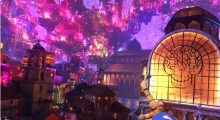
With the release of Coco last year Pixar created yet another film that won over critics and audiences with rich visuals and a compelling story; it’s earned over $200 million so far and just took home the Best Animated Feature Oscar. Pixar wanted to use the property to push forward into new territory, though, and thus used Coco as the vehicle for its first virtual reality experience. To do so they tapped Magnopus, a Los Angeles-based VR/AR company that had previously produced Moana‘s virtual reality product for Disney. The result is Coco VR, a visually arresting gaming experience that also constitutes Oculus’s largest foray into social VR thus far. […]
-
Building a Monster in Two Months: On Frankenstein AI: a monster made by many‘s Race to Sundance
The lobby is packed. Within minutes of opening, a line has formed for Frankenstein AI: a monster made by many, and we’re completely booked for the day. Festival-goers curious about emergent forms of storytelling weave their way through the New Frontier section of the festival, a labyrinth of VR, AR and AI. Now in its 11th year, Sundance’s New Frontier is hosted in two venues and has expanded to over 30 exhibitions ranging from individual experiences to a social VR theater for close to 100 participants. The last few months have been a whirlwind. On November 13th I received an […]
-
Sex Crimes and Virtual Reality: Best VR Storytelling of 2017, Gina Kim’s Bloodless
Nabbing Best VR Story at Venice, Bloodless is veteran filmmaker Gina Kim’s (perhaps best known for 2007’s Vera Farmiga-starring Never Forever) 12-minute immersive stunner. The US-South Korea coproduction was also selected as part of this year’s IDFA DocLab Digital Storytelling program, which is where I experienced it, having gone into the VR Cinema without even bothering to read the synopsis. And because of my cluelessness, the story’s climax packed a punch I never saw coming — one that shook me to the core. This is another way of saying that if you plan on experiencing the project on a future […]