FILMMAKER
The Magazine of Independent Film

FESTIVAL COVERAGE Festival Coverage RSS Feed

Wednesday, October 14, 2009
NEW YORK FILM FESTIVAL
By John Magary 


Whither primary sources? Here’s what I have in front of me, in case you’re interested: on the desktop sits the laptop, the phone, the book, the headphones. On the laptop’s desktop, the news, the blog, the review, the video, the work. On the phone, the music, the number, the same review as on the laptop, a different source of news, and some text. I’ve got headphones in. I’m tuned in to everything. There’s this feeling that something’s being lost, and so I wonder: what’s everyone else thinking? I cross-check my own opinion with reviewers or reviewer-aggregates, I navigate, looking for commentary or interviews, anything to make the experience more “special,” I call, I comment, I search. I do just about everything but sit in the dark and let the goddamn movie I just saw sink in.

The notion of steady work as a paid film critic, the kind of work that existed maybe a few years ago, is officially “quaint.” It’s bad enough out there to make one envy the sick-making whirligig that is the independent film industry for its intrigue and glamour, even if that glamour’s about as convincing as tinsel on a Christmas tree in mid-January. For the young ones, writing on film can only be a hobby, a passion certainly but also an unpaid and under-read time-suck. Press screenings look more and more like carousels for the smart and poor, turning round in the wafting carnival aroma of one more free screening in the morning, one more free cup of coffee, one more chance to dent and be dented.

Don’t get me wrong: there are worse ways to spend your time.

But that this carousel’s not only turning but sinking is a hard feeling to shake. Forgive the nail-biting, but to a worrywart like myself—a worrywart filmmaker, no less, whose investment in the future of cinema is more than theoretical—it’s hard not to notice that the theaters are getting emptier, the conversations are dwindling, the gap between independent film and studio slop is, incredibly, stretching even wider. Depending on your capacity for optimism, moviegoing’s always typified either a bleak or a romantic kind of dark isolation, the appeal of which is still plenty strong. But the specialness is looking more and more like scariness: we’re so screen-oriented now, dedicating eight to ten hours a day Coming to the Light, that the very notion of The Movies and their attention-demanding primary-ness—long, prickly, character-based, thirty feet high—starts to feel as comforting as boiled Brussels sprouts. “You wanna watch a movie? But I watched three at work!”

So there went the 47th New York Film Festival (Sept. 25 - Oct. 11), a hand-picked autumn bushel of primary sources, and it’s all over but the bitching. Unlike some high-profile American festivals who shall go nameless—they rhyme with “Funpants” and “My Schlecka”—the New York Film Festival takes its adult attendees’ seriousness about, um, film, pretty much for granted. There’s blessed little sophomoric reassurance and sloganeering—no buttons admonishing us to “Focus on Film,” no eye-rolling plays on “reel” or “take,” no (or not much) egregious sprocket-hole imagery.

A model of sobriety, programmed by genuine lovers of the medium, the festival flatters its attendees with a notable lack of falderal, letting the films more or less speak for themselves. Honestly, this recession-haunted year had almost too little circus: it was the soberest in my short memory, and the least special, with the misguided, head-scratching, depressingly corporate decision by new management to shift the Opening Night party from the lantern-lit, openhearted mazes of Tavern on the Green—with its goofy crusty-mascara charm, the party was a quarter-century-old tradition—to more hushed VIP-friendly digs at the luxuriously renovated Alice Tully Hall. And the outright redaction of the cozy bacon-and-eggs Directors’ Party at O’Neals’ Restaurant? Makes you feel bad for the invited filmmakers, bumping around on Broadway for a true-blue New York shindig. Still, though, reliably awkard question-and-answer sessions, a handful of red carpets, Directors’ Dialogues, a boutique main slate, a life-saving new $10 rush ticket system, and adventurous sidebars: this is a festival whose clarity and respect impresses even the most mole-like of cinephiles. It’s both a glimpse back to a Jurassic Age when films lumbered the earth big and loud, and a glimpse forward to a closer-than-we-want time when “going to the movies” will be thought of as something like an old-timey event, like sledding or making popcorn balls.

As happens in every other year of its existence, much has been written this go around about the festival’s “elitism” and penchant for misery, so I won’t bore you with my two cents—and make no mistake, the snobs-versus-populists debate is way past dull. For all the talk of the selection committee’s monocle-and-top-hat rejection of more “open” (read: middling, comforting, fleeting, commercial) fare, I couldn’t help but notice the very healthy and enthusiastic crowds for, to name some, Police, Adjective, Life During Wartime, The White Ribbon, White Material, and Bluebeard, all of which are downbeat, off-tempo, and more or less unkind. Even the screening I attended of Pedro Costa’s numbing/hypnotic and typically uncompromising Diary of a Chanteuse Ne change rien scored a half-full house (before the walkouts): not bad in this economy! Some years are better than others, nobody’s perfect, and so on. (Okay, here’s two cents: Did they miss a few? Maybe, but get over it, will ya?) Whether or not you agree with the slate is beside the point: one might take it on faith that the members of the selection committee—Lion of the Senate Richard Pena, Jim Hoberman, Scott Foundas, Melissa Anderson, and Dennis Lim—are choosing the very best films out there.

Still, I found myself questioning my faith, if only a little. I suspect Lincoln Center loyalty (and the promise of a flashy red carpet) may have been an irresistible factor in the inclusion on Closing Night of Pedro Almodóvar’s Broken Embraces, a lollipop-dipped-in-Campari noir celebration of art, love, and, well, Almodóvar. This is Pedro spinning his wheels, tarting up his preening, artsy-Ezsterhas plot mechanics with soapy line readings, pointless self-reference, and heaps of shallow-focus close-ups that will doubtless be described in some quarters as “luscious” or “sumptuous” or some other food word. Also in minor mode, if more intriguingly so, was Jacques Rivette, whose Around a Small Mountain has a disarming vulnerability, but ends up a stitched-together and half-baked experience, its warmed-over themes (life as performance, past as performance) explored with greater perception by the eighty-one year-old director in earlier, better films. By no means painful, but still: consider before you start your Rivette fixation here.

At least a decade away from hindsight and with an impaired view—I managed to see only fifteen films from the main slate not including such loud-shouting titles as Lars Von Trier’s Antichrist, Harmony Korine’s Trash Humpers, and Alain Resnais’s Wild Grass—I’ll venture to say it was not, alas, a vintage year for the New York Film Festival. Marquee names putting out admirable work with trademarked themes and not much jazz. Compared to last year’s festival, which introduced New Yorkers to A Christmas Tale, The Headless Woman, Summer Hours, and Hunger, there was less to gorge on, less to fight over. Mighty nourishing, but, yeah, thanks, I do have room for dessert.

That said, this is a world full of options, and in the interest of air-clearing, let’s just get it over with. Okay:

“MISS WITH A CLEAR CONSCIENCE.” All have virtues, but still:

Life During Wartime, directed by Todd Solondz. His broad swipes at imponderable selfishness are by now stale (his fault!), and his shot selection is alarmingly uninspired, even amateurish. A funny, provocative, plunked-down debate over the capacity to “forgive or forget” late in the game left me fighting to do the former.

Min Ye..., directed by Souleymane Cissé. As with Life During Wartime, a by-now-veteran loses control of the frame. Loads of Guiding Light-style close-ups and unshaped squabbles are almost redeemed by an off-kilter, very funny central performance by Sokona Gakou. Unfortunately, rounding the thing off at a woefully bloated 135 minutes, Cissé has done his best to shoot himself in the foot.

Precious: Based on the Novel Push by Sapphire, directed by Lee Daniels. What’s with the title? Did someone lose a bet with Sapphire? Propelled by social issues, dreams, and overwrought Gloom, this is a grab bag about perseverance, and finally, backflipping redemption. Visually, Daniels enters each scene like he forgot the last, but there’s no getting around the dedication of his performers. It’s a little much to see a Harlem social worker drop a tear at her desk, but still, that was Mariah Carey, and I barely recognized her, I actually bought her, and that’s some kind of trick.

“YEAH. IT WAS GOOD. I MEAN...YES. YES, IT…I LIKED IT.” Like the American Southwest, this territory comes with a certain number of reservations:

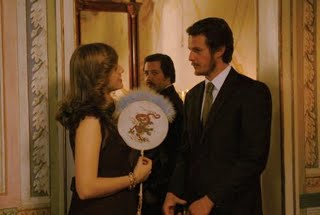
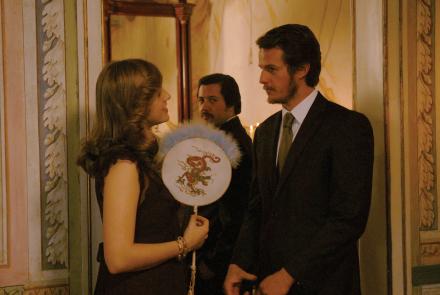
Eccentricities of a Blond Hair Girl (pictured), directed by Manoel de Oliveira. How old is Portuguese master Manoel de Oliveira, really? I heard he punched Thomas Edison in the face once for showing up late to set. Someone else told me he was seven when The Birth of a Nation came out. Can either rumor possibly be true? In any case, his sixty-four minute cut glass perfume bottle of a film feels like it was carefully transported, in a velvety pouch, from a different age. I wouldn’t say it compares so favorably to late-era Buñuel, but Oliveira’s visual scheme, falling somewhere between drab and fancy, is odd, refreshing, even exhilarating. I hope that when I’m 101 I’ll remember the film’s stunning last frame: the titular object of desire, seated, her legs open, her head down, beast-like, slipped off.

The White Ribbon, directed by Michael Haneke. By now, Haneke has amassed quite the flock of hairshirted admirers, and until I got to the end of this long and scolding communal mystery, I counted myself unquestionably among them. Startlingly precise imagery in the service of…what, exactly? Haneke has left out the answer to his own painstaking equation; the love story at the center is tender and honest, but the moral ugliness swirling around it feels like Halloween decoration. He’d be easier to shake if he weren’t so goddamned talented.

Ne change rien, directed by Pedro Costa. If I’d walked out on this, would it have ceased to exist? Costa, a hardcore formalist and unapologetic descendant of Straub/Huillet and late-era Godard, chronicles the actress-turned-chanteuse Jeanne Balibar, as she, well, tries to get the beat right. Like his countryman Oliveira, Costa knows exactly where to put the camera—far but close—and relishes limitation, but your engagement might rely not on his placement, but hers. Forgive me for this, but is Balibar any good? Is she worth all this? In any case, Costa’s getting the Eclipse treatment soon from Criterion, and I can’t wait to wait.

Police, Adjective, directed by Corneliu Porumboiu. Hard not to envy the young Romanians. The continuity in their collected work—from The Death of Mr. Lazarescu to 4 Months, 3 Weeks, 2 Days... to this one—is astounding. Just about guilty of art-film collusion, or an excess of bone-dry orthodoxy, the directors share a deep respect for quotidian timeframes and the ways in which bureaucracies degrade us all. Porumboiu’s new film is, in parts, genuinely funny, and in other parts, needlessly patient. There’s a good idea here, however drummed through, that language hides as much as it exposes, but too much effort is spent toward what is by now a stone-cold festival cliché: torturing the audience for the sins of the state.

“90% OF MY LOVE.” Masterpieces? Maybe none of them. But they deserve your $12:

White Material, directed by Claire Denis. One of the few films at the Festival without a reliable agenda, and one of the very, very few to express itself through rhythm. I was enchanted by the movie-movieness, the assured fusion of color, sound, composition, and performance. Denis’s characters are puzzling—does she lack confidence in language itself, or just her own dialogue?—but their convictions are never less than razor-sharp. Even with the willfully wackadoodle ending, this French-colonial action movie threw me into a pleasure-tizzy. The image of boy soldiers, scattered at rest, picking pills from the dirt—at once horrifying, sensual, alien, rapturous—is locked away in my noodle for good.

Mother, directed by Bong Joon-ho. The impressive, cloying opening shot—a lilting crane floats down to a sad middle-aged woman, as she starts to dance—had me worried. But in the end, it’s Joon-ho’s honking imagination that makes this convoluted whodunit hum. A master of tone and point-of-view, Joon-ho guides his audience through one convoluted scene after another toward a remarkably humane portrait. A structural tour-de-force, and appealingly whimsical: if things were right in the world, Joon-ho would be a household name here.

Bluebeard, directed by Catherine Breillat. Speaking of getting things right, could someone please throw Breillat a budget? A little shabby in design—unnecessarily lame video photography and unconscionably lame costuming—this feminist reexamination of the grisly Charles Perrault bedtime story is nevertheless a cold-filtered beauty. Contemporary to her core, Breillat teases out yearnings and dynamics that Perrault never dreamed of, and stamps the story with her own darkly funny, achingly proper moral. Ogres have rarely been so appealing.

“I DARE YOU NOT TO LOVE THIS MOVIE, FRIEND.” Heaven can’t wait for this lone angel:

Everyone Else, directed by Maren Ade. As someone who makes his living (or “living”) as a filmmaker, I’ll cop to an often foggy POV, and a complicated relationship with new cinema. Like many of my filmmaker friends, I’m bringing baggage into the theater with me—that day’s unfinished writing, the call unanswered, and, hardest to shake, the diamonds-and-granite conviction that, when all is said and done, movies should be made my way. (Oh, and there’s some jealousy.) Maren Ade, young, on only her second feature, has made a deceptively straightforward, plainly episodic portrait of a couple slowly unraveling. And the film gets so many tiny things right, it gives me palpitations. This isn’t an expressive work, really; her mise-en-scene blazes no trails. But how many directors—Pialat? Cassevettes?—have so convincingly tracked the minute directions of the human heart, so brilliantly modulated the tiny fears of an on-screen couple (Birgit Minichmayr and Lars Eidinger)? Never less than uncanny, adroitly avoiding the pitfalls of squishy romanticism and arty mopiness, Ade’s film cashes Mumblecore’s check. The scenes fall like dominoes, until we’re left screaming for our loved ones. This is a primary experience. What will Maren Ade do next? Can she keep it up?

Who knows? I’m too excited to worry.


# @ 10/14/2009 11:35:00 AM Comments (2)


Saturday, September 26, 2009
VENICE FILM FESTIVAL
By Belle N. Burke 


While construction of a new Palazzo del Cinema is under way in the center of the film festival venue, causing some dislocation and confusion, Venice's 66th edition (Sept. 2 - Sept. 12) produced a festival it can be proud of, diversified enough to offer something of quality for everyone but catering to no one. Among 75 official selections from 25 countries (the largest number in Venice's history) featuring 71 world premieres, there is a deliberate mix of what Marco Muller, the festival director, calls highbrow and popular art. Films that pleased, offended, or were remakes of previous films engendered debate and emotional reactions, which is what I believe a film festival should do.

The official sections included Venezia 66, whose jury, headed by Ang Lee, awarded the Golden Lion for Best Film to Lebanon, based on Israel's invasion of that country in 1982, in which the director, Samuel Maoz, participated as a young soldier, and for the past 20 years has been trying to come to terms with the experience. He is the third Israeli director to deal with the horrors of that war, after Ari Folman (Waltz with Bashir) and Joseph Cedar (Beaufort), and can expect a mixed reception in Israel.

Six U.S. films competed for the prestigious Golden Lion, among them Michael Moore's Capitalism: A Love Story and Oliver Stone's South of the Border. As disparate as they appear, there were perhaps inevitable comparisons, e.g., two American documentaries exposing the flaws of capitalism, Moore's receiving clamorous applause for its content and courage while Stone's became a media event as Hugo Chavez appeared on the red carpet (just another celebrity?), smiling, waving, and signing autographs. The press and the public were out in force in a surreal scene (think Fidel Castro at a film festival!) as Chavez basked in an incalculable amount of free publicity. Orchestrated by Stone, who insists that Chavez is misunderstood and unjustly criticized in the U.S., ignoring his decision to remove term limits on his presidency and other annoying facts that didn't fit his script, the film also includes six other South American presidents of countries that do not always qualify as democracies.

Although strong performances mentioned for best actor included Matt Damon in Steven Soderbergh's The Informant!; Nicholas Cage in Werner Herzog's Bad Lieutenant: Port of Call New Orleans; and Viggo Mortensen in John Hillcoat's The Road, the Coppa Volpi went to Colin Firth in Tom Ford's A Single Man. (Herzog is the first director ever to have two films at the same Venice festival; the second was a "surprise film," My Son, My Son, What Have Ye Done?, which almost nobody liked. He seems to have an ongoing feud with Abel Ferrara, whose 1992 film with a similar title starred Harvey Keitel, and who was also present with a new film, Napoli Napoli, Napoli, not in competition).

The Silver Lion for Best Director went to Shirin Neshat, an Iranian artist/filmmaker, for Women Without Men; the Special Jury Prize went to Soul Kitchen (an audience favorite) by Fatih Akin, a second-generation Turk who lives in Germany and until now made darker films such as Head On, the 2004 Berlin Golden Bear winner and The Edge of Heaven, best screenplay at Cannes in 2007; Ksenia Rappoport for Best Actress in La Doppia Ora, directed by Giuseppe Capotondi; the Marcello Mastraoianni Award for Best Young Actor or Actress to Jasmine Trinca in Il Grande Sogno by Michele Placido.

Todd Solondz won Best Screenplay for Life During Wartime; Sylvie Olivé for Best Production Design in Mr. Nobody; Lion of the Future for a Debut Film went to Engkwentro by Pepe Diokno in the Orizzonti section; the Controcampo Italiano Prize went to Cosmonauta by Susanna Nicchiarelli; and Special Mention went to Negli Occhi by Daniele Anzellotti and Francesco Del Grosso.

Among the films that stayed in my mind: Goran Paskaljevic's Honeymoons on the open wound of immigration; Io sono l'amore by Luca Guadagnino, memorable mostly for Tilda Swinton; and Yonfan's Prince of Tears about Taiwan's "white terror" in the 1950s. Baaria, Giuseppe Tornatore's meticulous recreation of his childhood in Sicily and the first Italian film to open a festival here, was preceded by high expectations but failed to impress.

This was an exceptional festival that reflected not only the superior quality of number of films, but also the fact that there is no more "Hollywood," a never-never land where all the makeup was perfect and reality was often shown the door. Once that door was opened it can never be closed, and Venice this year did not shy away from politics-both good and bad-and demonstrated the democratization of cinema. By welcoming filmmakers and actors of all ages, nationalities, ethnicity and sexual orientation. But tradition and familiar faces are still welcome: Omar Sharif did a tour de force turn in The Traveler, Sylvester Stallone was given a Glory to the Filmmaker award, and to provide continuity, George Clooney, a perennial idol in Venice, arrived this year with a new film, The Men Who Stare at Goats, and a new fiancée-Italian, of course.

The festival itself could have been a film script, I kept thinking, with improbable celebrities eliciting unexpected enthusiasm, and healthy disrespect for the politicans and institutions that deserve it. For example, Videocracy, a documentary by Italian Erik Gandini, shown in Critics' Week after it was canceled as an official entry and its ads removed from the leading TV outlets, targets Berlusconi's stranglehold on the media. Francesca, a film by Romanian Bobby Paunescu on racism in Italy, contained unfortunate quotes about Romanians in Italy by both Alessandra Mussolini (a member of the government) and the mayor of Verona, and was withdrawn from the festival after strong objections from the government despite its warm reception.

Having expressed my admiration for Venice 66, I must add that I have seen the most extraordinary fusion imaginable of art and film in Peter Greenaway's The Wedding At Cana ongoing project that will eventually illuminate nine great paintings, a surprise screening that I saw twice.


# @ 9/26/2009 10:16:00 PM Comments (0)


Saturday, August 8, 2009
THE DUBAI INTERNATIONAL FILM FESTIVAL
By Scott Macaulay 


Now in its fifth year, the Dubai International Film Festival stands at an uncertain but nonetheless exciting crossroads in the international film scene.

In the last several years, the Middle East, particularly the United Arab Emirates, has been a source of financing for both studio and independent organizations ranging from Warner Brothers to Participant to Sundance to National Geographic. As the real estate and finance bubble accelerated in recent years, Dubai, known for both, became also a synonym for outsized opulence, glitz and glamour. However, as the “office space for rent” and stalled construction projects spotted during the car ride from the airport at this year’s fest revealed, Dubai has been hit by the global downturn just like everywhere else. Perhaps appropriately, then, the 2008 Dubai International Film Festival (December 11 - 18) didn’t completely coincide with my expectations. (For the record, I traveled there as a guest of the festival.) Yes, there were incredible accommodations, stars (Salma Hayek, Goldie Hawn, Ben Affleck and, to introduce producer Charles Roven, who received the Outstanding Filmmaker of the Year Award, Nicolas Cage), and lavish events, but there were also serious discussions about the region’s role in international production made even more urgent by the global economic disruption. Commented Nadia Saah, partner in BoomGen Studios, which provides niche marketing, publicity and strategy services for Arab films in the U.S. market, “There are more people this year, and there is a higher level of engagement. In terms of the business side, there is less celebrity flash. It is more substantive, and the industry office here is working really hard to make that possible.”

I spent most of my four days at Dubai at industry events, and, for once, the musty back-and-forth that I associate with film festival panel discussions was nowhere to be found. Instead, the very real questions involving “capacity growth” (i.e., new theaters in the Middle East, audience development, and production) and the responsibility of local investors to the region’s artists and audiences were hotly debated in panels like one titled “Who is Holding the Purse Strings?” Walt Disney Studio’s Michael Andreen stated that the region was “one film away” from a crossover hit that would bridge its film community to international audiences while Bahrain-based Sherezade Film Development’s Steffen Aumueller discussed his strategy of raising money in the region for Western films like Smart People and New York, I Love You by comparing for his investors the world of film financing to real estate deals. Similarly, U.S./UAE Serafina Films’s ubiquitous Susanne Bonet stressed her experience developing sound screenplays and explained how she’d apply those skills to the movies she’s intending to make in the region. But during the Q&A, one audience member jumped up to argue that “developed stories” was code for censorship as it automatically ruled out work that would challenge the region’s tastes while another bemoaned the lack of the local financiers themselves on the panel. (A behind-closed-doors session, moderated by Colin Brown, actually did introduce a number of the region’s financiers to the attending Hollywood community.) On another panel, Jordan-based Laith Al-Majali, who produced Captain Abu Raed, which won the World Cinema Prize at the 2008 Sundance Film Festival, described the local filmmaking situation thusly: “Arab moviegoers prefer English-speaking films or commercial Egyptian film. They don’t know Arab independent films exist. Arabs can sustain a Las Vegas but cannot sustain a cinema.”


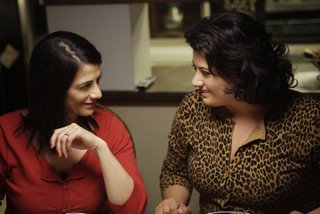
Developing an Arab cinema is a goal of the Dubai Film Connection. The Dubai Film Connection is DIFF’s CineMart-like financing market, which this year included Cherien Dabis’s Amreeka (pictured below) as a work-in-progress seeking finishing funds and Filmmaker “25 New Faces” director Annemarie Jacir’s Jordan-set period drama, When I Saw You. Says Lucas Rosant, a consultant and member of its selection committee, “The Middle East is one of the only places in the world where they are still opening theaters. The positive effect of the financial crisis here is that investors realize that cinema is crisis-proof. People need entertainment, and you can still make money. And they realize to do that they need to develop talent. This year for the first time we got sponsors from Bahrain and Kuwait who are looking for Arab content for theaters, TV and DVD. Even Disney is now investing in the production and development of films in Arabic.” Backing up his words, Rosant notes that of the 15 projects in last year’s inaugural Dubai Film Connection, seven have already been shot. “A 50% success rate? That’s great. It means something is really happening here.

Dabis commented, “This is my third year at Dubai. My first year I was here for a short film, which won an award that enabled me to continue working on the feature. I came back to the Dubai Film Connection the next year with Amreeka and had a series of meetings. We won an award at the market, and we closed our Middle Eastern presales.” Confirms Amreeka producer Christina Piovesan, about 10% of the film’s $2.5 million budget came from Showtime Arabia (pay TV) and Ratana Studios (free TV and theatrical) — the first time these entities got involved in international production.

Other memorable conversations: a panel on cultural exchange moderated by Cameron Bailey with filmmakers Haile Gerima and Deepa Mehta. It turned into an extended dicussion on Barack Obama and his ability to deliver global change, with an optimistic Jeffrey Wright, in Dubai with both W. and Cadillac Records, debating Gerima (who saw Obama as representing the end of the idea of “transformational mobility”) from the audience. Among the American indie filmmakers who attended with their films were producer Alex Orlovsky (Momma’s Man), director Nina Paley (Sita Sings the Blues) and actor Michael J. Smith (Ballast). So Yong Kim’s Treeless Mountain (pictured at bottom) won Best Film in Dubai’s Asia/Africa Competition while Lyes Salem’s Masquerades (pictured at top) won top honors in the Arab Muhr Competition.

(An edited version of this report appeared in the Spring, 2009 edition of Filmmaker.)


# @ 8/08/2009 02:23:00 PM Comments (0)


Tuesday, June 9, 2009
INDIELISBOA FILM FESTIVAL
By Jason Sanders 


The Mozambican Portuguese poet Virgilio de Lemos once wrote that the city of Lisbon “sees itself as an unfinished, incomplete city, open to metamorphoses…open to the delirious imagination of its lovers.” Imagine those ideals in a film festival, and one would have as good a way as any to describe the charm of Lisbon’s new IndieLisboa Film Festival (April 23 - May 3). Celebrating just its sixth edition this past April, IndieLisboa may indeed be young and a bit unfinished, but that’s all part of the appeal; compared to the rather bloated excesses of its European brethren like Cannes, Berlin, or Venice, this festival is intimate, quiet, open to metamorphoses, and, above all, open to the delirious imagination of film (and its lovers). Like Lisbon itself, it rewards those who enjoy traveling off the beaten path, revealing its charms not to those who rush, but those who linger.

Whereas most other European festivals trot out the same excessive lineup of tried-and-true, auteur-or-star-driven titles that were in the last festival (it’s a vaguely hidden secret that many festival films just flitter blandly from one city to the next, like some fashionable H.M.V. seasonal outfit), IndieLisboa aims to have a thematic mission. For this festival, the “indie” in its name is not some marketing copy, but the integral reason for its existence. To quote the programmers Miguel Valverde, Nuno Sena, and Rui Pereira, the focus is on “an original and demanding film program... dedicated to discovering and sharing the best in new cinema through the world.” No Holllywood-lite “independent” works, cross-nationalized Europudding, or big-budget Asian genre films here, just a tight focus of around 60 features from around the world, and a deepening concern for the best in new Portuguese cinema. In addition to the competition works, there were strands dedicated to documentaries, emerging cinema, music films (“IndieMusic”), films on filmmaking (the “Director’s Cut” section), children’s and young adult films (“IndieJunior”), and retrospectives of two “intransigently non-conformist and individualist” directors, Werner Herzog and Jacques Nolot (surprisingly, neither one had had full retrospectives before in Portugal).

The festival’s knack for assembling a cohesive, effective program was especially pronounced in their selection of American titles. Last year's award-winning success of Azazel Jacob's Momma's Man highlighted IndieLisboa’s status as a rewarding new avenue for emerging American independent film. This year they solidified that relationship, with a program that reads like a who's who of current U.S. indies, including Lance Hammer's Ballast and Sean Baker's Prince of Broadway (both in competition), as well as Barry Jenkin's Medicine For Melancholy, Josh Safdie's The Pleasure of Being Robbed, and Kelly Reichardt's Wendy and Lucy. (Ballast, Medicine and Wendy & Lucy have all been written of extensively in Filmmaker).

A film on a thief, rootlessness, and the simple pleasures of not knowing whether to speak to someone, or steal from them, The Pleasure of Being Robbed gained notoriety last year for being the only American feature chosen for Cannes’ prestigious Directors Fortnight section (Safdie’s newest, Go Get Some Rosemary, featured in Cannes this year). Like his purse-snatching, ever-drifting heroine, Safdie knows that success is in sleight-of-hand and constant motion, and so his vision of cinema is filled with magic and movement, of fragile, seemingly spontaneous moments that surprise at every turn. The film’s 16mm images lend it a warmth and texture missing in digital video, while its structure is as deceivingly simple as the Thelonius Monk tune that frames its soundtrack. It’s no surprise that The Pleasure of Being Robbed was chosen for Cannes; this sweet-natured ramble invokes Celine and Julie, Rivette and Eustache, and others for whom cinema, like making polar bears appear in Central Park, is magic.

If Pleasures takes it cues from Rivette or Eustache, Sean Baker’s Prince of Broadway (pictured above) takes its own from the street-level immediacy of the Dardennes Brothers and the baroquely verbalized New York City landscapes of Taxi Driver-era Martin Scorcese. Following a Ghanian immigrant-turned-Garment District-hustler as he deals with knock-off sneakers, uncertain customers, random hoodlums, and a little boy who may or may not be his son, Prince of Broadway captures the movements, aesthetics, and verbiage of life in one substrata of New York City, circa 2008, with utter precision. Along with his earlier film Take Out (co-directed with Shih-Ching Tsou), Baker is creating a visual history of New York City that will one day stand with Scorcese’s efforts; Baker’s, however, will be recognized as far more immediate, and far more realistic. Few American filmmakers today are able to use the on-the-fly freedom of the digital aesthetic—skeletal crew, little equipment, improvisational filming—to capture the way people live, move, and talk today better than Baker. Mixing a fictionalized plot with a very real situation—the lives of Chinese restaurant workers in Take Out, or marginalized African immigrants in the city’s hustler underground in Prince of Broadway — Baker is developing an aesthetic that’s as vibrant as the Dardennes, but with a New York City roughness all his own.

Baker was one of the few American filmmakers able to attend IndieLisboa, a shame considering the real hospitality of the festival staff and the relaxed vibe of the entire event. No power lunches or industry-only screenings here; instead, filmmakers had the space and time to mingle with one another, and to respond to audience hungry for new filmmaking. “It was encouraging to see how enthusiastic the audiences are for indie film,” Baker noted. “I wish the US audiences were as hungry for hard to find indies as the Portuguese are.” The festival’s relatively small layout—around 4-5 screening venues scattered around this highly walkable, tree-lined city, each easily accessible by metro or a festival mini-bus—made running into fellow guests simple; mornings found many attendees sharing coffee and brunch at the festival hotel, while late nights found them congregated at the festival’s “official” gathering spot, the notorious nightclub Cabaret Maxine, a former brothel turned atmospheric bar and music showcase.

A chance to sample Lisbon’s venues and former brothels wasn’t the only insight into Portuguese culture the festival offered, of course; thanks to the indefatigable Manoel de Oliveira, the sphinx-like Pedro Costa, and the youthful Miguel Gomes, Portuguese cinema is currently one of the most vibrant cinemas in Europe. Possibly Portuguese cinema's most famous name, Manoel de Oliveira (now over 100 years old) debuted his newest film, Eccentricities of a Blonde-Haired Girl, at the festival, but it's some of the lesser-known directors that made an even more intriguing impression. Ivo M. Ferreira unlocked the emotional scars of the 1974 Portuguese Revolution in his family drama/road trip work April Showers, which followed a young man's search through the dry Alentejo and coastal Algarve regions for the mystery behind his father's disappearance. Joao Rosas' experimental documentary Birth of a City combined visual snapshots of London with the story of an artist literally painting a similar portrait of city; its uniting of cinema, painting, and poetic voice-overs refreshingly avoided heavy-handedness for a pleasing, memorable lightness. In Ruinas (Ruins), by Manuel Mozos, there's a different kind of city landscape: it's a documentary on ruined buildings, with Mozos training his camera on abandoned homes, deserted hospitals, and crumbling estates like von Sternberg trained his camera on Dietrich. Epic long takes allow viewers to appreciate the sheer beauty of decay (it's a powerful film to see in Lisbon, home of countless similar old ruins), while narrators accompany the images with texts from various centuries, all recounting obituaries, sicknesses, loves lost, even hotel accommodation requests. Produced by the same group behind Miguel Gomes' Our Beloved Month of August (one of the best new Portuguese films of the year, and one whose off-the-cuff traveling aesthetic should stand as an example to all American independent filmmakers, too), Ruins has a quiet visual poetry similar to the landscape cinema of James Benning, only fleshed out with a saudade-fueled sorrow that seems to ooze from the Portuguese setting. Mozos’ camera lingers on each devastated home, every broken window or crumbling wall; here the setting becomes emotion, with each static take revealing the movement (or stasis) of history, the poetry of loss.

It’s no coincidence that Ruins won the Best Portuguese Feature Film Award at the festival, while Lance Hammer’s Ballast won the prestigious Feature Film Grand Prize (and its suitcase full of 15,000 Euros). While literally worlds apart, both films are fueled with this poetry of loss; filled with ruins, landscapes or individuals seemingly caught between collapsing or rising, each embrace the unfinished, the unpolished. It’s a type of cinema that, like IndieLisboa, and this city, rewards those who linger, and revel in the unknown.


# @ 6/09/2009 11:31:00 AM Comments (2)


ASPEN SHORTSFEST
By Brandon Harris 


Now in its 18th year, the Aspen ShortsFest (April 1-5) has long had a reputation as one of the premiere North American showcases for short films. The Academy Award-qualifying festival culls together eight short programs each year, two of which unfold daily over four consecutive nights in Aspen’s elegant, reconstruction-era Wheeler Opera House. Spearheaded by the team of Executive Director Laura Thielen and Director of Programming George Eldard, the festival has a penchant for programming a sharp, international selection that showcases work that runs the gamut of budgets, sizes and aesthetic compositions.

Fifty-nine films, culled from over 2,500 entries, screened in this year’s international competition. A quiet, stately affair, the festival does a terrific job of reaching out to the citizens of this wealthy resort town, one where everyone seems over 60 or under 20, capturing their imaginations with films that offer a strong counterpoint to their Hollywood-fed assumptions of what filmmaking can and should be. Drawing heavily from Sundance (Dustin Daniel Cretton’s Grand Jury Prize-winner Short Term 12) and Claremont Ferrand (Claire Berger’s Forbach), Aspen is not a hot world premiere destination for Shorts but nonetheless has the feel of a discovery festival. Due to the intimacy of its program, films that may have slipped through the cracks in larger festivals get the attention they demand in this snowy mountain setting.

One such film is Luke Doolan’s Miracle Fish (pictured above), a searing and mysterious Australian short about a school shooting that bowed at Sundance this year and was perhaps the most well-received film in Aspen. Doolan focuses on a troubled child, delivered to school late by his irresponsible mother, made fun of by his unforgiving classmates for his mother’s welfare status, who feels ill and takes a nap in his elementary school infirmary. When he wakes up, he discovers that everyone in his school has vanished. What begins as a troubled child narrative quickly begins to play out like a supernatural tale, with hints of David Lynch in its haunting, claustrophobic framing and a gaunt, washed out color scheme. The film envelopes us effortlessly in the mystery of where all the other students and faculty members have gone, trolling down hallways and through classrooms in graceful tracking shots reminiscent of Gus Van Sant’s Elephant, but the finale Doolan has in store for us is frighteningly grounded look at the morbid finality of guns and the abstraction that an unsuspecting child may make of a deadly and tragic circumstance.

Among narrative short filmmakers, although there was much to like on display from just about every corner of the world, the most intriguing films seem to be coming from down under. Doolan, like fellow Aussie and Kiwi short filmmakers like David Michod (Netherland Dwarf), Rene Hernandez (The Ground Beneath), Katie Wolfe (This is Her) and Julius Avery (Jerrycan) brings a keen sense of youthful melancholy and an accomplished visual style to tales of the disappointments and dangers of childhood. Together, they represent the largest outpouring of talent to come from the isles since the Australian New Wave of the late ’70s. While it’s tough to lump these filmmakers together because of the breadth of the work, they all are making formally challenging and very dark films, many of which center on the disappointments and dangers of Aussie and Kiwi working class life.

Although in the past I’ve found that Aspen’s animated and narrative programming was stronger than its documentary programming, this year’s festival included a host of terrific documentaries. Will Perinello’s Richard Gere-narrated, Dali Lama-featuring Tibetan restoration doc Mustang – Journey of Transformation, Susan Cohn Rockefeller’s Jewish-doctor-goes-to-Ethiopia-and-adopts-sick-kids chronicle Making the Crooked Straight, Jill Orschel’s unforgettable portrait of a Mormon polygamist Sister Wife and Deborah Koons Garcia’s modest organic-farming doc Soil in Good Heart found loving partisans. The most powerful of the docs and winner of the festival’s best documentary prize was The Witness: From the Balcony of Room 306, Adam Pertofsky’s Oscar-nominated profile of Reverend Samuel “Billy” Kyles, who was standing next to Doctor Martin Luther King Jr. when he was slain outside a Memphis hotel room in 1968. While maintaining a hopeful tone that doesn’t succumb to melancholy, the doc accurately captures the contours and fissures that were developing in the Civil Rights Movement at the time and the hearty sense of disappointment and doom that King felt as he restlessly campaigned for the rights and wages of waste workers in that particular southern city. It’s an unforgettable cinematic experience.


# @ 6/09/2009 11:30:00 AM Comments (0)


Sunday, May 10, 2009
TRIBECA FILM FESTIVAL
By Jason Guerrasio 


With festivals around the world struggling to keep their doors open and sponsors attached, the Tribeca Film Festival with its big name backers is no different as this year sponsors like Target and Cadillac bowed out and the number of features shown was cut down to 86, but still the fest is better off than most. TFF flexed its muscles leading up to its 8th edition (April 22 – May 3) with the announcement late last year that it's expanding to the Middle East with a sister festival in Qatar and then came the stunning news earlier this year of Geoff Gilmore joining Tribeca Enterprises as its Chief Creative Officer after being Sundance’s director for 19 years (soon after Peter Scarlet left his post as Tribeca’s artistic director). With this jolt of adrenaline, would it matter come festival time?

Screening 86 titles made TFF a more accessible experience this year and audiences came in droves, even though most of the fest was during some of the hottest late-April weather in recent memory. The fest opened with the world premiere of Woody Allen’s Whatever Works (pictured above) at the Ziegfeld. His first time shooting in New York City in four films, it has received modest reviews, most noting the teaming of the two ultimate neurotics, Allen and the film’s lead Larry David. But for me, what keeps the film from going off the tracks is the performance of Evan Rachel Wood as a dimwitted southern belle. Most of her scenes are with David and she holds her own.

Allen’s film (which Sony Pictures Classics opens June 19) wasn’t the only coup TFF had over its soon-to-follow competitor, Cannes. Steven Soderbergh also passed on the Palais for TFF to premiere his latest low budget film, The Girlfriend Experience, a non-linear look at the pre-economic downfall seen through the eyes of a high-end New York City escort played by adult star Sasha Grey. Other notable titles in the Showcase section were Spike Lee’s made-for-TV documentary on basketball star Kobe Bryant, Kobe Doin’ Work; Barry Levinson’s look at politics and Hollywood in Poliwood, starring Anne Hathaway, Susan Sarandon and Sting. There was also Sundance favorites In the Loop, Black Dynamite and Moon along with Hirokazu Kore-eda’s Toronto standout Still Walking, a tender tale about a Japanese family’s secrets and regrets that includes amazing performances along with a keen script and editing by its director.

In the Premieres, Marshall Curry returned to TFF after receiving the Audience Award for his first film Street Fight at the ’05 fest with his latest Racing Dreams, which looks at the competitive world of go-cart racing (the film won the Best Documentary award); Ti West was the talk of blogsphere leading up to the fest with his remarks on the final cut of his new horror The House of the Devil, but there’s really not that much to his gripe (four minutes was cut from the middle of the film) and it’s a shame that’s how the film is getting attention at the moment because it is a gem of a horror film; actress Paola Mendoza shares the directing and screenwriting credits with Gloria La Morte in her first narrative feature, Entre nos, a personal tale starring Mendoza in a gripping performance as a mother who’s recently abandoned by her husband and practically lives as a vagabond with her two children to get by; and Cyrus Frisch continues to challenge the audience with Dazzle, another experimental look at troubled souls as well as life in Amsterdam (I blogged about these titles during the fest, read more here). Another doc that grabbed attention was Gabriel Noble’s P-Star Rising which takes a five year look at Priscilla Diaz, a feisty nine-year-old rapper who through the tutelage of her father rides the highs and lows of the recording business in search of fortune and fame; while Bradley Rust Gray’s The Exploding Girl, though a very similar aesthetic to partner So Yong Kim’s In Between Days, highlights the wonderful talents of lead actress Zoe Kazan, who has the perfect silent-film siren look for this intimate story about teen angst (Kazan was awarded the Best Actress award). Asghar Farhadi’s About Elly won Best Narrative, and Raymond De Felitta’s City Island won the Audience Award. (Unfortunately I didn't get to see either of these films.)

Never short on celebrities or parties, TFF has gradually begun to grab the attention of the New York cinephiles as general audiences not only attended the gala screenings where they can sit across from the actors in the films, but the less glamorous afternoon mid-week screenings were also very well attended. “All the films seemed really well received,” says the festival’s executive director Nancy Shafer after the fest. “I had no idea the matinees would all sell out, but it just goes to show you that people will change their schedules and figure out a way to get to films they want to see.” For Norweigen filmmaker Rune Denstad Langlo, who walked away with the Best New Filmmaker (Narrative) Award, he was stunned by the reception his film North received. “This was the first time it played in North America and I imagined the audience would be different from Europeans,” he says. “But I was surprised they liked it and understood it so well. And the audiences stayed for the Q&A and were interested in how we make the film, that’s not usual in Europe.”

Though the festival has found a comfortable hub in Union Square (and Schafer says there is no plan to change the festival dates to the fall), there’s still the question of its relation to lower Manhattan. During the festival Anthony Kaufman jokingly called it the “Union Square Film Festival” on his blog, but Shafer says they have not forgotten about their namesake. “We would do more there but there are no movie theaters,” she says, stating the mainstays as being Tribeca Cinemas and the Tribeca Performing Arts Center. “We would love to have it all in Tribeca but we’re going to continue to do what we can there during the festival and year round.”

With that said, it was bizarre to watch a commercial that ran before every festival screening championing the festival as being a spotlight for lower Manhattan; inferring that people flock to the area throughout the fest. Walking around Greenwich St. – the heart of Tribeca – during the festival, outside of a few streetlight banners, you’d have no clue TFF was even going on. Though there’s an all-day fair on the street the last Saturday of the festival, store owners and restaurateurs told me that in the last few years when the festival had to move most of their screenings uptown, there’s been little increase in their businesses during the fest and there’s gradually been a lack of promotion by the festival in the area. “Do you see any advertisements down here?,” says a bartender at the Pig N’ Whistle. “We were talking the other day how there aren’t any flyers on the store fronts anymore. It was nice when it was all down here, now you have no clue where it is.”

Though TFF has come a long way in eight years to gradually build respect on the festival circuit and New York City film lovers alike, it seems they need to reconnect with their own backyard.


# @ 5/10/2009 11:05:00 PM Comments (0)


Monday, January 5, 2009
AFI FILM FESTIVAL
By Justin Lowe 


Always an indication of the imminent onset of awards season, AFI Fest typically gets ahead of the curve with world and local premieres of would-be contenders. For some films, it’s a prestigious Hollywood launching pad to build momentum toward the Golden Globes, guild honors and the Oscars, while for others it’s a brief moment in the spotlight before getting eclipsed by higher-profile titles.

This year’s fest (Oct. 30 - Nov. 9) hit a significant snag even before kicking off, when Paramount pulled opener The Soloist, which will now premiere in theaters in March, 2009, from opening night. AFI Fest fortuitously filled the slot with the world premiere of Miramax’s Doubt, writer-director John Patrick Shanley’s dour inquisition of a suspected pedophile priest (resolutely played by Philip Seymour Hoffman), adapted from the filmmaker’s original Broadway stage production.

After opening night at the Arclight Cinerama Dome, AFI Fest screenings expanded to the historic Grauman’s Chinese Theater and adjacent multiplex in the heart of Hollywood. With the apparent goal of adding another prominent gala venue, the growing scope of the festival proved a challenge for screenings scheduled at different theaters, although a reliable shuttle service connected the Roosevelt Hotel, site of the badgeholders’ Cinema Lounge, to the Arclight complex down Sunset Blvd.

Castmembers from Darren Aronofsky’s The Wrestler were among those walking the red carpet at the Grauman, including a reinvigorated Mickey Rourke, who gives a staggering performance as middle-aged Randy “The Ram” Robinson, a third-rate professional pugilist confronting health problems and an emotional crisis that threaten not only his career but his fundamental self-image. Kudos came to the The Wrestler’s rescue late in the fall, with Golden Globe and Spirit Award nominations.

Somewhat skirting the limelight prior to the spring 2009 release of Sugar, directors Ryan Fleck and Anna Boden brought their newest indie drama to the fest. The film recounts the recruitment of Dominican baseball pitcher "Sugar" Santos (Algenis Perez Soto) for the U.S. minor leagues with a familiar immigrant arc coupled to a somewhat unconventional warts-and-all sports drama. Spot-on casting, sensitive storytelling and authentic performances – particularly by the nonpros, including newcomer Soto -- make Sugar a title to watch during next year’s awards contests.

Among the documentary selections, Playing Columbine made a surprisingly convincing case for creative license and free speech in the realm of video games. After crafting a decidedly low-tech game that allows players to reenact the gruesome high school massacre, designer and director Danny Ledonne endured widespread criticism for his alleged insensitivity to the shootings. Thoughtfully responding to the controversy, Ledonne interviewed video game designers, players, advocates and critics for a wider perspective on issues related to free speech and gaming.

Kief Davidson’s Kassim the Dream (pictured above) – a profile of former Ugandan child soldier Kassim Ouma, who battled his way to world junior middleweight boxing champion -- landed a one-two combination to win both the jury and audience doc prizes, sharing the latter award with The World We Want, a hopeful portrayal of international youth activists promoting positive social change in their communities.

Federico Veiroj’s Uruguayan coming of age comedy Acne won the grand jury prize among international narratives, with American indie drama A Necessary Death by Daniel Stamm taking the audience award.

International features comprise a large proportion of AFI Fest programming, drawn from world and North American premieres, prestige festivals and regional releases. Following up on its Toronto International Film Festival People’s Choice award, Danny Boyle’s Slumdog Millionaire made another favorable impression at AFI Fest, where Boyle was treated to a career tribute before the screening.

AFI alum Ed Zwick returned to the festival with the world premiere of Paramount Vantage’s Defiance, a World War II actioner starring Daniel Craig and Liev Schreiber that’s adapted from a nonfiction book recounting how a group of Jewish resistance fighters took refuge in the Russian forests and launched guerilla attacks on German forces rather than face extermination by the invading Nazis.

Despite the stirring storyline, Zwick’s typically energetic directing style can’t adequately animate the strained relationship between the two brothers leading the partisans, played by Craig and Schreiber, whose performances often seem disengaged from one another, draining the film of essential vitality.


# @ 1/05/2009 03:15:00 PM Comments (0)


HAWAII INTERNATIONAL FILM FESTIVAL
By Jason Sanders 
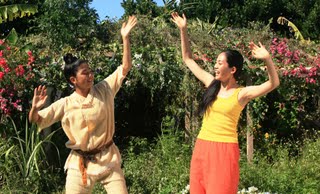


The Louis Vuitton Hawaii International Film Festival (Oct. 9-19) prides itself on being a bridge between “East and West,” but this year’s edition found its greatest strength in films even closer to home (or as close to home as Hawaii can get, considering it’s the most geographically isolated populated landmass in the world). Festival programmer Anderson Le and director Chuck Boller brought in the usual dizzying array of films and filmmakers from around the Pacific Rim, with Chinese melodramas, Japanese comedies, and Korean thrillers among the many choices on offer this year, but also spotlighted low-budget works from Hawaii and other Pacific Islands, including the first feature films ever from Guam and the Marshall Islands. No longer content to be a mere “bridge” between East and West, this year’s festival promised to highlight the Pacific Islands as a creative locale in its own right.

Don and Kel Muna’s Shiro’s Head (pictured above), from Guam, and Aaron Condon and Mike Cruz’s Morning Comes So Soon, from the Marshall Islands, represent the tip of this new Pacific wave. Both films were born more from love and desire than any concrete system; with neither Guam nor the Marshall Islands having a film industry, these filmmakers made not only the films, but the entire support structure, themselves. Brothers Don and Kel Muna gained their education in Southern California film schools and honed their film skills with Northern California wedding videos before returning to Guam to make Shiro’s Head, a gang-tinged family drama with an intriguing rhythm all its own. Schoolteachers Aaron Condon and Mike Cruz joined forces with Marshallese youth nonprofit organizations to create Morning Comes So Soon, a Romeo-and-Juliet love story set among indigenous Marshallese and recent Chinese immigrants. Made in American territories located as near to Asia as to the U.S. mainland, both films merge American-indie tropes and character structure with the aesthetic freedom and experimental ethos of new work from the Philippines and China, creating a blend that’s truly (to echo the festival’s claim) a bridge between East and West.

A world-weary thug with soulful eyes and cheekbones so sharp they could cut glass stares aggressively into the camera; directly addressing the audience with a declaration of vengeance and death (delivered in the native Chamorro language), he then flicks a lit cigarette at the lens as the image suddenly, breathlessly freezes: This is the dramatic opening scene of Shiro’s Head, and a declaration of intent that this is no by-the-numbers film. A young man returns to the island to find himself an outsider in his own realm, trying to make sense of a family mystery, a love triangle and a criminal enterprise, all while deflecting the antagonism of various threatening locals, including a seething Mohawked punk. The plot could be borrowed from countless other genre films, but the Munas filter it through a distinctly Guamian landscape and culture; even the simple fact that it’s delivered partly in Chamorro, a language whose use is declining even in Guam, serves as a form of cultural resistance. (A quick prowl through IMDb, in fact, lists Shiro’s Head as the only film ever made in Chamorro.) The Guam of Shiro’s Head is no tropical dreamland of palm trees and sun-kissed beaches, but rather a nightmare of weed-cracked asphalt sidewalks, concrete shacks, and moody machos with trouble in mind, constantly lingering uneasily on the periphery. It’s a landscape that’s normally erased from all images of the region, but for Shiro’s Head it’s the only one that matters, and the Munas fill it with legends, mysteries and ciphers. This is filmmaking designed not only to tell stories, but to preserve them, and to even preserve the language that tells them. The Munas’s commitment to capturing local life and flavor isn’t just in front of the camera, either; they recruited a host of local musicians to lend songs to the film’s diverse soundtrack and organized their friends and neighbors for cast, crew and support.

Morning Comes So Soon boasts its own commitment to place and culture, in this case the Marshall Islands, a Micronesian nation of multiple islands and U.S. territory. Working with local high school youth (and sponsored by a U.N.E.S.C.O. grant), directors Aaron Condon and Mike Cruz mold a familiar Romeo-and-Juliet plot onto the area’s simmering cultural tensions and contemporary problems. An easy-going local boy (the appealing James Bing III, plucked from an area high school) falls for a young Chinese teen (Ting-Yu Lin, also from a local high school), who works in her mother’s convenience store, but soon trouble emerges from both the boy’s racist friends and the girl’s suspicious family.

Using a teenage love affair for the structure, Morning tackles not only the island’s current political issues of racial unrest, unemployment and economic collapse, but also more psychological issues like depression and family communication. Part island tragedy and part youth documentary, Morning also succeeds as a portrait of teenage life on the Marshall Islands with its everyday rhythms and ordinary sights, while its spoken dialogue of Marshallese, English slang and Chinese serves as a virtual mirror to the area’s polyglot nature. There’s a quiet, serene rhythm to many of the shots, but a just-as-present lingering tension; it may be “paradise,” but something’s not quite right. A scene on a beach underneath a hanging palm serves as the only concession to tropical beauty, but even that setting soon turns into something far more tragic. Instead we have a setting more inner-city than outer-island, of convenience stores and basketball courts, low-ceilinged windowless rooms and stuffy schoolrooms, and of young teens stuck with seemingly nowhere to go.

Evidently it spoke to the local community: Morning was originally to be screened once or twice in a local theater, but it was held over and screened multiple times a day after outdrawing its Hollywood competition and fostered renewed discussions on racism, depression and community relations on the island.

The festival found further success even closer to home in the form of the Audience Award-winning Chief, a gorgeously shot mini epic from director Brett Wagner that, in only twenty-something minutes, created a perfectly realized, psychological Polynesian noir, filmed under Oahu’s blinding sun yet as dark as any nocturnal thriller, and with a hard-boiled performance by Chief Sielu Avea that would make even Robert Mitchum take note. The Best Documentary winner was another Hawaiian labor of love, Anna Keala Kelly’s Noho Hewa: The Wrongful Occupation of Hawaii, which detailed in straightforward, passionate detail the impact of militarism and tourism on native Hawaiians, and the Hawaiians’ continuing fight for their land and rights.

It’s been hard for the festival to toe that line between serious artistic venue and easy-going vacation destination (its official Web site interviews of filmmakers include queries like, “What kind of sunscreen do you prefer?”). Visiting filmmakers, critics and programmers find a schedule that makes it simple to do both; most screenings start in the late afternoon, leaving plenty of time beforehand to sample the island’s non-theatrical pleasures, while most films are done by midnight or so, leaving plenty of time to, um, sample the island’s non-theatrical pleasures. The festival’s always been known for its spotlight on emerging Asian filmmakers and Asian genre works; this year’s focus on Hawaiian and Pacific Island films, however, may turn HIFF into not only an “aloha” destination, but a place of discovery as well.


# @ 1/05/2009 03:01:00 PM Comments (0)


Thursday, November 6, 2008
TOKYO INTERNATIONAL FILM FESTIVAL
By Nicholas Vroman 


Following on the heels of the Pusan International Film Festival, the Tokyo International Film Festival (Oct. 18-26), ever wanting to position itself as the "go to" festival for new Asian cinema, seems to get sloppy seconds. Even the newcomer, the Bangkok International Film Festival, programmed an edgier Asian section, scooping the new Naomi Kawase film, Nanayo, a few weeks before TIFF. Long the rollout fest for Japanese fall theatrical releases, the Tokyo International Film Festival still carries its weight for Japanese distributors. This year’s opener was John Woo’s Red Cliff and closing was Wall-E.

The festival is flush, centered in Roppongi Hills, the high-class mega development in central Tokyo which boasts countless cafes, shopping galore, an art museum, apartments and offices and a toney new six-plex cinema. An environmentally friendly green carpet opening night brought out the star power with the likes of John Woo, Fernando Meirelles, Jerzy Skolimowski, Julianne Moore in town for their Tokyo premieres and John Voight as competition jury head. They even had a special fly-in on the last weekend of the fest with Chen Kaige and Nikita Mikhalkov for lifetime achievement kudo, the Akira Kurosawa Awards.

Tokyo is a festival that brazenly programs epic schlock along the lines of Kim Tae-kyun’s The Crossing, Feng Xiaoning’s SuperTyphoon and Journey to the Center of the Earth; theater-bound quality pics like Hunger and Mike Leigh’s Happy Go Lucky ;and festival faves along the lines of Jose Luis Guerin’s In the City of Sylvia and Nuri Bilge Ceylan’s Three Monkeys along with various rejects from Pusan and Bangkok. But still there were a few diamonds in the rough and discoveries that made the festival worthwhile.

TIFF’s Japanese Eyes section started four years ago in reaction to the challenge mounted by Edo’s other big film festival, Tokyo Filmex, which from its beginning has embraced the mission of breaking new Japanese films and talent. TIFF’s always had a bit of a problem finding and competing for such films. Nonetheless, out of a rather dreary lineup, there were some genuine winners. Taking the Best Picture Award was Buy a Suit, the last film by the woefully neglected auteur, Jun Ichikawa, who sadly passed away a month before the scheduled festival debut of his film. It’s a wonderful no-budget chamber piece that’s part city symphony and part Ozu-channeling family drama -– a moving denoument to an amazing career. Kaizo Hayashi’s The Code, a clever thriller spoof featured a remarkable Joe Shishido, Seijun Suzuki’s favorite star, showing that minus cheek implants and at 74, he still is a commanding presence.

The competition section was a mixed bag of offerings from the truly questionable, to several lackluster Japanese, American and French entries, to the new Skolimowski and some premieres by very talented unknowns. Among the best were Planet Carlos, the debut film by German filmmaker Andreas Kannengießer about a dirt poor Nicaraguan teenager trying to make a go of life in gigantona, a sort of street poetry/dance/performance art. The Tokyo Sakura Grand Prix winner went to Tulpan (pictured above), a first feature by Kazhakstani filmmaker Sergey Dvortsevoy. It's a wry ethnographic social comedy that fits into a new genre of films defined by the likes of The Story of the Weeping Camel. Winner of Un Certain Regard at Cannes this year, the film is making the rounds, winning prizes nearly everywhere it goes. Skolimowski walked away with the Special Jury Prize for 4 nights with Anna. Though perhaps not his greatest film, it’s good to see him back after 17 years. The audience award went to a Japanese oddity, Tetsu Maeda’s School Days with a Pig, an awkward adaptation of a TV documentary about a class that spends a year raising a pig from birth to the dinner table.

A new section was added with the Toyota Earth Grand Prize, part of an eco-friendly promotion by one of the festival’s major donors. The winner was the amusing but clichéd Ashes from the Sky, a Spanish anti-nuke Local Hero.

Like Roppongi Hills itself, TIFF is big, sprawling and very commercial, but there are many nooks and crannies where one can find some great things.


# @ 11/06/2008 02:13:00 PM Comments (0)


Monday, September 15, 2008
LOS ANGELES FILM FESTIVAL
By Justin Lowe 


The defining moment of the Los Angeles Film Festival (June 19-29), presented by Film Independent, didn’t occur at a gala screening or a high-profile filmmaker panel, but transpired instead at the fest’s annual Finance Conference as Mark Gill, former president of Miramax and currently CEO of The Film Department, delivered the keynote address.

As widely reported in the entertainment press, Gill’s speech presented a comprehensive overview of the state of independent film, detailing his premise that “Yes, the Sky Really Is Falling.” He cited a variety of reasons for the poor performance of indie releases this year, including the surfeit of films available for sale and competing against one another for screen space, the flight of capital from the independent sector, contracting (or collapsing) foreign sales opportunities, the poor theatrical performance of documentaries, and the recent demise or reconfiguration of specialty outlets New Line, Picturehouse, Paramount Vantage and Warner Independent, as well as ominous rumors if imminent collapse at ThinkFilm..

These and other factors have contributed to a contraction in financing and distribution opportunities for independently produced projects -- apparent even at the beginning of the year from slow sales at Sundance and the major spring festivals. The trend was also evident during LAFF, as distributors passed over a number of strong competition films, although a deal was announced before the fest for Morgan Dews’ doc Must Read After My Death, acquired by Gigantic Releasing, while IFC picked up Barry Jenkins’s narrative Medicine for Melancholy, which had premiered at South by Southwest.

Jenkins’s inventive two-hander captivates with fine performances from Wyatt Cenac as Micah and Tracey Heggins as Jo, San Francisco African-American 20-somethings navigating the awkward aftermath of a drunken one-nighter. Undaunted by Jo’s firm indifference to his attempts at establishing a further connection, Micah’s spontaneous familiarity with the city wears down her initial resistance as they develop a comfortable, if somewhat wary, rapport and maybe even the beginnings of a romance.

Shooting with a de-saturated palette reduced nearly to black and white, Jenkins lends many of his infrequently lensed San Francisco locations an almost classic resonance. James Laxton’s deft HD cinematography suits the film’s intimate scale while opening an expansive sense of the city’s possibilities.

Adopting a similarly low-key approach, writer-director Sean Baker’s third feature, Prince of Broadway, is a surefire charmer that leverages primarily non-professional actors, improvised dialogue and practical locations to craft a persuasive portrait of contemporary New York life. Illegal African immigrant Lucky (Prince Adu) works the seedier side of Manhattan’s fashion district, hustling knock-off designer shoes and handbags. When his ex-girlfriend shows up and dumps her toddler (Aiden Noesi) on him, claiming that Lucky’s the boy’s father, he’s forced to come to terms with his bachelor lifestyle and the responsibilities of parenthood.

Baker captures his characters on grainy DV in an informal verite style that pays off with a level realism seldom achieved on similarly limited budgets. Prince of Broadway’s abundant charisma helped Baker win LAFF’s juried $50,000 Target Filmmaker Award and will work wonders with receptive audiences.

Writer-director Lori Petty’s semi-autobiographical 70s-set domestic drama The Poker House was less successful at achieving authenticity, despite its non-fiction origins. Jennifer Lawrence plays Agnes, a version of 14-year-old Petty, the eldest of three sisters living with a drug-addled single mom (Selma Blair) whose disorderly home is party central for a constant parade of neighborhood lowlifes. Agnes and her siblings gingerly navigate this emotional minefield, never losing faith in their ability to endure.

Barely skirting outright melodrama, Petty elicits impressive turns from her primarily female cast, particularly Lawrence (who won the fest’s narrative acting award) as her stand-in, despite an over-written script and distinctly heavy-handed directing.

Among competition documentaries, Pressure Cooker received a special commendation from the jury for its portrayal of inner-city Philadelphia youth attempting to improve their lives through the culinary arts. Although essentially a standard kids’ contest doc, co-directors Jennifer Grausman and Mark Becker latch onto several live-wire students determined to excel in the culinary field, which lends the production some pleasing momentum.

Hoping to capitalize on the electoral season, Boogie Man presents an intriguing depiction of notorious Republican National Committee chair Lee Atwater’s career and his management of George H.W. Bush’s 1988 presidential campaign. Filmmaker Stefan Forbes ably fills in the background on Atwater’s development of now-familiar negative campaign tactics, but ultimately breaks little new ground covering the strategist’s career or detailing obvious parallels with contemporary hardball politics.

Defying a serious-minded doc field, Sacha Gervasi’s raucous Anvil! The Story of Anvil — an entertaining account of the influential and largely forgotten Canadian hard-rock band — took the audience award, but was still seeking a distributor capable of handling the distinctly niche picture. Darius Marder’s treasure-hunter profile Loot (pictured above) won the $50,000 Target Documentary Award.

The Summer Previews sidebar sneaked a variety of mid-year specialty releases, although none appear likely to approach the nearly $4 million in box office earned by last year’s LAFF prizewinner, Young@Heart. Among the titles in summertime release, only audience award recipients Man on Wire from James Marsh and Jonathan Levine’s The Wackness have broken $1 million in box office.

Despite the high-profile summer movies bookending LAFF, with Universal’s Wanted opening and Hellboy II closing the fest, the overall mood was more subdued than last year, although apparently not due to the rapidly diminishing likelihood of a SAG strike. Fewer parties, more event restrictions and the souring of the acquisitions market all seemed to be contributing factors.


# @ 9/15/2008 07:07:00 PM Comments (1)


Tuesday, July 8, 2008
CINEVEGAS
By Jon Korn 


The CineVegas Film Festival (June 12-21) celebrated its tenth year in a manner befitting its Sin City setting: a colossal, ten-day jubilee of film and fun. High and low culture rubbed a lot more than just shoulders — among the many special events were not only a screening by contemporary art darling Takashi Murakami on a waterfall at the Wynn Resort but also a fete at Sapphire’s, the self-billed “World’s Largest Adult Entertainment Complex.” And that was just on Monday and Tuesday. Keeping up with the screenings and numerous parties, all while nobly trying to ignore the siren song of the tables, proved to be utterly - and delightfully - impossible.

Not too long ago, holding a film festival in Las Vegas seemed to be a lost cause, but CineVegas artistic director Trevor Groth says that the city’s attitude has gone from “apprehension to excitement.” He explains, “From the beginning we knew that for the festival to succeed it would have to be embraced by locals as well as the film industry. And now in our tenth year I truly believe that this has happened.” Of course, CineVegas is a much-loved destination for members of the film industry as well, and the veritable army of helpful staff members made sure even the most ambitious events ran smoothly. (Full disclosure: I have worked for CineVegas in the past, so I know just how much organizational aptitude this takes.)

CineVegas’ fetish for eclecticism carried over to the slate, a strong group of both independent and studio films from all over the world. New this year was a Pioneer Documentaries section that was evaluated by its own jury, which gave Beautiful Losers the main prize and recognized Hi My Name is Ryan with a special award. Both films focus on artists who buck convention, with directors Aaron Rose and Joshua Leonard’s Losers tracking a semi-organized group of street artists and outsiders that formed in the ‘80s and Ryan, from Paul Eagleston and Stephen Rose, telling the story of its titular hero, the “clown prince” of the Phoenix art scene.

The Grand Jury Prize went to director Rolf Belgum’s She Unfolds By Day, a moving, ethereal look at a son’s attempt to care for his Alzheimer’s-stricken mother. In a matter reminiscent of 2004 CineVegas standout The Talent Given Us, Belgum blurs the lines between fiction and documentary, even using members of his family in the lead roles. Among the other films highlighted by the jury were Rachel Samuels’ neo-noir musical Dark Streets, Bill Pullman’s performance as an addled sci-fi legend in Matthew Wilder’s Your Name Here and Jonás Cuarón‘s beautifully simple Ano Una in the year-old La Promixa Ola selection, which features young Mexican filmmakers. Audience awards went to Jared Drake’s dystopian comedy Visioneers (pictured above) and racehorse documentary Lost in the Fog, from director John Corey.

One of the most discussed films of the festival was writer-director Josh Fox’s Memorial Day, an unblinking examination of modern America’s obsession with documenting itself. There are several reveals throughout the film that would be a shame to give away here, so let’s just say that you will never look at the holiday as simply an excuse for beer and bad behavior again. Between the dizzying handheld camera work and some truly disturbing imagery, there were several walkouts from the film’s world premiere screening -- and a heated discussion afterwards. According to Fox, a theater manager told him, “Audience members were screaming that they were going to ‘sue the Palms’ or actually ‘burn it down if they showed the film a second time.’” While characterizing himself as “surprised” by the strength of the negative response, Fox also seemed sanguine, calling the reaction “appropriately insane.”

That would seem to be the ideal phrase to sum up a stay at CineVegas 2008. Between the thought-provoking films, the all-night parties and the surreal setting, insanity wasn’t just appropriate; it was basically required.


# @ 7/08/2008 10:54:00 AM Comments (0)


NEWFEST
By Conor Fetting-Smith 


Just past Madison Square Garden, if you can weave through its mass of disoriented tourists, beneath the neon moniker of the New Yorker hotel, you’ll find a disproportionate number of same sex couples, groups of men with distinct fashion sense, packs of women and yet nary a high heel – all them congregating outside the Loews 34th Street movie theater. And if you’re keen enough to glance inside to the lobby, you’ll see why: NewFest, New York City’s Gay, Lesbian, Bisexual and Transgender Film Festival (June 5-15) is in residence for just over a week in this, its 20th year.

As a gay filmmaker living in New York City, I was eager to take in NewFest’s slate of films. With so much change and progress over the past 20 years, I wondered how NewFest would assert its continued relevance as a means of relaying the gay experience in a city where same sex displays of affection are as common as the rats in the subway, or bagels with lox.

What I found is that this assertion came quickly and with a direct-ness that New York City has earned as one its most defining characteristics. In speaking with the festival’s artistic director, Basil Tsiokos, he cited the fact that as a LGBT festival with a twenty year history, NewFest does not just present films that might cross over with wider, more mainstream audiences, but it cultivates a community – and effectively bringing that community together year after year is at least as essential as picking the next big thing in LGBT film.

Fittingly in this anniversary year, NewFest drew both its community and the next big thing. It became apparent that NewFest’s perennial community had arrived at the opening night gala screening of Tru Loved. The film is a sunny insight into coming-out in a diverse present day LA community, and it proved the perfect pop tart to ignite a giggly crowd ready to celebrate. Reacting like high school students themselves, it was clear that this audience was a special, filled not just with industry and programmers but New Yorkers who are vocal in expressing their affection for what universally draws audiences to the cinema, its evergreen ability to entertain.

It took a little longer to find the next big thing in LGBT film, but it finally came wrapped up as NewFest’s closing night gala film. Were the World Mine (pictured above) is a grounded yet spectacular musical that follows its protagonist Timmy as he’s cast as Puck in his prep school, all male version of A Midsummer Night’s Dream. Real life mirrors drama as the Shakespearean verse reveals the recipe for a love potion, which Timmy spreads throughout the entire town, transforming its inhabitants into love-struck homosexuals for a brief period before the spell is broken at the play’s performance. Director Thomas Gustafson succeeds where many before him have failed in updating Shakespeare for modern audiences. The film hinges on a young cast who deliver engaging performances most notably Tanner Cohen as Timmy, and Wendy Robie as Ms. Tebbit, the drama teacher. These actors draw us in to the magic of music, love and Shakespearean language, and the film boasts beautiful cinematography and superb art direction.

Rest assured, not all of NewFest focused on high school romance. Winner of the best documentary feature prize Be Like Others chronicles the lives of Iranian men who transition from male to female in order to abide by their country's law, which explicitly bans homosexuality as punishable by death. Pageant, the Audience Award winner for best feature follows contestants for Miss Gay America, and had NewFest’s aforementioned vocal community cheering as if the competing drag queens were standing before them in the flesh. Japan Japan captures the wanderlust of a young Israeli man who dreams of life in Japan. Filmmaker Lior Shamriz distinguishes himself with a quiet style reminiscent of Lynne Ramsay or Sofia Coppola, while he effectively captures the angst of the modern age. Bi the Way a smart and cleverly entertaining doc takes a stab at understanding trends in bi-sexuality in America through the stories of a handful of young people spread out across the nation. These subjects present us with wisdom beyond their years, in understanding that no two minds think alike, and what could be more complex and personal than sexual preference? We can look at data, or read quotes from experts, but until we take the time to stop and examine what’s different and challenging, we haven’t understood much at all. And thus we elucidate the importance of NewFest’s indelible mark on the LGBT, Film and New York communities.


# @ 7/08/2008 10:45:00 AM Comments (0)


TORINO INTERNATIONAL GAY AND LESBIAN FILM FESTIVAL
By Shari Roman 


Jodie Foster “came out” during a recent Hollywood Awards ceremony, Gus Van Sant’s feature on the assassination of San Francisco’s gay mayor Harvey Milk is now in production, and gay and lesbian liaisons amongst the older [Ellen Degeneres and Portia de Rossi] and younger star sets [Lindsay Lohan and Samantha Ronson?] are now looked upon with almost avuncular support.

Yet, way before alternative lifestyles tipped their way into the mainstream, there was the Torino International Gay and Lesbian Film Festival (April 17-25). A key showcase, Torino supported the early “taboo” efforts of Van Sant and Derek Jarman and introduced local audiences to Todd Haynes, and Apichatpong Weerasethakul. Now firmly established within the international film calendar, the “little” festival, nestled amidst mountains in the heartland of Italian machismo and primo gelato by filmmakers Ottavio Mai and Giovanni Minerba in 1986, is one of the longest continuously running queer-themed cinematic events in the world.

These days, Torino’s challenge is to balance its programming slate. Being provocative without being preachy or kitschy or dipping too deeply into narrative-light soft-core porn is no easy task for a ‘themed’ festival. Thankfully, for the most part Torino succeeds.

Kicking off the festivities: a blow out river-side fete and screening for Madrid director Juan Flahn’s Chuecatown; a crowd pleaser/family comedy-murder mystery involving real estate value and the mysterious murders of little old ladies. Torino then went on to host a fully international slate of 150 films [plus over 100 shorts].

Replete with a particularly strong documentary section, festival director Minerba and his genial programmers continue to show a keen eye for weird, wonderful and intriguing prospects from all over the world. Favorites included: Julian Cole’s fascinating documentary, With Gilbert and George; Bruce LaBruce’s hilarious gay-zombie feature, Otto; or Up with Dead People (pictured above) and Thomas Gustafson’s Shakespearean musical Were the World Mine.

This year’s special offerings included a tribute to Ms. Foster; John Waters’ megastar Divine, and France’s Sébastien Lifshitz. Even Hong Kong auteur Stanley Kwan and New York based artist-provocateur Terence Koh – screening his epic sex-fest God -- popped into town as special guests.

Although, strangely, there were no Italian films in the main competition, the eleven Jury members, including American director Jamie Babbit (But I’m A Cheerleader), Portugal’s João Pedro Rodrigues (Odete) and Italy’s critic/journalist Pier Maria Bocchi went global, giving special Jury mentions to Germany’s Julia von Heinz’s Was am Ende zählt and France’s Christophe Honoré (for Les Chansons d’amour). But the Ottavio Mai Award for Best Feature Film rightfully went to French director Santiago Otheguy’s breathtaking La León. Featuring a stunning performance by Jorge Román, it’s a simply told and beautifully shot story of one man’s day-to-day struggle against the nature of the world around him.

Documentary honors went to Parvez Sharma’s heavily lauded opus on Muslim sexuality, A Jihad for Love, with Special Mention and an Audience award to Australian Julian Shaw’s Darling! The Pieter Dirk-Uys Story. The solid, if slightly “last season” The Walker, Paul Schrader’s finale of his “gigolo” trilogy, starring Woody Harrelson as the escort of the wives of the Washington political elite, was the closer.


# @ 7/08/2008 10:18:00 AM Comments (0)


Monday, July 7, 2008
TRIBECA FILM FESTIVAL
By Jason Guerrasio 


The 2008 Tribeca Film Festival (April 23 – May 4) could best be described as the year it edged closer to finding its niche in the overcrowded festival schedule. Cutting 40 films off of its slate, lowering ticket prices and (this is the biggie) centralizing the festival in Union Square — the first time TFF has had a home base since its first two years when it was in Lower Manhattan — the seventh edition still had its moments of gaudiness. But, for the most part, cineastes actually had something to smile about.

With not much buying happening at Sundance earlier in the year, many were certain that TFF would go by with its usual big-budgeted red carpet premieres (it did: Baby Momma, Speed Racer) and ho-hum indie Sundance rejects. But TFF had a surprising buying surge this year with IFC and Magnolia taking the Spanish thriller La Habitación de Fermat and the Matthew Broderick/Brittney Snow starrer Finding Amanda, respectively. And journalists found a juicy story when Errol Morris admitted that he paid for some of the interviews in his Standard Operating Procedure, which screened at the festival as a sort of sneak peek before its theatrical release.

“I was probably the biggest naysayer years one and two of the festival,” says IFC Films head Jonathan Sehring. “I thought [the festival] was kind of a sham, but I think their programming is very good. They are up against a lot, bookended by Sundance and Cannes with Berlin in there too.”

“Everyone I’ve spoken to shares my feelings that this was a real good one,” says TFF artistic director Peter Scarlet days after the fest wrapped. “I think we smoothed out a lot of the rough edges. Having a central area certainly didn’t hurt and trimming down the program the way we did maybe [hit] just the right size.”

Though many of the premieres had more hype behind them than payoff — James Mottern’s Trucker was a disappointment as was John Walter’s Theater of War, a behind-the-scenes look at The Public Theater’s staging of Mother Courage — there were some films that left the festival stronger than they came into it. The narrative prizewinning Swedish vampire tale Let the Right One In was picked up by Magnolia Films’ genre arm Magnet Releasing, and Brian Hecker’s comedy Bart Got a Room, about a high school student looking for a date to the prom, had a lot of buzz during the festival and as of press time is closing in on a distributor. And while some critics were negative on Richard Ledes’s The Caller, which got the “Made in NY” Narrative Award, I thought it’s neo-noir style and strong performances by Elliot Gould as a private eye and Frank Langella as a whistle-blowing energy exec outweighed its below-average script. Trisha Ziff and Luis Lopez’s entertaining and informative doc Chevolution showed how a photo of the revolutionary Che Guevara has become a profitable gimmick put on everything from T-shirts to coffee-mugs. And Melvin Van Peebles, who came to the festival two years ago as the subject of Joe Angio’s excellent How to Eat Your Watermelon in White Company (And Enjoy It), returned with his first feature-length film in eight years, Confessionsofa Ex-Doofus-ItchyFooted Mutha (pictured above). Starring the 75-year-old Van Peebles, the picture is part autobiography, part experimental film and part black history. Filled with funny one-liners from Van Peebles’s poetic tongue, it also has an endearing lo-fi quality that’s a joy to watch.

Can TFF keep the momentum going for ’09 and beyond? Scarlett admits there’s no guarantee that the real estate the festival enjoyed in Union Square this year will be available to them next year. But The Caller’s Richard Ledes says that doesn’t matter. The thing that TFF has going for it is New York City. “The level of attention you get here is rare compared to other festivals outside of the biggies,” he says. “You get audiences from all walks of life. You don’t get that throughout most of the country.”


# @ 7/07/2008 11:40:00 AM Comments (1)


Monday, April 14, 2008
GEN ART FILM FESTIVAL
By Alicia Van Couvering 


To enter Gen Art, your name must be on a clipboard manned by a shining, feverish lady in black. If it is you feel lucky, chosen, special, because then you are permitted to taste what life should be like EVERY DAY: lo, there is free beer, free wine, free cookies and free popcorn. You eat, you drink, you look around. Are you in a singles bar? No – over there is a character actor whom you admire... there is another.... it's a film festival! Now another feverish black-clad lady is ushering you inside, and you obey her, because she must be obeyed.

Gen Art’s Film Festival (April 2-8) is just one part of the larger Gen Art mission to produce events celebrating every artistic enterprise, including art, fashion and music. The goal is to celebrate emerging talent, but sometimes it can feel like the focus is more on the event itself than the art within it. And by “event” I mean “party.” Fourteen teams of filmmakers and the army of energetic staff are probably still sleeping off their hangovers a week later. It's an affectionate, city-defined festival that encourages everyone in attendance to get drunk and kiss a stranger.

“This is an audience-driven festival,” says Vice President of Film Jeffrey Abramson. “And our audience are not, by and large, cinephiles who are heading to the arthouse every single weekend. But they’re social, and curious, and they have good taste.” Logos and shout outs to the program’s corporate sponsors are ubiquitous – witness the gleaming Acura planted in the middle of the opening night Diminished Capacity party - but it means an unlimited open bar, so no one seems to mind.

Doug Pray’s Surfwise (pictured above) won the audience award – it’s a crowd-pleaser about the 11-member Paskowitz family, “the first family of surfing,” who grew up living the peripatetic utopian vision of their father, waking up on a new beach every day. “[Subject & producer] John Paskowitz was just going around hugging everybody all night, saying he wanted to spoon people,” said Abramson, as smitten with Paskowitz as he is with every one of the 14 directors.
There is only one screening each night of Gen Art. Each is a New York premiere, though many have been gathering buzz on the festival circuit for months. About half come with distribution already in place, a balance that the programmers have chosen to maintain. The Take, starring John Leguizamo and Rosie Perez, closed the festival on Wednesday night and a few days later opened in New York and L.A. Surfwise was produced by the now-shuttered HDNet, and has distribution via its parents company Magnolia Films.

The family in David Pome’s Cook County runs a meth lab, although the screening and party weren’t any less joyful for it. You can watch theirs and everyone’s antics in the videos by David Jr., who could be seen circling the melee with his tiny Sony video camera at all times. David Jr. edited his pieces nightly, and Gen Art projected them on the big screen the following evening.

Frost, by Steve Clark, carries on a long narrative tradition of wealthy young men with the world at their feet and an existential crisis at their door. Frost was the film with a Gen Art home team advantage. New York-bred Clark shot in his own Tribeca apartment building, his parents’ townhouse, and a city court building lobby – not to mention his friends’ nightclubs. Its stylish cast of bright young things are already fixtures on the New York social scene. The ghost of George Plimpton apparently hung over the production, as Clark and co-writer were editors at the Paris Review before moving behind the camera.

Ultimately it was Jennifer Phang’s marvelous Half-Life, which won the Grand Jury Prize, not much of a surprise after juror Alan Cumming’s glowing preface to the announcement.

Half-Life is not an easy film, but [our films] don’t have to be super digestible,” said Abramson. “We want films that will connect with our audience. Some speak directly to our audience like Frost or they’re something that’s unique and original, like Nightlife… we really want to showcase talent that we think is going somewhere, that has a future.” This promise of great things to come has been satisfied by alums like Azazel Jacobs, Ilya Chaiken, Brad Anderson, Craig Brewer, and many more.

Reached by phone on his way to the airport, Abramson and Gen Art are already gearing up for an upcoming film festival in Chicago, casting for Project Runway, an art exhibit of cellphone videos with Nokia and, to be sure, more parties.


# @ 4/14/2008 01:42:00 PM Comments (0)


Wednesday, March 19, 2008
MIAMI INTERNATIONAL FILM FESTIVAL
By Rob Nelson 


The Miami International Film Festival’s (Feb. 28 - March 9) lack of public screenings before 4 p.m. makes sense only after you’ve plopped bare feet onto the beach and felt the sun on your face--unusual sensations for movie people, several of whom were seen sporting freshly burned skin in the fest’s first half. On Day 4, Henry Fonda flaunted his own deep, dark tan in Once Upon a Time in the West (1969), magnificently restored from the Techniscope negative by veteran Paramount archivist Barry Allen and screened to a small but ecstatic audience at the Gusman, Miami’s gorgeous, ’20s-era movie palace.

If the MIFF never again conjured such cinephilic magic as Once Upon a Time, we should blame the rare poetic genius of the late Sergio Leone and not the admirable efforts of the fest’s new director Patrick de Bokay, whose years as a Hollywood executive likely helped bring Demi Moore and her 25-member entourage to the Gusman for a screening of Michael Radford’s Flawless--a film not quite truthfully named, but worthy for settling almost half of the old art-and-commerce equation. (Would you believe that the star plays a thief?)

Among de Bokay’s other important achievements is having kept the Miami fest’s focus on Ibero-American fare, represented in this 25th anniversary edition by films in both dramatic and documentary categories (e.g., The Zone in the former and Stranded in the latter).

“The power of Miami is that it’s on U.S. soil, but it’s also multicultural,” says de Bokay, who’s multiculti himself--a Hungarian born and raised in Paris before moving to Los Angeles and now Miami.

“You can be a filmmaker from anywhere,” de Bokay says, “and your film has an audience here, in a real theater. So on the one hand, the purpose of [the MIFF] is to grow into a global entertainment event--following Sundance in January and Berlin in February--that showcases everything that can be done in this industry. Yet, on the other hand, the most important thing in Miami--the centerpiece of the festival--is the [awarded] competition. We try to find the best work of the moment and give it the proper recognition.”

At fest’s end, an Ibero-American jury split its award, recognizing both the Haitian/French Eat, For This is My Body and the Mexican Cochochi. The World Competition jury, which included actress Catalina Sandino Moreno (costar of Steven Soderbergh’s upcoming pair of Ché Guevara biopics), awarded its grand prize to the Polish Tricks (Sztuczki), with special mentions going to the Serbian It’s Hard to Be Nice and the violent Israeli drama Foul Gesture (Tnu'a Meguna) (pictured above).

Speaking of Foul Gesture (and in the spirit of full disclosure here): I served with Hungarian critic Géza Csákvári on the two-man FIPRESCI jury that considered the 15 films of the World Competition category and awarded the aforementioned Israeli movie, which plays like a political variation on the 1970s rash of urban American vigilante flicks--or like Spielberg’s Munich at half the length and twice the guts.

Tight as a drum, Foul Gesture is a movie in which every scene--nearly every line of dialogue, in fact--serves to support a handful of interwoven ideas about masculinity, parenthood, sexual frustration, downward mobility, writers’ block, terrorism, Jewishness, and the Israeli-Palestinian conflict, to name a few. More broadly speaking, director Tzahi Grad’s insight into the stress-inducing details of modern life is acute enough to cause the nervous viewer some additional anxiety--as befits a movie that on some level means to point its middle finger at us. The film isn’t called Foul Gesture for nothing.

Though one senses this festival is still getting its bearings on an operational level, the best films--including the jury-feted docs Santa Fe Street (Calle Santa Fé) and Santiago--asserted the programmers’ taste for both significant subject matter and artful execution. And when, at some hours, there weren’t any films--good, bad, or ugly--to be seen at all, well, there was the beach.


# @ 3/19/2008 03:08:00 PM Comments (2)


Sunday, January 6, 2008
DUBAI INTERNATIONAL FILM FESTIVAL
By Jason Guerrasio 


In only four years the Dubai International Film Festival (DIFF) has taken on the Herculean task of establishing itself as a platform for Middle Eastern films to the Western world. And when there seems to be no limit to the amount of money the city will put into the fest (and itself: the tallest building in the world will soon be located in Dubai, its mall has the largest indoor amusement park and an indoor ski slope, and there’s the seven-star hotel, Burj Al Arab), it seems DIFF will only grow from here. But will the fest be a side note to the region’s abundance of wealth, exotic locale and gaudy architecture or become a legitimate contributor to the film community?

Unlike the Cairo, Marrakech (which ran at the same time this year as DIFF) and the one-year-old Abu Dhabi festivals in the Middle East, DIFF’s advantage is its deep pockets, which can tempt filmmakers with its over $300,000 in prize money for winners in the competition categories, very tempting for the extremely financially strapped Middle Eastern film community.

But DIFF this year (Dec. 9-16) also brought some of the best Western films to Emirati audiences who would never see these films as we do (UAE censorship laws make it impossible for any film with heavy violence or sexual content to be seen in its entirety, but those laws were lifted to films playing in the festival). The Diving Bell and the Butterfly, Control, Gone Baby Gone, Bee Movie and No Country For Old Men were some of the films screening during the seven day fest. Though I stayed clear of most of these as they were already released in the U.S., I couldn’t resist seeing a Coens film in another country, and it was interesting to see how a sold out audience in another region of the world took to No Country; laughing or cringing at the same scenes audiences in America would.

Most of my time in theaters was watching what Eastern cinema had to offer. And for the most part I was pleased. My favorite film of the festival was one I learned I’d missed at last year’s Tribeca Film Festival, Making Of (pictured above). Directed by Nouri Bouzid, and set in Tunisia during the fall of Baghdad to American forces, the film follows Bahta (Lotfi Abdelli), a slick-talking dancer, who is manipulated into a fundamentalist group. But Bouzid decides to begin discussions about the film’s subject matter before the final frame. In a clever move, scenes suddenly halt and the viewer is thruster behind the camera where director and actor begin heated discussions about the film’s message and the motivations of the Bahta character. Done with humor and respect to all cultures, Bouzid makes a thought-provoking film that’s one of the best I’ve seen about the war. And Abdelli (who won a best acting award at Tribeca) gives a tour-de-force performance. From China came Ning Cai’s Season of the Horse. In the vein of fellow Mongolian filmmaker Byambasuren Davaa’s Story of the Weeping Camel and The Cave of the Yellow Dog, this simple story follows a family of nomads who can’t cope with the progression going on around them, specifically the family’s patriarch, Wurgen (Cai), a stubborn farmer who reluctantly sells his horse so his boy can go to school but learns that the horse was the final link to his ancestors and slowly drifts into a mid-life crisis. Lastly, there’s another simple story about a farmer that stuck with me, Amor Hakkar’s The Yellow House. After learning that his son has been killed in the line of duty, the poor farmer must hop on his tractor and take The Straight Story-like journey to retrieve his body. Beautifully shot, the final five minutes of the film are heart wrenching to watch.

But like many young festivals DIFF has growing pains. Some are out of their hands and will improve as the city blossoms while others are so elementary it was puzzling why it was occurring. One of the biggest head scratchers was why the festival didn’t announce the films it was showing before it started. The only press releases before the fest brought notice to the opening night film Michael Clayton and even on their website they had no section that listed the films (thought it’s listed on the site now). Also, many screenings didn’t begin on time, especially the gala screenings that had red carpet arrivals. Another major problem is the progress of the city. Due to the huge amount of construction being done throughout Dubai, and little mass transit options, the three main roads in the city are constantly congested which made it difficult for many people to get from the Madinat Jumeirah, where the main box office and press conferences took place to the Emirates Mall where a majority of the films were screening. And for the press, a shuttle from the Habtoor Grand Resort, where many of us stayed, to the Madinat at times felt like an eternity (if the shuttle came at all). But the construction of monorail lines around Dubai should make things easier in a few years.

Talking to most filmmakers, press and industryites either located locally or abroad, most are fascinated by Dubai’s growth and believe the festival can become a great outlet for area filmmakers. Writer-producer Janet Dulin Jones, who was at the festival to network as her company Storyteller Films is planning to shoot a few films in Jordan, was taken by the stories she heard from filmmakers. “Many of them have had to leave their native lands due to war or other religious tensions,” she says via e-mail after the festival wrapped. “Yet they create, they are passionate and they want to bring their voices to the world.”

But with the fact that films are censored in the region and many Internet sites dealing with homosexuality, AIDS, or any other "taboo subject" are blocked, the region still has a long way to go before it can call itself progressive. There are signs of progress though. One short program in the fest called Emirati Voices highlighted the work of young student filmmakers from UAE that questioned everything from the war to the strict Muslim culture they were raised in. That the festival let these brave filmmakers express their feelings, beliefs and thoughts was inspiring as these people will hopefully be the foundation of a much stronger film community in the future.


# @ 1/06/2008 11:01:00 PM Comments (0)


Wednesday, November 28, 2007
ROME FILM FEST
By Caveh Zahedi 


Now in its second year, the spectacularly-funded new-kid-on-the-block Rome Film Fest (Oct. 18-27) exhibits the apparently ontologically inescapable teething pains that all toddlers must endure – disorganization, poor communication skills, a certain clumsiness, and a forward-looking sense of “anything’s possible.” Also, a tendency to imitate the mother’s facial expressions – in this case, the Venice Film Festival in particular and every other “big” film festival in general. What this often leads to is the empty husk of spectacle, or spectacle disassociated from its original purpose and adrift in the free-floating play of eternally recombinant signifiers that is contemporary culture.

Add to this a way-out-of-the-way location that typically took over an hour of travel time to get to, a state of the art audio-visual complex that was weirdly non-functional – for instance, seats in the balcony facing not towards the screen but at a 90 degree angle – and films that were supposed to be subtitled in English but weren’t, and voilà – the Rome Film Festival! But there were stars aplenty: Robert Redford! Tom Cruise! Sean Penn! Emile Hirsch! Sophia Loren! Bernardo Bertolucci! Gerard Depardieu! Jane Fonda! Martin Scorsese! Scratch that, Scorcese couldn’t make it. Ang Lee!

The festival’s most trumpeted achievement was the premiere Francis Ford Coppola’s Youth Without Youth, his first film in ten years and his self-proclaimed return to his indie roots. Also included was a new documentary on Coppola titled Coda: Thirty Years After by his wife, Eleanor Coppola (Hearts of Darkness), followed by an on-stage interview with the man himself. And indeed, the presence of Coppola and his family seems the perfect objective correlative for what this festival was all about – star power, a rather dated notion of cinema, and a fuzzy-minded stab at Italian-ness.

A more courageous curatorial foray was the largest retrospective ever of the always brilliant but occasionally slapdash films of the astonishingly prolific Chilean Director Raul Ruiz, a filmmaker whose work is so original and challenging that a different approach was needed. It’s not enough just to quietly screen 40 Ruiz films in a festival of this size and scope. There needed to be discussions, lectures, special guests, and an on-stage interview. Instead, the Ruiz retrospective was relegated to the margins of the festival, with Ruiz receiving a lifetime achievement award at an award “ceremony” the time of which was never announced. Such oversights made the retrospective seem like someone’s half-hearted attempt to add another notch to their festival belt rather than a sincere and passionate expression of admiration for Ruiz’s prodigious opus.

The most memorable event of the festival, for me, was the in-person conversation with Terrence Malick. Malick, who is legendary for never appearing in public or granting interviews, made a rare and, as far as I know, unprecedented public appearance, with the stipulation that there would be no cameras and that he would only talk about his love of Italian cinema. Like most Malick-worshipping cinephiles, I attended the event with impossibly high expectations. But Malick did not disappoint. He was disarmingly gentle, shy, soft-spoken, humble, and sincere all at once. It struck me as remarkable that someone so obviously pure of heart and other-worldly could exist and function in the gaudy, tinsel-strewn, cut-throat world that is contemporary cinema.


# @ 11/28/2007 03:42:00 PM Comments (1)


Tuesday, November 6, 2007
VANCOUVER INTERNATIONAL FILM FESTIVAL
By Rob Nelson 


Now in its 20th year under the firm stewardship of festival director and art-film connoisseur Alan Franey, the Vancouver International Film Festival (September 27 to October 12) remains the same as it ever was: committed to an intelligent mix of new movies from Asia and Canada (and new nonfiction from around the world), and admirably resistant to the market pressures that sometimes threaten to make its East Coast Canadian sibling, the Toronto International Film Festival, look like one big studio junket. Hardly a haven for awards strategists and sales agents, Vancouver is chiefly for filmmakers and viewers — a fact reiterated at almost every post screening discussion here, but particularly this year at the now legendary Q&A that followed the aptly named Operation Filmmaker.

If you haven't heard by now, documentarian Nina Davenport's politicization of the Project Greenlight formula — here the vaguely talented young hopeful hails from war-torn Baghdad — is a total knockout. But the blows delivered after one of three VIFF screenings are what accounts for the persistent buzz.

Among those who defended Davenport against audience accusations that she had exploited and otherwise unduly dissed twentysomething Iraqi playa Muthana Mohmed — a PA on lefty Liev Schreiber's Everything is Illuminated set — is the Boston Phoenix's Gerald Peary. After several viewer indictments of Davenport, who's seen in the film giving money and other support to the reluctantly self-sufficient Mohmed, Peary stood up and said, "Don't you people understand that this film is a comedy? In Toronto, people were rolling in the aisles! You're all so serious!"

Neither was knee-jerk political correctness on the agenda of another Davenport fan, Jim Finn, whose own VIFF film La Trinchera Luminosa del Presidente Gonzalo (The Shining Trench of Chairman Gonzalo) [pictured above] — something of a Hi-8 La Chinoise — is a thoroughly fascinating, scrupulously provocative mock-doc about young female members of the Shining Path, the Peruvian Maoist revolutionary terrorist group, circa 1989.

"I'm an independent filmmaker," Finn announced when the Q&A for Operation was threatening to get bloody. "And I can tell you," he joked, "that we're all assholes, pretty much."

Speaking more seriously a few days later, Finn gave props to the VIFF for its programmers' enthusiastic support of indie filmmakers with something to say and limited means with which to do it. "You get here [to Vancouver]," Finn says, "and right away you can tell that the festival people have not only seen your film, but they know it well and they understand it. They really want you to be at the festival. And in my experience, that's pretty rare."

Like his staff members, including Cinema Scope editor-in-chief Mark Peranson, Franey is an unmistakably devoted cineaste. He still vividly remembers attending the original incarnation of the VIFF with his dad in the early '60s, when the great Michelangelo Antonioni came to town and critic Pauline Kael served on a jury. This year, Franey's fest drew a record 150,000 people and plenty of positive feedback, which encourages him to continue focusing on the fest's mission to serve not only artistically significant work, but that which, like Finn's film, could use a leg up.

"As much as we like seeing Pirates 3 and Shrek 3, et cetera," says Franey, "the truth is that for anyone who cares about cinema, the diversity of voices and the excellence of other forms of cinema is incredibly threatened. So that's why we stick to our guns. We're a nonprofit cultural institution. We don't think we should be paying Canadian taxpayers' money on promoting the latest Hollywood release."

The closest this year's edition came to routine stargazing was the ritzy French farce Priceless, with Amelie's Audrey Tautou as a Cote d'Azur golddigger whose latest "catch" turns out to tend bar. Screened on closing night, the movie served to prep the well-dressed crowd for an aptly swank afterparty at the Sheraton Wall Center. Maybe it even warned a few wealthy spouses with roving eyes not to mistake one of the Sheraton's expert cocktail-mixers for the next Mr. Moneybags.

But for this decidedly non-bourgie reviewer, Priceless wasn't worth a Canadian nickel past the first half-hour; indeed, the sight of Tautou and Gad Elmaleh's hardly suave martini man squirming in bed sent the sleepy critic straight back to the hotel, where clean sheets and a DVD of the VIFF's, um, Young People Fucking awaited.

Likewise more valuable than Priceless was the $25,000 cash-prize award — announced before the screening — to The Planet, one of nearly a dozen films in the fest's "Climate for Change" series, sponsored by the pro-Earth activists at Kyoto Planet. Not a Nobel Prize, perhaps, but a little green won't hurt The Planet — nor its three heretofore unknown Swedish directors (Michael Stenberg, Johan Soderberg, and Linus Torell).

Unlike Earth, the "ecosystem" that Franey mentions — that of Canadian festivals — isn't endangered in the least. "What we share [with the TIFF] is English Canada, and that's a small market about half the size of California," Franey says. "And yet we have two festivals less than two weeks apart. It works, because it's actually not a competitive relationship between the two [festivals]. As a matter of fact, Toronto — which does well at maintaining that very public, business, glamorous face — helps save us a bit of those commercial pressures. We've always operated as a complimentary opposite [to Toronto], and I see no reason to change that."


# @ 11/06/2007 10:28:00 AM Comments (0)


Wednesday, October 17, 2007
NEW YORK FILM FESTIVAL
By Erica Abeel 


It's been noted that with Tribeca nipping at its heels and film fests sprouting like kudzu, the New York Film Festival might be losing its relevance and lustre. Well, to judge by the 45th edition, such concerns are premature. From Sept. 28 to Oct. 14 the NYFF — the 20th with Richard Peña at the helm — rolled out a wide-ranging lineup of mostly exhilarating films. If they reflect, in Pena's words, "the state of cinema," one piece of the cultural landscape is in rude good health.

The selection struck a happy balance between marquee names, art house auteurs, and lesser known talents. Included, too, were folks, such as Brian De Palma and John Landis, whom you might not expect to encounter in this venue. Absent but not missed was such trendy fluff as last year's Marie Antoinette from Sofia Coppola.

The fest flung open its doors to the embattled planet, and political consciousness loomed front and center (more than in the 44th edition, with the exception of Abderrahmane Sissako's Bamako.) The Axe in the Attic, a doc from Ed Pincus and Lucia Small, used cinema vérité to record the aftermath of Hurricane Katrina, culling from the devastation harrowing stories of human survival and bureaucratic red tape. More resonant than the standard-issue hand-wringing, Axe voices the suspicion that bearing testimony with the best intentions may not be enough.

Brian De Palma's Redacted [pictured above] is a gut-punch that felt ripped from cable news. It's a fictionalized account of a 2006 atrocity committed against a teenaged girl and her family by American troops in Mahmoudiya. This portrait of a dazed, confused, and vengeful platoon, complete with resident video diarist, reveals with cold fury how a misguided war causes soldiers to lose, in the anemic phrase, their "moral compass," turning them into marauding beasts.

Harking back to his countercultural roots, De Palma marshalls his indictment of American policy with technical brio: a soldier is making a video about the war (hoping it will get him into film school), while another films him making the video; then the narrative is passed to a French doc; then to TV footage; then to a surveillance camera complete with running time, and so on. A collage of the ways we process information in the video age, yes - but also a vehicle to convey De Palma's rage, as if he were continually stepping back to refocus his lens in order to comprehend the horror.

Based on the graphic novel of the same name, Persepolis, co-directed by Marjane Satrapi and Vincent Paronnaud, is a rara avis: a film that dares to tackle big topics — history! politics! Western imperialism! — but by canting the narrative through the POV of a feisty young girl named Marjane also becomes a crowd pleaser. Using groundbreaking animation, the film takes Marjane from childhood in Iran, through adolescence under the oppressive Khomeini regime, to expat life in Vienna. An added pleasure is Danielle Darrieux voicing Marjane's wise but outrageous grandmother (who needed toning down, Satrapi told me, to be credible). The filmmakers chose stark black and white animation instead of real life actors, they stated in the press conference, because the abstract nature of the drawings provided something that all people could easily relate to. Interwoven with Marjane's sentimental education, the critique of Anglo-American designs on mid Eastern oil goes down easy — and would delight Noam Chomsky.

Tales of family dysfunction arrived, not surprisingly, courtesy of the American contingent. Noah Baumbach feels almost like a project of the NYFF: his first film, Kicking and Screaming, was a selection, followed by painful/funny The Squid and the Whale. Margot at the Wedding is more lateral step than advance. When the toxic Margot (Nicole Kidman) arrives for the nuptials of her sister (Jennifer Jason-Leigh) to husky-size underachiever Jack Black, she acts as a catalyst that tips this shaky bark into the brink. Baumbach is a master of breathless editing that lends psychological drama the pace of an action movie. But Margot swims in a murky light that often obscures the actors' faces, a puzzling esthetic choice. Baumbach shines here as a writer, less as a filmmaker.

The Darjeeling Limited from Wes Anderson, another NYFF regular, was probably, on reflection, not a bad choice for opener. It offered marqee names to walk the red carpet; lightness and brevity; visual delights; armchair travel; contagious music (I still hear that catchy Peter Sarstedt song from the Darjeeling prelude, Hotel Chevalier). But I was not alone in finding this spiritual quest by three brothers jejeune, as well as culturally clueless. Yes, Anderson creates a unique world; you either like the vibe or you don't. For me the film played like Rich White Boys Do Rajasthan.

Set in the 1940s, Married Life by Ira Sachs is an impeccably acted roundelay about the pathologies of marriage, but never quite finds its tone. You could call Go Go Tales a family comedy, even if this gang inhabits the Paradise Lounge, a place of twirling tassels, pole dancing. and Asia Argento hilariously bouncing off walls en route to her act. Abel Ferrara's engaging sleaze fest follows the travails of club owner Willem Dafoe, who needs to win the lottery to pay his back rent and keep the joint rockin'. Tales features riotous cameos by landlady Sylvia Miles, threatening to sell to Bed, Bath and Beyond; Matthew Modine, in blonde bangs, as king of Staten Island beauty salons; a cook selling gourmet free range hot dogs. The thump of porn music fades in and out and everyone talks in phlegmy growls. Shot over 21 days in Cinecittà, the films builds to a comic delirium, playing like an extended single take.

A tragic family saga, Before the Devil Knows You're Dead from Sidney Lumet follows Ethan Hawke and Philip Seymour Hoffman as two brothers who hope to solve their money woes by robbing a mom-and-pop jewelry store owned by… their mom-and-pop. But the foolproof plan misfires horribly, creating a series of disasters that sweeps through the family like a rolling blackout. Lumet juggles time in intriguing fashion, revisiting earlier scenes to open fresh persepctives on the characters. But who are these people? They walk, talk, and wear suits, but seem some species of Neanderthal loose in the city. Especially despicable is Hoffman's opportunistic wife (Marisa Tomei), secretly having it on with his younger brother. What will resonate for more than a few viewers is the desperate need for cash that drives these losers. Ethan Hawke as the beleaguered younger brother only continues to grow as an actor, both onstage and in film.

GUS VAN SANT'S PARANOID PARK. PHOTO BY SCOTT GREEN. ABOVE PHOTO COURTESY OF MAGNOLIA PICTURES.


A cluster of films dealt with existential crises in formally innovative ways. Paranoid Park by Gus Van Sant (who was awarded a special 60th anniversary prize at Cannes for his body of work) plumbs the ordeal of a teen skateboarder who has accidentally caused the death of a security guard near a skate park. Van Sant conveys the boy's turmoil through a severely fractured narrative, layering over it a soundtrack combining Nino Rota and musique concrete by the brilliant Leslie Schatz.

Alexander Sokurov's Alexandra is a flat-out masterpiece. During the fest it got picked up by Cinema Guild; let's hope they have the wherewithal to get the film before the public it deserves. Sadly, much of the public suffers from media-induced ADD and may not cotton to the stately elegaiac pace of Sokurov's tale of a Russian grandma who travels to a military camp near the Chechnyan border to visit her grandson. Offering a more conventional narrative arc than in his recent films, Alexandra is both a meditation on the futility of war, as well as a love story as big as the steppes.

In The Diving Bell and the Butterfly American painter-filmmaker Julian Schnabel weighed in with a French-language film about one-time Elle editor and bon vivan Jean-Dominique Bauby, who was leveled by a catastrophic stroke that locked him in the title's diving bell, leaving him to communicate with one eye-lid. A harrowing story, but the film converts one man's appalling fate into a visual tour-de-force, taking the viewer into the world according to Bauby.

The French presence included two tart, worldly-wise films from renowned auteurs. Claude Chabrol's A Girl Cut in Two continued his ongoing vivisection of the bourgeoisie through a nasty tale of a light-weight weather girl, who becomes the battleground for two male egos duking it out. Adapated from a novel by 19th century bad boy Jules Barbey d'Aurevilly, Catherine Breillat's The Last Mistress expanded the fearless auteur's inquiry into female desire onto the larger canvas of a period piece. In its insistence on the primacy of desire over just about everything else, it's, well, the most romantic film I saw in the festival.

Finally, a couple of lovely surprises from left field. A hit in Cannes, The Orphanage from Juan Antonio Bayona eerily reworks the blurred lines between fantasy and the real in the manner of Henry James in The Turn of the Screw. What begins as a supernatural thriller veers into darker terrain about debts owed the dead by the living. It's also scream-out-loud scary. And after all the gravitas and angst and feel-bad ladled out by NYFF 45, what could be more welcome than a dollop of laughter. That was provided in spades by John Landis with his doc Mr Warmth: The Don Rickles Project, an overview of the insult comic's life and times. At 81, Rickles has lost none of his timing, or skill with equal-opportunity insults. Landis's film offers up not only a grand slice of Americana — it's also formally stunning. An artfully fragmented meditation on a life and period that interweaves Rickles' live performance with talking heads, raucous roasts, quiet backstage moments, managers in comb-overs and sharkskin suits — and visions of a flamboyant mob-run Las Vegas that's now the stuff of legend.


# @ 10/17/2007 05:48:00 PM Comments (0)


Thursday, July 26, 2007
LOS ANGELES FILM FESTIVAL
By Justin Lowe 


Blithely defying industry norms, Film Independent’s Los Angeles Film Festival (June 21-July 1) managed the unlikely achievement of figuratively conferring independent filmmaker status on blockbuster director Michael Bay by presenting the L.A. premiere of DreamWorks’ Transformers to an audience of 4,000 in four theaters simultaneously during the height of the festival.

By now Film Independent’s affinity for mini-major product and studio specialty fare featuring high-profile talent, as evidenced by both the annual Independent Spirit Awards and Los Angeles Film Festival (LAFF) programming, is so well established that even the Transformers premiere drew little more than shrugs from filmmakers and festivalgoers.

Elsewhere in the fest lineup, those same inclinations were reflected by the gala programming, which put Focus Features’ Talk to Me up front as the opening night film. Kasi Lemmons’s period biopic of 60s radio icon and ex-con Ralph Waldo “Petey” Green Jr. features an awards-worthy performance by Don Cheadle in the DJ’s role, stirringly abetted by Chiwetel Ejiofor as his manager Dewey Hughes and Taraji Henson as Green’s girlfriend. Following his release from prison on an armed-robbery conviction, Petey storms Washington, D.C.’s WOL radio, where station manager Hughes gives him a slot on the morning show and runs interference with upper management to keep Green’s irreverent broadcasts on the air. Talk to Me has charisma to burn during the first half, but gradually loses some allure as Cheadle’s role diminishes with the decline of Petey’s career.

Fox Searchlight Pictures filled the closing night slot with the North American premiere of Danny Boyle’s highly anticipated sci-fi adventure Sunshine. Continuing his habitual genre hopping, Boyle and screenwriter Alex Garland construct a classic near-future premise about a spaceship crew on a mission to revive earth’s dying sun with the jolt of an onboard nuclear device. Miscalculations soon lead to mishaps that take on disastrous proportions, but midway through, the film shifts from a metaphysical mediation on man’s place in the universe to a space thriller, with ultimately uneven results.

Between the two specialty releases, LAFF thrived in its second year at a newly expanded Westwood Village location, a compact, accessible neighborhood adjacent to the UCLA campus that features several 500-plus-seat single screen theaters favored by the studios for premieres, as well as scattered smaller venues, a filmmaker lounge and dedicated space for post-screening parties and special events.

Seven world premieres competed among the eight films eligible for the narrative competition jury prize. While debate continues regarding the significance of prioritizing festival premiere screenings, suffice it to say that an emphasis on debuting new titles necessarily balances the opportunity for exciting discoveries with the risk of foregrounding mediocre material. For instance, Severed Ways, subtitled “The Norse Discovery of America,” augured a low-budget epic as the tale of two Vikings stranded on the Northeast coast of the continent in 1007 AD. Shot primarily on his parent’s Vermont property in luminous widescreen HD, Tony Stone’s debut feature displays an evocative visual style, but with minimal dialogue and some dubious plot twists, the thin storyline gets stretched to the point of improbability well before its final existential gasp.

Margarita Happy Hour writer-director Ilya Chaiken presented her second feature, Liberty Kid, an affecting account of two Brooklyn buddies idled after the September 11 attacks sideline their jobs at the Statue of Liberty. Although Chaiken demonstrates a discerning ear and keen eye for the vernacular rhythms of borough life, achieving striking production values on a modest budget, the principal characters don’t develop much beyond the second act, leaving later reels deprived of narrative momentum.

Other moderately scaled character dramas included Owl and the Sparrow [pictured above], Stephane Gauger’s appealing Saigon-set first feature about a ten-year-old orphan girl who abandons a life of drudgery working for her stern uncle and heads for the big city, where she struggles to survive by befriending a lonely flight attendant and a broken-hearted zookeeper in a touching attempt to form a makeshift family. Shooting handheld with the bustling Saigon streets as an atmospheric backdrop, Gauger coaxes winning performances from his small cast, crafting a universal story that won the festival Audience Award for Best Narrative Feature.

The narrative feature competition jury presented the $50,000 Target Filmmaker Award to August Evening, writer-director Chris Eska’s drama centering on a young immigrant Mexican widow’s relationship with her father-in-law and his attempts to help her begin a new life as he struggles with failing health. Evening’s meandering pace and bucolic visuals of the Texas countryside cast a pleasant spell, but at 135 minutes, the film runs overlong. Evening’s ensemble cast also won the juried Narrative Acting Award.

The 11 selections in the documentary competition demonstrated the ongoing popularity of non-fiction films for specialty audiences, with titles covering the spectrum from the creative to the peculiar. Filmmaker Ondi Timoner followed up her rock band doc DiG! with Join Us, focusing on a group of defectors from a Christian cult. Despite the provocative subject matter and extensive interviews with a variety of alleged victims and experts on religious cults, the film lacks sufficient cogency and urgency regarding the proliferation of these groups.

Athletic fervor is at the heart of JUMP!, as documentary producer Helen Hood Scheer discovered when she took up the camera to direct this film about the world of competitive jump roping. A global sport involving 400,000 boys, girls and teens worldwide in local, regional and national events, the sport combines jumping, tumbling and break dancing to choreograph astounding speed and freestyle routines. Scheer tracks six teams over the course of a year, following young competitors from practice sessions through the nationals and on to the world championships with in-depth personal interviews and dynamic sequences of the kids demonstrating their impressive skills in this lively and inspiring doc.

Billy the Kid, Jennifer Venditti’s portrait of an offbeat Maine adolescent, ultimately took the $50,000 jury prize for Best Documentary Feature, while festivalgoers voted Resolved, Greg Whiteley’s (New York Doll) incisive examination of high school debaters, the Audience Award winner for Best Documentary Feature.

High school debate also figures centrally in writer-director Jeffrey Blitz’s Sundance award-winning debut feature Rocket Science, which finds a chronic young stutterer recruited for the high school debate team by a senior rhetorician. Her unlikely mentorship inspires her recruit to attack his speech problem head-on while developing a strategy to both succeed at debate and win the girl’s heart. Leveraging a wry perspective on youthful competition from his experience directing the documentary Spellbound, Blitz creates a nicely nuanced narrative, even if some plausibility-stretching plot points occasionally compromise the otherwise piquant humor.

Young@Heart, a documentary from Emmy-winning British director Stephen Walker about a plucky chorus of singing seniors, led an impressive selection of international titles, winning the Audience Award for Best International Feature. Walker visits Young@Heart’s hometown of Northampton, MA, where he tracks the members’ preparation for a major concert featuring their trademark off-the-wall contemporary music selections, including Sonic Youth's “Schizophrenia,” the Talking Heads’ “Life During Wartime” and James Brown's “I Feel Good.” Despite Walker’s sometimes intrusive interview style, the endearing profiles of chorus members (who range in age up to 93), rehearsal footage leading up to the big show and specially staged music videos contribute to a charismatically uplifting doc that will travel on to theaters following acquisition by Fox Searchlight at fest-end.


# @ 7/26/2007 10:23:00 AM Comments (0)


Tuesday, July 10, 2007
SAN FRANCISCO INTERNATIONAL FILM FESTIVAL
By Justin Lowe 


As the oldest film festival in North America, the San Francisco International Film Festival (SFIFF) celebrated its 50th anniversary April 26-May 10 with a variety of special screenings, events and awards. Following a period of inapt leadership under previous management, the second fest helmed by executive director Graham Leggat saw SFIFF beginning to regain its stride while facing increasing competition from a variety of high-profile festivals with rising influence on the U.S. circuit.

When the San Francisco Film Society launched the SFIFF in 1957, the domestic festival scene was wide-open. By contrast, this year’s calendar saw SFIFF running almost concurrently with the Tribeca Film Festival and closely followed by both CineVegas and the Los Angeles Film Festival. The three younger fests have gained increasing prominence in the last several years, challenging the perceived hegemony of more established festivals and successfully competing for film selections, premieres, guests and sponsorship. (Ironically, Tribeca and LAFF are both programmed by former SFIFF staffers.)

The heart of the International’s New Directors narrative section is the annual Skyy Prize juried competition for first-time feature filmmakers, which confers a $10,000 award. Among the 11 films selected this year, Joachim Trier’s Reprise delves into Oslo’s hip urban literary scene, focusing on the rising careers of several young Norwegian authors. The underdeveloped storyline falters in the early going with the mental breakdown of one of the principal characters and labors to recover momentum in later reels, but a lack of engaging drama and a bleak visual palette hamper the nonlinear narrative, leading to an unconvincing resolution.

A freewheeling Hong Kong mockumentary, The Heavenly Kings leverages the popularity of Asian-American actor and Canto-star Daniel Wu to create a full-blown fictional side project. Wu, who also directs, forms the band Alive with three buddies and despite their near-complete lack of musical ability, the group soon finds popularity in an amusingly faked send-up of Asia’s pop culture fixations. As Wu’s DV production charts the quartet’s fairly predictable ups and downs, some viewers may miss Kings’ clever central conceit, namely that the band’s entire concert tour was staged as an elaborate piece of performance art for the sake of the film.

Ultimately the Skyy Prize went to The Violin, Francisco Vargas Quevedo’s black and white period portrayal of peasant political unrest in 1970’s rural Mexico, which also took the best narrative feature audience award, while the audience prize for best documentary feature was given to A Walk to Beautiful, an account of impoverished Ethiopian women seeking scarce medical care for injuries suffered in childbirth.

Out of competition, the New Directors program continued with Eagle vs. Shark, Taika Waititi’s nerdy New Zealand romantic comedy about a pair of mismatched mid-20s lovers brought together by video gaming. Although not without occasional offbeat humor, the film’s mannered performances and deliberate quirkiness prove altogether too precious, overwhelming its genuine though understated charms. On Fire, a French drama from Claire Simon that initially portends a serious case of youthful romantic obsession, percolates nicely for the first hour and then sputters into melodramatic machinations after a teenage girl literally begins playing with fire in an attempt to fulfill her unrequited crush on a married, middle-aged firefighter.

Festival opener Golden Door [pictured above], Emanuele Crialese’s period saga of Italian immigrants journeying to America in the 1900’s that premiered at the 2006 Venice Film Festival, was prominent among the international cinema selections. While the choice may have appeared suitable given the title’s resonance with the fest’s 50th anniversary, critical response was noticeably mixed prior to Miramax’s late-May U.S. release.

Longtime fans of Irish music and film, San Francisco audiences received writer-director John Carney’s Once with two simultaneous sold-out screenings. A winsomely charming near-romance rich in character detail, Carney’s film grafts a minimal narrative about a Dublin street musician and the immigrant Czech pianist who unexpectedly walks into his disheartened life onto a selection of resonant folk-pop tunes, coaxing winning performances from its two non-pro leads. For many, the low-budget Once represents an authentic and increasingly scarce variety of top-quality filmmaking that relies primarily on the inspiration and skill of the creators and performers, rather than the infusion of mini-major resources.

SFIFF’s special event presentations centered on the Film Society Awards Night fundraiser, which featured an evening of tributes to filmmaking veterans Spike Lee (directing), Robin Williams (acting) and Peter Morgan (screenwriting). Multi-hyphenate George Lucas received the one-time Irving M. Levin Award, named after the festival’s founder, for his various roles promoting cinema arts.

Celebrity filmmakers were also prominently featured in one of the fest’s three world premieres, Gary Leva’s hagiographic Fog City Mavericks, a documentary focusing on the careers of Lucas and other prominent Bay Area filmmakers (among them Francis Ford Coppola, John Lasseter, Phil Kaufman, Walter Murch and Saul Zaentz), which drew a long list of industry luminaries to the Castro Theater screening, but only lukewarm response from critics.

SFIFF wrapped after 15 sprawling days with La Vie en Rose, Olivier Dahan’s indulgent period biopic of the French singer Edith Piaf. Throughout the 140-minute film, overstuffed with minor characters and digressive incidents, Marion Cotillard evinces a brave, intense performance as the emotionally wounded “little sparrow” that’s likely to be enthusiastically recalled come awards season.

While attendance hit approximately 84,000 this year, assuring SFIFF’s status as the preeminent Northern California regional festival, achieving a similar stature among other major city fests both domestically and internationally may remain an ongoing challenge.


# @ 7/10/2007 11:15:00 AM Comments (0)


Sunday, May 13, 2007
SARASOTA FILM FESTIVAL
By Mark Rabinowitz 


The Sarasota Film Festival's (April 13-22) director of programming Tom Hall, programmer Holly Herrick, executive director Jody Kielbasa and the rest of the staff and attending filmmakers are getting a reputation... for making the SFF quite possibly the most enjoyable regional film festival experience in the United States. Of course 10 days of sun, sand and sea doesn't hurt, but the real pleasure here is the feeling of artistic collaboration and celebration. One gets the feeling that the staff like working with each other and the attending filmmakers really like seeing each other's films and boy howdy do the local audiences love watching the films! In fact, on the ninth day of the fest, I overheard as an elderly couple (Sarasota's population skews towards the upper end of the age spectrum) made plans to attend their 37th film of the fest and were looking to break 40. That's impressive for a film professional, even more so for the general public.

Hall's programming philosophy is pretty simple: If it's good, it screens. He's been heavily quoted as saying that his M.O. is "one for them (the audience) and one for me," however this year's submissions were so good, according to Hall, that he didn't have to make such a distinction. The opening night film, David Sington's Apollo space program doc (and upcoming THINKFilm release) In the Shadow of the Moon was exactly the sort of rousing, thought-provoking, engrossing film that opening nights were made for. The event was all the more special by a post-screening Q&A with the director and Astronaut Dr. Edgar Mitchell, the 6th man to walk on the moon. And much of the talk at the lavish opening night party following was about not only the film itself, but the film's subjects. A perfect reaction to a documentary.

There's been much talk in the festival world lately about premiere status and claims of certain events strong-arming filmmakers into bypassing fests such as Sarasota and SXSW and Hall's got strong opinions on the subject: "Our mission is to bring the best cinema to festival audiences and also to discover new work. While I think premiere status matters from an industry perspective [in that] buyers want to attend markets where they can buy brand new films before their competitors, outside of one or two festivals in North America, I don't think it matters at all." In fact, Sarasota doesn't promote the premiere status of its films at all because they deem it irrelevant. "Our goal is to bring the best in cinema to our audiences and the industry. Period."

That practice has served them well, as SFF was stop number two on the "Great Mumblecore Road Trip of 2007." Joe Swanberg's Hannah Takes the Stairs [pictured above], Ry Russo-Young's Orphans, Aaron Katz's Quiet City and Michael Tully's Silver Jew were just a few of the films making the trip from Austin to the Gulf Coast along with their makers, which is one of the key things that elevates Sarasota above the rest of the pack. Not only do Hall and Herrick curate a fantastic event, but they do their best to bring in as many filmmakers as possible who, along with industry guests and an astonishingly high level of community support and involvement combine to make the SFF a special event. The 4 a.m. hotel pool skinny-dipping excursions don't hurt, either.

SFF also embraces the work of master filmmakers. This year's recipient of the Lifetime Achievement Award for Excellence in Filmmaking was Norman Jewison and the Sarasota audience was treated to screenings of Moonstruck, Fiddler on the Roof, ...And Justice For All, A Soldier's Story, The Russians Are Coming The Russians Are Coming!, and The Thomas Crown Affair, not to mention an "In Conversation With..." session between Jewison and Turner Classic Movies' Robert Osborne. There were similar conversations with actor-director Steve Buscemi, actors Joe Pantoliano & Marcia Gay Harden (in town with Canvas) as well as actor Edward Norton & writer Brian Koppelman.

An added treat at the fest is the music. And for me the soundtrack at this year’s SFF will be liberally sprinkled with songs by Athens, GA-based collective, Of Montreal, who played a rousing set at Sarasota's Minxx Nightclub. Hall is getting a reputation as not only a fantastic programmer but also as the deliverer of exceptional musical performances for the festival crowd. In his short three years at the artistic helm, the Sarasota crowd has been treated to gigs by former Husker Du/Sugar frontman Bob Mould, DeVotchKa, Ted Leo & the Pharmacists, Kiki & Herb, crooner Matt Dusk and Of Montreal.

"One of the most important things to remember when putting together an event," says Hall, "is that film doesn't exist in a vacuum, but is instead one medium among many, speaking to similar concerns and ideas. We wanted to bring musicians in to the festival because musical performance is a complimentary experience to the cinematic experience and we think it makes the festival more whole." In addition to the musical performances, programmer Holly Herrick put together a reception with local visual artists and filmmakers, with the hopes that it might inspire a conversation among artists working in diverse media and engage the local artistic community. "Movies are treated like disposable commodities in our culture," continues Hall, "and our goal is to reverse that trend in the minds of our festival-goers by properly contextualizing film as one among [many] visual arts."

All in all, the 9th annual Sarasota Film Festival was a wonderful experience for all involved. Embraced by the local community and filmmakers alike, the event's 10th anniversary should be one of the "can't miss" stops on the festival trail next year.


# @ 5/13/2007 07:15:00 PM Comments (0)


Monday, April 23, 2007
2007 NEW DIRECTORS/NEW FILMS
By Erica Abeel 


The tone of the 36th edition of New Directors/New Films (March 21-April 1) might be encapsulated in the words of a character from The Great World of Sound, a first feature by Craig Zobel: "Fuck 'fair.' Life ain't fair." In fact, if the miserabilist flavor of the festival is any indication, the world (hedge fund managers excepted) is not a happy place.

Many of the 26 films in the fest (a joint venture of the film department at the Museum of Modern Art and the Film Society of Lincoln Center), featured the proverbial little guy ground down by poverty, war, incarceration, or just old age. This parade of misfortune threatened to become a downer. But a couple of standouts — Day Night Day Night [pictured above] by Julia Loktev and Red Road by Andrea Arnold — transformed their grim content, through accumulated detail and the musique concrete of everyday sounds, into riveting cinematic realism. Both films are marked by icy control and withholding of crucial information. Both induce paranoia: either we’re under surveillance or menaced by a bomb. Both work an intimate canvas, while opening a panorama on big issues.

Day Night Day Night — Loktev’s astonishing first feature which became a fest talking point — follows a polite 19-year-old girl of unstated origins and motives as she's prepped by her handlers to become a suicide bomber, and then deposited in Times Square. The first half, shot in a leached light, watches the girl ritualistically wash, depilate, brush teeth. She barely speaks; it’s that awful light that voices her state of mind. Moments of gallows humor surface as the girl "models" a series of teen uniforms and knapsacks; and makes a bomber's final video, the handlers blotting a shiny nose and fitting her out with a cartridge belt, as if for a graduation photo.

But it's in the second half in Times Square, shot in raucous color, that Loktev gets all cylinders firing, staging a battle between mundane life — munching a sticky candied apple, the proximity of overweight tourists slung with cameras — and the heavenly rewards envisaged by the girl. In a laugh out loud sequence (yes, even in this context) a bling-laden dude hits on the girl, saying “Why don’t you love me — I'm somebody," a plaint that echoes throughout the fest.

In Red Road from the U.K., Jackie (the superb Kate Dickie) works as a CCTV (closed circuit television) operator, scanning the mean streets around the Glasgow projects. One day she's jolted to discover a man from the past on her screen, apparently on parole from a 20-year prison sentence. Jackie stalks, then seduces him in a scheme to exact revenge for a crime revealed only in the third act.

If Loktev reels in the viewer with gallows humor, Arnold does so with a sex scene that had everyone talking in last year’s Cannes. That the woman is violating, in a sense, the man (for a change); that she’s both aroused and cratering with hate evokes a netherworld of eros seldom seen on screen. And by canting much of the story through CCTV, Arnold endows a tale of female rage with a larger resonance.

Though less powerful than Arnold's and Loktev's, other films in this internationalist lineup also documented “Life on the Margins.” What the Sun has Seen from Michal Rosa is an omnibus tale involving several down-and-outers scrounging for money in southern Poland, whose lives eventually intertwine. It also typifies the miserabilist film that remains as dreary as the pain it documents. More engaging is The Only One from Belgium's Geoffrey Enthoven, which indicts the ghetto that society erects for its aging population, extracting humor from the refusal of an ornery codger to be shunted into a nursing home, and his desire, at eighty, to kick up his heels.

Padre Nuestro (which won the Grand Jury Prize at Sundance) by talented Christopher Zalla plumbs the plight of Mexican illegals struggling to gain a foothold in the States. While getting trucked to New York, a wily teen steals another boy's money and letter of introduction to the father he's never seen, then passes himself off as the son. Though the plot is gimmicky, give Zalla credit for refusing to sentimentalize immigrant life, and exposing a subculture rife with mutual exploitation. He nails the feel of what it's like to be cast out, penniless and on the street. And his camera captures the gaunt whites and menacing shadows of neighborhoods where Hubert Selby's Tra La La (from Last Exit to Brooklyn) might have felt at home. Like Day Night Day Night, this film uses light to illuminate the heart of darkness.

All horrors pale, though, beside those unveiled in War/Dance by husband and wife team Sean Fine and Andrea Nix Fine. In Northern Uganda, a rebel group has shattered the lives of three children, who now live in a large refugee camp. The film is part straight-to-camera testimonials from the children (one was forced to become an assassin), all the more wrenching for being voiced in neutral tones; and part rehearsals for a National Music Competition held in Kampala. Paradoxically, from the worst circumstances, the filmmakers have spun an upbeat mood — but the pandering, "personal best" note violates the suffering of these children.

A subset of “Life on the Margins” might be dubbed “The Great American Underbelly.” In The Great World of Sound, a feature that plays like a doc, Craig Zobel casts a cold eye on hucksters looking to sucker amateur musicians out of $3,000 by promising to cut, then promote a CD. Martin and Clarence, the company's A-team, set up shop in cheesy motels across America to offer local "talent" a shot at the gold ring.

At the screening I attended, the audience laughed at the guys' ploys — "It's all about the song"; "Do me a favor and take a chance on your future" — to get singers to part with money they didn't have. I found the thing more appalling than funny. Zobel exposes a culture of workers so bummed by wretched jobs, they’re putty in the hands of scammers (who in turn get screwed). As in Padre Nuestro, bottom feeders target an even lower link in the food chain — which made me think of Herbert Marcuse’s claim that the ruling class is invested in keeping the underclass at each other’s throats.

Audience of One, a doc by Michael Jacobs, inspects another dubious pocket of America. Richard Gazowsky, a pentecostal pastor, claims he’s been mandated by God to film a sci-fi blockbuster called The Shadow of Joseph, with a projected budget of $50 million. Jacobs walks a fine line between mocking this spirited man’s aspirations — as well as a congregation with crosses tattooed on their hands, and the borderline types he casts in the film — and treating the pastor's endeavor with respect. Though it's windy in the way of many docs — just because it's real doesn't make it watchable — Gazowsky exemplifies the tenacity and, yes, insanity necessary for any creative person, religious or otherwise, struggling to get their dream out in the world.

So what about love? While last year’s ND/NF offered a slew of odd couples, this year l'amour was in short supply. Is the world of emerging filmmakers too embattled for such luxuries? An exception was Euphoria from Russian playwright Ivan Vyrypaev, the strangest, most gorgeous film of the series (though I heard it dismissed as "arty”).

From the opening scene of a motorcyclist zooming toward us with a mad grin, accordion music clanging (the guy never appears again, by the way) we're on unfamiliar ground. At the center is the adulterous passion of a couple, who wander the Russian steppes in some demented remake of Elvira Madigan. “Since they have never been taught to love and to be loved,” says the director, “they cannot cope with the euphoria that has seized them." In an instance of the film’s impudent tone, the lover says, "Don't worry about your husband, I'll kill him if necessary.” Unscrolling in some Wild West of the heart, Euphoria bears re-watching — in one haunting shot, the lover lies in a boat under the stars, gliding diagonally up the screen. And the desolate landscape, with its curving River Don and roads cut into the land like the "earth work" art of Walter de Maria, acts as a fourth character.

From Argentinian filmmaker Alexis Dos Santos comes Glue, which could be subtitled "Horndogs in Patagonia." Lyrical, hormone-addled, and largely improvised, the film turns digital video into a painter’s brush. In one scene, three teens sit around giggling, witless — a mobile hanging in the face of one — talking about absolutely nothing. Perfect! Never separated from his red knapsack with raccoon tail, Dos Santos charmed the audience at the festival’s public screenings, which include often revelatory Q&A’s with the artists.

Jean-Pascal Hattu based 7 Years on stories collected from women involved with men in the slammer. The erotic triangle formed by a woman, her husband, and a warden is not so much kinky as a desperate strategy to build bridges between a cruelly separated couple. The acting is impeccable; Hattu is a talent to watch. The much-touted Once, from Irish director John Carney, follows two broke musicians, who launch a career together and edge toward love. I found it enervating, but at least it didn't wrap up in the way viewers were primed to expect.

Not surprisingly, several films explored the search for roots and origins. In Cowboy Angels, a misfire by Kim Massee, a neglected boy launches a search for his dad, but the studio concept on an indie budget made an unhappy mix. Far more engaging was Congorama from Belgian Philippe Falardeau, about a man's search for his birth parents in francophone Canada. Demanding much of the viewer, this convoluted journey — that at moments has its head up its ass — deconstructs the whole notion of narrative. Catch it for the great Olivier Gourmet alone, whose myopic gaze suggests he's trying — vainly — to figure out why he was put on earth. The feature Stealth by Swiss Lionel Baier sends a young man named Lionel to Poland to unearth his origins. Part of the fun is figuring out which is the actual Baier and which is a screen persona.

A writer’s character comes to life, causing no end of trouble, in Paul Auster’s slumberous The Inner Life of Martin Frost, which kicked-off ND/NF. What likely worked as a print parable about the writer’s psyche got lost in translation to the screen. A zippier take on the writer’s life is Reprise from Norwegian Joachim Trier. When two young men launch careers as scribblers, one perseveres, the other goes bonkers. Rather than the story per se, what’s original is the cheeky form, flouting linear time, winging it with voiceovers, wandering off on hypothetical riffs, and generally thwarting expectation at every turn. Whew! Exhausting. That Trier is a former skate board champ helps explain the twisty momentum of this film.


# @ 4/23/2007 01:36:00 PM Comments (0)


Tuesday, February 13, 2007
PALM SPRINGS INTERNATIONAL FILM FESTIVAL
By Howard Feinstein 


The Palm Springs International Film Festival (January 4-15), with a budget around $2.8 million, advertises itself as the fest “where star power and the cinema come together.” The order is significant. On opening weekend, this 18th edition and the fourth under director Darryl Macdonald hosted a meretricious gala at the Convention Center — replete with a video-clip homage to emcee Mary Hart of Entertainment Tonight — saluting the canonized talents of the past year. These shining lights feasted with, and courted from the stage, 1,800 high-rollers — good PR for the studios as awards season commenced. Among the honorees were Kate Winslet, Jessica Biel, and the entire cast of Babel (Brad, too), including Cate Blanchett, who, at just 37, received a career achievement award. The festival invited the L.A. film press, nearly all of whom returned home by the next morning with their Tiffany swag.

The following eight days comprised most of “the cinema” portion of the formula. Once the “star power” waned, so did the overall energy. Yet attendance, much of it reflecting the area’s retiree demographic, was good at many screenings of the 254 features. The program is a mixed bag — too many bad French films, for one — although the Cine Latino and Eastern European selections were a cut above. Scattered throughout the gala screenings, New Voices/New Visions (its jury awarded Argentinian Verónica Chen’s Agua), Scandinavian sidebar, doc section True Stories, and World Cinema Now were many of the usual fest suspects, more than 20 LGBT features, and a plethora of so-sos.

What IS distinctive about Palm Springs is “Awards Buzz,” an Oscar preview section that includes 55 of the 61 submissions for Best Foreign Language Film — an opportunity to inspect some sort of barometer of last year’s worldwide production. Having viewed them as a juror, I couldn’t help but wonder how individual countries make their choices. Quality? Connections? Second-guessing the elderly Academy members who vote in this category? Better films were made last year in several of the represented nations.

Almost all of the movies that merited serious discussion had been discussed and validated during the past year (and were on the 9-film Academy shortlist announced mid-January), yet there were several fine films with less word-of-mouth: Romanian Catalin Mitulescu’s The Way I Spent the End of the World, Brazilian Marcelo Gomes’s Cinema, Aspirin and Vultures, Chilean Matias Bize’s In Bed, and Hungarian Szabolcs Hadju’s White Palms. The winner was, perhaps predictably, Guillermo del Toro’s Mexican entry Pan’s Labyrinth. Best Actor nod went to Mads Mikkelsen (Casino Royale) for Dane Susanne Bier’s marvelous After the Wedding, which IFC Films will release this spring, an astute, stunningly photographed study of an unusual ménage-à-trois set in Bombay and Denmark. Blanca Lewin took Best Actress for In Bed, a sizzling peep into a one-night stand shot in a single motel room.

As far as trends go, a number of the Oscar entries turned out to be about war, specifically war involving Muslims — not surprising in this post-9/11 era of global paranoia, terrorism, and American aggression. The value of Mohamed Al-Daradji’s Ahlaam, a mediocre Iraqi film that follows three inmates of a mental asylum before and during the U.S. invasion, lies in its graphic depiction of bombing, shooting, looting, and clueless American soldiers behaving insensitively toward locals. In a conventional movie about neighboring Afghanistan, Fyodor’s Bondarchuk’s disturbingly celebratory The 9th Company, Russia waxes nostalgic, in spite of the fact that it withdrew in defeat. The focus on the occupying soldiers’ solidarity and heroism fighting a faceless enemy is alarming.

Much more accomplished are Bosnian Jasmila Zbanic’s Grbavica: Land of My Dreams, which Strand opens in February, and Algerian Rachid Bouchareb’s Days of Glory, soon to be released by The Weinstein Company. Grbavica takes place in Sarajevo after the genocidal war by Bosnian Serbs against the Bosniaks (Muslims) over secession from Yugoslavia, yet that struggle is a hovering absence. Zbanic astutely observes the tense relationship between a single mother and the troubled 12-year-old daughter who is unaware that she is the product of her mother’s incarceration in a Serbian rape camp. Like Grbavica, Days of Glory is reality-based and addresses ethno-religious divisions. Bouchareb tells the story of a battalion of Algerian Arab soldiers who fought courageously in the Second World War to defend France, their “mère patrie.” French officers and the official bureaucracy treated them as second-class (non-) citizens. Worse still, the government later denied them their pensions. War is hell, but so is its aftermath.


# @ 2/13/2007 02:23:00 PM Comments (0)


This page is powered by Blogger. Isn't yours?


FALL 2009

Fall 2009 Cover

ON THIS PAGE

NEW YORK FILM FESTIVAL
By John Magary

VENICE FILM FESTIVAL
By Belle N. Burke
THE DUBAI INTERNATIONAL FILM FESTIVAL
By Scott Macaulay
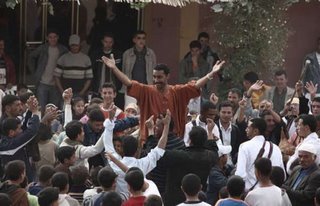
INDIELISBOA FILM FESTIVAL
By Jason Sanders

ASPEN SHORTSFEST
By Brandon Harris

TRIBECA FILM FESTIVAL
By Jason Guerrasio

AFI FILM FESTIVAL
By Justin Lowe

HAWAII INTERNATIONAL FILM FESTIVAL
By Jason Sanders

TOKYO INTERNATIONAL FILM FESTIVAL
By Nicholas Vroman

LOS ANGELES FILM FESTIVAL
By Justin Lowe

CINEVEGAS
By Jon Korn

NEWFEST
By Conor Fetting-Smith

TORINO INTERNATIONAL GAY AND LESBIAN FILM FESTIVAL
By Shari Roman

TRIBECA FILM FESTIVAL
By Jason Guerrasio

GEN ART FILM FESTIVAL
By Alicia Van Couvering

MIAMI INTERNATIONAL FILM FESTIVAL
By Rob Nelson

DUBAI INTERNATIONAL FILM FESTIVAL
By Jason Guerrasio

ROME FILM FEST
By Caveh Zahedi

VANCOUVER INTERNATIONAL FILM FESTIVAL
By Rob Nelson

NEW YORK FILM FESTIVAL
By Erica Abeel

LOS ANGELES FILM FESTIVAL
By Justin Lowe

SAN FRANCISCO INTERNATIONAL FILM FESTIVAL
By Justin Lowe

SARASOTA FILM FESTIVAL
By Mark Rabinowitz

2007 NEW DIRECTORS/NEW FILMS
By Erica Abeel

PALM SPRINGS INTERNATIONAL FILM FESTIVAL
By Howard Feinstein


ARCHIVES

Current Posts
January 2007
February 2007
April 2007
May 2007
July 2007
October 2007
November 2007
January 2008
March 2008
April 2008
July 2008
September 2008
November 2008
January 2009
May 2009
June 2009
August 2009
September 2009
October 2009

blog | back issues | buy print subscription | buy digital subscription | subscription FAQ | advertise | contact
© 2009 Filmmaker Magazine