LOAD & PLAY  Tuesday, December 8, 2009
THE COVE
 "A dolphin's smile is nature's greatest deception." That's a line given in the beginning of Louie Psihoyos's gripping documentary, The Cove. And the man who says it, Ric O'Barry, is one of the most intriguing subjects in a doc you'll see this year. Ric O'Barry captured and trained the five female dolphins that played Flipper in the 1960s TV series. He lived twenty steps from them for close to ten years. But everything changed when Cathy, the lead Flipper, committed suicide in O'Barry's arms. The next day he was arrested for trying to free a dolphin from a marina and has spent the last 35 years trying to destroy the industry that he helped create. Japan has brought the greatest harm to dolphins and Taiji, Japan is its torture room. This small, unobtrusive town -- that if you glance at it looks like the biggest fan of the mammal -- is, as O'Barry puts it, "the little town with a really big secret." In a tiny lagoon in the town dolphin slaughtering takes place daily. Caught and dragged into the lagoon by fisherman, the dolphins are paraded for trainers looking for bottlenose dolphins -- looking for Flipper. The ones who aren't sold are killed for their meat. 23,000 dolphins are destroyed yearly for their meat, which in Japan is given out in schools, though they are incredibly high in mercury. O'Barry has spent decades trying to expose what's going on in Taiji. He's brought out the BBC, London Times, Time Magazine and countless activists, but all have come away empty handed. Bullied and annoyed by fisherman until they are forced to leave, there is still no proof, only speculation of what goes on in the cove. Psihoyos, who along with being a renowned photographer, created a nonprofit foundation, the Oceanic Preservation Society,met O'Barry and after hearing his story decided to take on the challenge of revealing what really goes on in Taiji. Enlisting a motley crew of thrill seekers and activists, Psihoyos and his team head off to Taiji to discover the truth. Using high tech gadgets, underwater cameras and covert cameras made to look like rocks and bird's nets, we follow the team's mission. Difficult to watch at times, it is visuals everyone should see and will hopefully help the survival of one of the sea's most fascinating creatures. Lionsgate releases the DVD today. Features include a commentary with Psihoyos and producer Fisher Stevens. A documentary on the hazards of mercury in fish and a behind the scenes look at how the covert cameras were created. Read our interview with Louie Psihoyos.Labels: load play
# posted by Jason Guerrasio @ 12/08/2009 12:06:00 AM
Monday, November 23, 2009
GOMORRAH
 Matteo Garrone’s masterwork Gomorrah is notable for what it is not. There is no macho camaraderie amongst thugs in social clubs as seen on The Sopranos. And there is nothing romantic about ‘the life’ of mobsters. While American audiences have been accustomed to the portrayal of gangsters having facile access to money, power and women with seeming impunity, they will be treated to a coarser, realistic depiction of the Naples crime syndicate known as the Camorra. Based on the eponymously named novel by Roberto Saviano, Garrone’s film bears more than a passing resemblance to socio-economic and cultural milieu of Luis Bunuel’s Los Olvidados and Fernando Meirelles’s City of God, where squalor, death and hopelessness reign with no end in sight. Five non-interrelated storylines take place in a colorless, prison-like Neapolitan housing project, itself a fiefdom of rival Camorra gangs. There is Pasquale, the fashion tailor (Salvatore Cantalupo), two young wannabes, Ciro and Marco (Ciro Petrone and Marco Macor), Franco, the waste management specialist (Toni Servillo), Don Ciro, the mob-bagman (Gianfelice Imparato) and Toto, the small associate (Salvatore Abruzzese). Each attempts to get on with their lives, knowing full well, there is no escaping from the tentacles of the Camorra, which influences every single one of their choices. None of the characters will have serendipitous encounters with each other and none can run to the government, which is noticeably absent, as is perhaps God in this part of the world. Each accepts as a fact of life, the Camorra as omnipresent and omnipotent. Either work with evil or be eliminated. Gomorrah focuses on the attempts of the victims to do what they must despite it all. Wider American audiences may not take to the lack of Hollywood flash in the film, but it will give them pause to think. They will think about the social conditions in which so many people live and shame the government into taking decisive action against organized crime. The most fascinating of the DVD extras is the 60-minute segment entitled Five Stories, providing the behind scenes making of documentary for each of the five storylines. The doc’s camera sits back and records Garrone’s interaction with the cast, many of whom come from the slums depicted in the movie. Behind the camera, we can see Garrone giving many liberties to his actors to improvise both their dialogue and movements and to go with what feels real. Director Garrone cast for people deeply rooted to Naples and even according to their physiological appearances of the parts they played. But it is in casting non-professional actors, some of whom have more than a passing knowledge of organized crime, that gives Gomorrah its power. Take for example the most interesting segment of the Five Stories involving Ciro and Marco, the two young wannabes. They aspire to be like Tony Montana, naively thinking they can be independent of the Camorra and end up stealing a large cache of automatic weapons from one of the local crime factions. The man, from whom they steal, is in fact a real Camorra gangster, played by the boorish Giovanni Venosa, who would later be arrested after the film wrapped. The director reassures Ciro and Marco that the mobsters for the penultimate shot of the film won’t really hurt them. After all, these aren’t just actors. Other extras include various deleted scenes along with interviews with author Roberto Saviano describing his first hand reporting experiences while living in the northern ghettos of Naples where the stories took place. Now he lives in the Witness Protection Program for having named names. One can only hope someone will take notice of this tragedy. Gomorrah will be released by Criterion Collection this week.Labels: load play
# posted by Rupert Chiarella @ 11/23/2009 08:00:00 PM
THE NEW YEAR PARADE
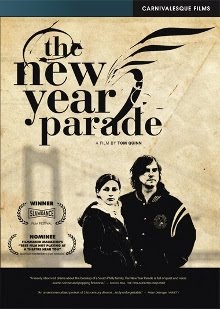
 For his debut feature Tom Quinn took the hours of footage he shot of family and friends talking about dealing with divorce for a psych class as inspiration to create a touching story that meshes domestic issues with the culture of his native South Philadelphia. After placing 13th in Philadelphia's Mummers Parade, which is held every New Year's Day where local clubs in elaborate costumes compete for prizes and bragging rights, the South Philadelphia String Band are stuck in a rut as their losing ways have gone on for decades now. For Mike (Andrew Conway) and his son Jack (Greg Lyons) the pain doesn't subside when they head home. Mike and his wife Lisa (MaryAnn McDonald) are separated and Jack and his younger sister Kat (Jennifer Welsh) are just starting to feel the tear in the family. With a gritty handheld look, shot by Quinn, and great performances by Lyons and Welsh, the film follows a year in the life of the family as they struggle to stay together and Mike and Jack try to bring the string band back to its prominence. Quinn uses real Mummers and engrosses us in their community to create an authentic piece of regional filmmaking. Along with directing and shooting, Quinn, a 25 New Faces alumni, also wrote the screenplay, edited, and produced the film (along with Steve Beal). Winner of the Grand Prize award at Slamdance in 2008, The New Year Parade was also nominated for our "Best Film Not Playing at a Theater Near You" award at the Gotham Independent Film Awards the same year. Features include Quinn's interviews he conduced of people who have gone through their parents getting divorced, a making-of piece, and a history of the South Philadelphia String Band and the Mummers. Carnivalesque Films releases the DVD this week.Labels: load play
# posted by Jason Guerrasio @ 11/23/2009 05:00:00 PM
Tuesday, November 10, 2009
BALLAST
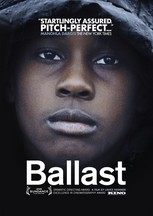
 As he did in making his debut feature Ballast, Lance Hammer ignored all the conventional rules when he released the film last year. Originally slated to be opened by IFC Films, Hammer -- known best for his work in the visual effects department of Hollywood pictures like the Batman films of the Joel Schumacher era -- rethought his decision and came to the conclusion that it would be better to self distribute the film. Though the attention of his dramatic move led to more ink about the self-distribution/DIY model than any other time in recent memory, it's still hard to determine if it was the best move for Ballast (and this isn't the proper forum to explore that). The film received instant respect from critics when it played at Sundance in 2008 and walked away with the awards for Director and Cinematography (for the splendid handheld 35mm camera work of d.p. Lol Crawley). It highlighted a different type of Sundance film as Hammer wasn't looking for a meal ticket to bigger-budgeted filmmaking. With no score, using untrained or unknown actors and a European aesthetic influenced by the works of the Dardenne brothers and Robert Bresson, in some ways Ballast is a blueprint of the recession-era filmmaking we're currently in -- a film that can find attention without the backing of the now extinct mini-major distributor. Exploring the splintered relationship of a family living in the Mississippi Delta, we come into the story at the family's lowest point. Twin brothers, Lawrence (Michael J. Smith Sr.) and Darrius, are in a rut and Darrius has committed suicide. Lawrence is soon to follow but a neighbor, who has found Darrius, hears the gunshot Lawrence has inflicted on himself and gets him help. Lawrence awakens ten days later to return home alone to a two house property he and his brother shared. Hammer then moves his attention to Darrius's widow Marlee (Tarra Riggs) and her son James (JimMyron Ross). We learn Marlee was into drugs and might have drove Darrius away. She's now trying to repair her life while in the mean time James is left to fend for himself, spending his time playing video games and hanging with drug dealers. Darrius's death forces the three to come back together and through time the relationship begins to mend. But Hammer doesn't spoon feed sappy moments or heartfelt apologies. Instead the film (which warrants multiple viewings not just to marvel at the gorgeous visuals, but catch the plot points) gives a tone and mood similar to the season in the Delta. Dreary and cold with the hope of brighter days to come. Disc includes an essay from Amy Taubin, and a breakdown of the improvisations of some of the key scenes in the film. Sadly, there isn't a director commentary or feature on the film's cinematography. Hopefully that will come in a future version. Kino releases the DVD today.Subscribe now for a digital issue to read our interview with Hammer in the Fall 2008 issue.Labels: load play
# posted by Jason Guerrasio @ 11/10/2009 09:00:00 AM
Monday, October 26, 2009
IL DIVO
 With so much press given to Matteo Garrone's Gomorrah in '08 and '09 (and all of it for good reason) it's easy to forget fellow Italian director Paolo Sorrentino's Il Divo also came out around the same time in both Italy and the U.S. Though not as chilling and much more stylistic and flashy than Garrone's mafioso epic, both films display the diabolical trifecta of politics, religion and organized crime that has plagued Italy for decades. Il Divo explores the end of the reign of Italian politician Giulio Andreotti (better known in his home papers as the Prince of Darkness, the Black Pope, the Fox, the Sphinx, the Hunchback and Il Divo). A slouchy, bespectacled hermit, he doesn't look like a man who was one of the most powerful politicians in his country, but as the head of the Christian Democratic Party his acts led to the murders of high-level bankers, judges and journalists for decades (he was investigated for his role in the 1979 murder of a journalist who published allegations that Andreotti had ties to the Mafia and the kidnapping of Prime Minister of Italy Aldo Moro. A court acquitted him in 1999). Like Gomorrah, if you have knowledge of the events or the main players you will appreciate what's going on a bit more, but Sorrentino does a good job of giving a cliff notes of the issues and events surrounding the 2003 trail accusing Andreotti of having corruption ties to the Vatican and the Mafia -- dubbed the "Trial of the Century" -- which inevitably destroyed the Christian Democratic Party. A prime minister three different times in Italy, and later given the title "Senator of life" (a position he still holds to this day at 90), actor Toni Servillo (yes, he starred in Gommorah) plays Andreotti in a tour-de-force performance. Most of the film looks inside the lavish lifestyle Andreotti leads, though he is anything but. Rarely showing emotion (outside of a twirling of his fingers), Sorrentino and Servillo depict Andreotti as Italy's Richard Nixon. With a powerful score and top notch camera work, Sorrentino creates a new form of bio pic that's hip and engaging. DVD is out this week through MPI Home Video. Read our interview with Sorrentino here. Labels: load play
# posted by Jason Guerrasio @ 10/26/2009 11:12:00 PM
Friday, August 21, 2009
HUSBANDS
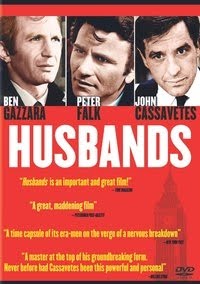
 If you never saw Husbands during its brief release in 1970 through Columbia (mostly misunderstood by critics, audiences and even the studio that released it) or bought it on VHS, you've probably only heard of it through discussions people have of John Cassavetes' work or books written on the actor/director. If you've read about the film, like I have, you're probably excited for this release, as for the first time, Husbands is being released close to how Cassavetes wanted it to be seen. It is one of my favorite chapters in Ray Carney's seminal book on Cassavetes' life and work, Cassavetes on Cassavetes (Faber and Faber). In the book Cassavetes describes Husbands as the "...craziest, most painful project that I've ever been involved in." At the time Cassavetes began thinking about making Husbands it sounds like it was motivated by money. He was still in post on Faces and had huge debts to pay off so he decided to make a film that would be extremely attractive to a studio. He asked his famous friends Lee Marvin and Anthony Quinn to play opposite him in a story about three guys who mourn the loss of their best friend by going on a alcohol fueled trip around the world. Unfortunately, when the three men met to work out the story and characters Marvin and Quinn did not get along, putting Cassavetes back to square one. Having always wanted to work with Peter Falk and Ben Gazzara, both highly touted at the time, he approached them for the roles and though he didn't have money or a studio for the film yet, showing them Faces sold the actors that they wanted to make a film with Cassavetes. This would be the start of a long collaboration for the two actors in Cassavetes films as Falk would star later in A Woman Under The Influence and Big Trouble and Gazzara in The Killing of a Chinese Bookie and Opening Night. Finding money through an Italian financier (there was only enough money for Cassavetes to shoot in New York and London, so the 'round-the-world premise got scaled down to the three husbands gallivanting across the pond for the second half of the film), Husbands finally had a cast, a greenlght and Cassavetes was riding high on the praise for Faces, which was released around the same time (1968). Writing the script for Husbands through rehearsals Cassavetes, Falk and Gazzara did a few months before shooting, like all his films Cassavetes was looking to capture true emotion and eliminate all cinema cliches that he thought plagued Hollywood. Many at the time thought the three actors were just goofing around while the cameras rolled, building the Cassavetes mystique that all his films were heavily improvised. But, as Gazarra states in the featurette on the disc, there were only a few times when they went off page. The singing contest scene, which is one of Cassavetes' most entertaining long scenes out of all his films, was made up on the spot after Cassavetes threw away the original scene of the three husbands sitting at a bar discussing the meaning of life. There are moments when the actors would adlib, but even that quickly crafted scene had a structure that Cassavetes stressed everyone to follow. Like most of his dealings with studios, this one would be filled with confrontation. Cassavetes and Columbia fought throughout post on the length of the film. In fact, the cleverly created brief opening title card was done through necessity to save every minute for the film. At one point Cassavetes' preferred cut was running at 225 minutes, but got it down to around two-and-a-half-hours for the release. Columbia still wasn't satisfied though, so during the film's release in 1970 it cut 11 minutes out of the prints, though it was in violation of Cassavetes' contract he didn't have the strength or money to fight it. The 11 minutes (the last nine minutes of the singing contest scene and the first two minutes of the vomit scene) are in the film for this release for the first time since Cassavetes showed around his own cut of the film to promote the theatrical release. The vomit scene is another thing that Colombia (and even some of Cassavetes' crew) hated. It follows the singing contest at the bar where we find Falk and Cassavetes hunched over toilets. You don't see anything, but there are loud vomit and farting sounds throughout the scene. Cassavetes addresses the vomit scene and its meaning in Cassavetes on Cassavetes. A lot of people got uptight about the scene in which Peter and I vomit in the men's room of a bar. The characters weren't vomiting just because they happened to be drunk; they got drunk so they could vomit -- vomit for their dead friend. Some people may find that disgusting, but that's their problem. When somebody dies, I want to feel something. I want to be so upset that I could cry, throw up, feel the loss deeply. If that offends some people, then let them be offended. I was watching television one night and the news come on and it said 500 people in Cleveland got up and left the theater, en masse, and the name of the picture was Husbands. [Laughs] I could only laugh at that because I thought, "Jesus, what did that contain that could affect them so?!" I'm such an optimist. I think, isn't that marvelous that you could make a picture that can scare 500 people out of the theater without having a moment of violence, a moment of anything that would be any way near controversial. Just the idea that people behaving in a way that is not acceptable can take 500 people and throw them out of the theater! Now, I've been bored with pictures, so if it's a boring picture I just sit there and at a certain point I say, "Let's go," but I won't get up and leave with 500 people because it's boring, so it must be doing something else to an audience. Like anything Cassavetes made there was always drama behind the scenes. But what he's left behind is an amazing examination of human interaction and with Husbands we see his take on friendship and the trappings of marriage. The words that appear in the opening title card read "A comedy about life, death and freedom" and regardless if you agree with the husbands' actions in the film or not you have to commend what Cassavetes delivered through a studio, and with its release opening the door for other unconventional titles to come out of Hollywood throughout the next decade. Disc also includes a featurette on the making of Husbands and commentary by author Marshall Fine. You can purchase here. Labels: load play
# posted by Jason Guerrasio @ 8/21/2009 01:00:00 AM
Monday, August 10, 2009
THE GOODTIMESKID
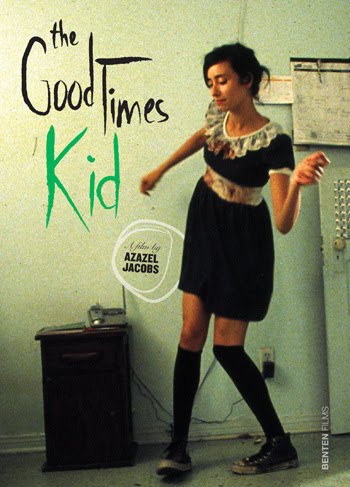
 Before there was Momma's Man there was The GoodTimesKid. In Azazel Jacobs's second feature you can see his style beginning to take form, meshing a punk-rock attitude with cinema influences as wide ranging from Chaplin to Jarmusch. In The GoodTimesKid Jacobs and Drama/Mex director Gerardo Naranjo both play men named Rodolfo Cano. Both men learns of the other when a congratulation letter of enlistment in the Army is sent to the wrong Rodolfo (Naranjo), leading to the other getting drunk and into fights while Rodolfo II gets better acquainted with Rodolfo I's (Jacobs) girlfriend, Diaz (Sara Diaz). Spanning 24 hours in Los Angeles' Echo Park, the film isn't as much a commentary on war as it is a funny look at loneliness and the hunger to find companionship in the world. Jacobs tells the story through small spurts of dialogue while Naranjo's blank looks matched with Jacobs' destructive tendencies make for subtle comedic moments. Remastered beautifully by Benten Films, the disc also inlcudes commentary with Jacobs, Naranjo and Diaz, deleted scenes, Jacobs' short Let's Get Started, his father, Ken Jacobs' short The Whirled, which stars a very young Jack Smith and an essay by critic Glenn Kenny. Click here to buy the DVD. Labels: load play
# posted by Jason Guerrasio @ 8/10/2009 11:42:00 PM
Tuesday, July 28, 2009
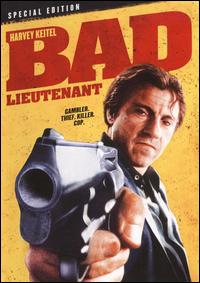
BAD LIEUTENANT: SPECIAL EDITION
 When a film is labeled controversial on its release, often times with the passage of time things that made it risqué become tamer, leaving the story less effective. Abel Ferrara's Bad Lieutenant is not one of those films. 17 years after being released, Ferrara's disturbing look at a dirty cop (played by Harvey Keitel in one of his most powerful performances) running rampant on the streets of New York City is still as gritty, horrifying and powerful as when it premiered at the Toronto International Film Festival in 1992. Receiving a much needed special edition, out this week through Lions Gate, the film has grown in popularity through the years, as a new generation of filmmakers and film lovers, too young to have seen the film when it first came out, have embraced its honesty and amazing, no-holds-barred filmmaking. Written by Ferrara and actress Zoe Lund (who stars in the film), the film examines the mortality of man and how power can be one of the most intoxicating vices. But it also explores a New York that no longer exists, as Ferrara calls it in the disc's commentary, "a cowboy, shoot 'em up time." Guided through the late night New York City streets by LT (Keitel), dazed and confused most of the time, Ferrara's use of sports talk show host "Mad Dog" Russo in the opening credits sets a feel that's as tense and unsettling as the Dog's patented rambling, high-pitched voice. The film's plot is very basic. LT is on a big case trying to solve who rapped a nun in Spanish Harlem while having a huge debt over his head from a bookie on the Mets/Dodgers League Championship Series (a fictitious event). But the plot isn't what keeps you glued to the screen. It's Keitel's tour-de-force performance in which he portrays the most despicable anti-hero ever to be put on screen. (In the documentary special feature it notes that Christopher Walken was offered the role of LT first, but quickly bowed out stating he could never play this kind of part.) Like Ferrara's King of New York, some of Bad Lieutenant's best scenes are the ones where nothing is said. Keitel is able to convey everything you need to know in a scene through a blood shot-eyed stare, or stumble down a shady stairwell or bass thumping night club. "It's what you don't write that counts," adds Ferrara in the commentary. But when there is dialogue it's stirring. Like Lund's harrowing line after shooting up: "Vampires are lucky, they can feed on others, we gotta eat away on ourselves." The commentary alone is definitely worth the purchase. Listening to Ferrara laugh hysterically at the most retched moments of the film is twistingly funny (the film's d.p., Ken Kelsch, also is with Ferrara on the commentary). And Ferrara shares entertaining stories, like getting Mickey Rourke to let them shoot some of the scenes at his suite at the Mayflower Hotel and the time Ferrara was offered to make a sequel to the film with the main character being one of LT's kids from the original film, now in his 20s (no, he never mentions Werner Herzog's remake). And if you ever wonder how they were able to get a crowd to gather around LT's car after being shot in the final scene, Ferrara says he basically yelled out "Hey, I think someone got shot" and had five extras look into the car, everyone else followed. Disc is available here. Labels: load play
# posted by Jason Guerrasio @ 7/28/2009 09:00:00 AM
Tuesday, July 21, 2009
AUDIENCE OF ONE
 Hands down one of my favorite films of 2007 is this funny yet poignant documentary about a driven San Francisco Pentecostal minister who wants to make films. Though I will admit I was a little late on the One bandwagon (I didn't see the film until we started screening titles to consider for that year's Best Film Not Playing at a Theater Near You for the Gotham Awards, which unfortunately, because of the talented crop of titles that year, wasn't nominated for the award), Michael Jacobs's film found a lot of success on the festival circuit, winning awards at SXSW, Silverdocs and screening at New Directors/New Films. Pastor Richard Gazowsky saw his first film at 40. Soon after, he had a vision that he was to make a film company. In fact, he says he was told by God to "Be the Rolls-Royce of filmmaking." Through donations from his congregation (which totaled in the hundreds of thousands), Gazowsky created the company WYSIWYG (What You See Is What You Get) and began production on their first film, Gravity: The Shadow of Joseph, which the film's producer describes as " Star Wars meets The Ten Commandments." Jacobs then follows Garzowsky's rag-tag group of unqualified cast and crew (all non union, found on Craigslist or from the church) as they move production to Italy to shoot the film. Soon the naivete of the people behind the production begins to become more apparent, revealing a behind the scenes look of a Christian sci-fi epic that turns into something similar to Lost in La Mancha. Though Jacobs highlights a lot of absurdity behind the making of Gravity (Gazowsky's hilarious explanation of a bar scene, shooting the film on 65mm, the mystery investors in Germany, to only name a few), he and editor Kyle Henry never look down on Gazowsky and his team, and instead stays as objective as possible, which is the film's true testament. The disc includes a great commentary by Jacobs, deleted scenes and the only scenes that have ever been shot of Gravity. To purchase the film, click here. Labels: load play
# posted by Jason Guerrasio @ 7/21/2009 12:01:00 AM

| 





 See the VOD Calendar →