 Leading up to the Oscars on Feb. 22, we will be highlighting the nominated films that have appeared in the magazine or on the Website in the last year. Scott Macaulay interviewed
 Frozen River
writer-director Courtney Hunt for our Summer '08 issue. The film's lead, Melissa Leo, was also interviewed in a sidebar to the piece by Jason Guerrasio. Frozen River
is nominated for Best Actress (Melissa Leo) and Best Screenplay (Courtney Hunt).At Sundance this past year, two films in the Dramatic Competition especially stood out: Lance Hammer’s Ballast and Courtney Hunt’s Frozen River. It’s easy to mention the films in the same breath, because both are examples of regional American independent cinema attuned to the economic realities of life in this country today. They each feature characters mainstream Hollywood films rarely notice: single parents hovering just at or most often below the poverty line. People struggling to contain a justified depression in order to help a neighbor or keep food on their family’s plates.
But beyond these similarities, these two excellent films could not be more different. Ballast is loosely structured and its story points are small and indicative of the randomness of life. A subplot in which an armed child is threatened by local teen thugs is allowed to gently dissipate while the film’s emotional climax occurs when one character learns to use a credit card machine. Clearly influenced by the Dardenne Brothers, Ballast finds truth in the people and the moments movies often ignore.
Frozen River also begins by introducing us to the kind of working class character Hollywood has largely forsaken, but rather than remain intimate in its ambitions, the film steadily becomes a tersely executed, plot-driven thriller; it’s got the kind of classic Hollywood storytelling that even the studios rarely pull off anymore. And in addition to its indelible portrait of a blue-collar mom, the film makes complicated and resonant points about this country’s current debate around immigration and the nature of the American character.
Set in upstate New York near the border of Canada, Frozen River introduces us to Ray (Melissa Leo), a single mother who works at a local retailer and tries to save enough of her minimum wage to feed her young son and daughter. When her economic situation becomes dire — and she’s about to lose the sizable down payment she’s put down on a new prefab home — Ray joins a Mohawk Indian woman, Lila (Misty Upham), in her illegal immigrant smuggling operation, ferrying in the trunk of her car poor Chinese workers over the icy border to Canada. The smuggling trips go well for a short while but soon, of course, things spin out of control…. Frozen River, which will be released by Sony Classics this summer, is the winner of Sundance’s Grand Jury Prize.
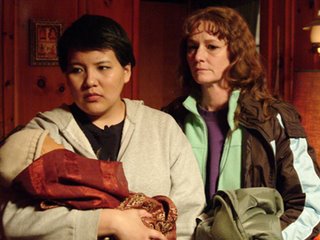
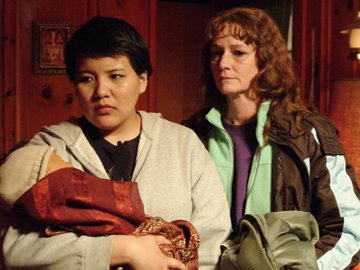
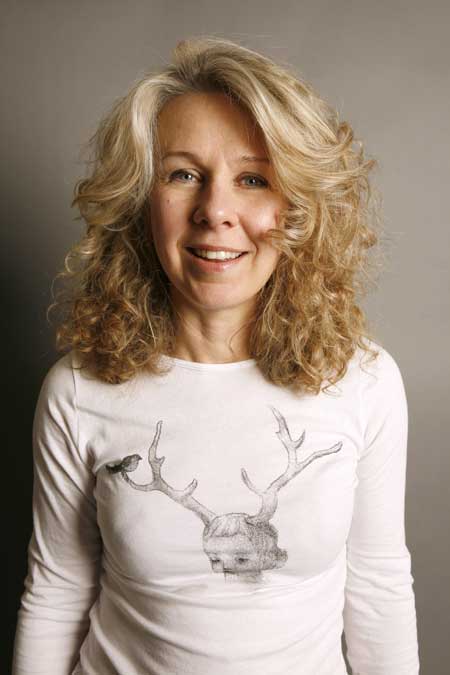
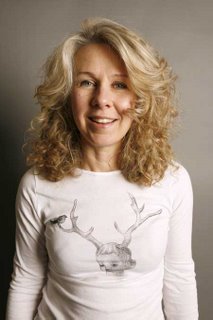 TOP OF PAGE: MISTY UPHAM (LEFT) AND MELISSA LEO IN FROZEN RIVER. PHOTO BY: JORY SUTTON. ABOVE: FROZEN RIVER WRITER-DIRECTOR COURTNEY HUNT. PHOTO BY HENNY GARFUNKEL/RETNA LTD.
 It’s funny, because Tarantino said that too. I never thought of it that way. I just think if a story is good enough to compel people to watch it, then it’s a good movie. And so when I’m writing, I work on structuring things so that you have got to keep turning the page, or you’ve got to keep sitting there and seeing what happens. You have to get invested. But I didn’t think of it as a thriller.
You have all these thriller elements. There’s danger throughout, and you have a car chase. And the great thing about the car chase is that because it’s on ice, it’s a slow speed car chase, which is a fantastic twist on the way car chases are usually handled. Well, I hate car chases in movies deeply, and I wouldn’t have been any part of one if it hadn’t grown right out of that story. But that clumsiness of how they aren’t moving very fast made it okay.
When did you begin the first incarnation of Frozen River? I had an idea when I was graduating from Columbia Film School — I wanted to do a story where women were really active, where they were
doing stuff. Not relationship stuff, just stuff in the world.
Acting. My husband is from extreme North Country, which is north of Albany. I learned from him about this Indian tribe, the Mohawks, and that this [smuggling] went on. I met some women smugglers who were at that time smuggling cigarettes across the river. It was simply a business to them. They told me about some of their adventures, and I thought, why would [these women] do this? I talked to a few [producers and executives] about it right after Columbia. I was like, “I’ve got this smuggling story.” And they were like, “What are they smuggling?” “Cigarettes.” And they were so not into it. Then I wrote this other script but it didn’t really work. Remember how after 9/11 there was this whole year of [questioning whether] art can happen anymore. Well, I learned that [the Mohawk women] were then actually smuggling immigrants, and I thought, “Hmm, this really is relevant.” So those characters, especially Ray, who I tried to kill off and to put in a drawer, just kind of came back up. I was writing something one day and I just started writing her point of view, and that became the short [film of
Frozen River]. After [the short] went to the New York Film Festival, I thought, “Okay, this thing has some legs, let’s fill it out.”
The short was a success on the festival circuit? Well, it made a big splash, but it was kind of an iffy short in my opinion. I mean, it played by most of the rules.
How helpful was the short in fund-raising for your feature? Being in the New York Film Festival made people pay attention, but my husband and I still couldn’t get anywhere with [the feature script]. I shopped it all over the place. Melissa [Leo] and Misty [Upham] were on board from the beginning, and any big place we went to immediately wanted us to get bigger names, but that was just not what this story needed. I’d say, “You help me find somebody who is better and I’ll lose them, but there’s nobody better than these two.” Finally my husband said, “How hard can it be to write a prospectus?” So we did and took it to these investors, people we knew or knew of, and we found four people. And obviously [because of the short] they knew that I knew what to do behind the camera, could tell a story and that the characters were engaging.
These were not film investors? No.
And then in terms of deciding what scale to make the film, I don’t know the budget… Teeny.
But there’s probably very different ranges it could have been made for depending on who you were making it with. Exactly.
So how much of what you said you were going to do did you actually do? In other words, how much did your production match the prospectus? Pretty much exactly what we said we were going to do we did. We got it in the can pretty much exactly [on budget], and then there have been more post expenses. They’re a drag. They’re still going on. But yeah, we did it for what we said we could do it for, which was impossible, but we could get away with it with this story and setting. It’s gritty — it didn’t have to be beautiful — and the weather was forgiven when it wouldn’t cooperate. We shot in HD, which was a savings, and we had some people who were not as experienced but they worked very, very hard. We went to a place that wasn’t at all film savvy and [the locals] were into it. It was a story about their region and everybody knew this kind of stuff goes on, so everyone had a story of their own to tell. It was fun — the whole town was involved, and that’s what you want. It was great. I mean, it was miserable, but it was great.
How did you find your crew? They all came from a little place called Brooklyn. [laughs] My d.p. lives in Brooklyn, one of my producers is in Brooklyn. It was a New York crew, all the grips and gaffers. They were very good, and very young. For some of them it was just their fourth or fifth film.
How did you find Melissa Leo? I met her at this little film festival in Chatham, New York, called FilmColumbia. [Focus Features president] James Schamus will often show whatever he’s got upcoming, and he brought
21 Grams. And she came — she’s really good in that movie. I met her at the party afterwards. I’m not much of a schmoozer, but there she was with her big hair and I sort of cornered her. She was really nice, and then I sent her a short and another script. Then my husband said, “Courtney, what about the smuggling thing?” I was like, “Oh my God, you’re right!” So I sent her that short and that’s kind of how this happened.
Earlier you said you wanted to make a movie where women are active and out in the world. Is that how you’d pitch the movie to people, by referencing that desire? You hear these things at film school about how women’s movies tend to be talky, sort of like
Fried Green Tomatoes. I so resented that. I mean, I was raised by a single mother, and she was not talking — she was doing stuff all the time just to get by, but somehow that stuff is not considered “action” or interesting. So to hear it called a thriller now is really gratifying because it just means that something happens in it that grips you which life often does for men and women.
Your screenplay is rock hard. There’s no flab, the beats are precise and there’s purposeful foreshadowing. You know when they drive past that police car two times and aren’t caught that they’re not going to sail past the third time. All the secondary characters have their very specific wants and needs. So what was your development process like? How did you arrive at such a classically structured screenplay? I went through three drafts. There were subplots and other things. I had to decide whether or not to see the husband. That was a big issue. In terms of the “threes,” rather than that being an invention, I think that’s a natural arc. Did I sit down and think, “Oh, they’ve got to go past this trooper three times?” No, but it naturally worked within the context of the story. You know what I did? I wrote everything I needed to write and then I took everything out. I just stripped the script down. I don’t like dialogue-y movies, and I didn’t think that witty, clever dialogue would really be believable. But I’m not sure how to really answer the question.
You just did. All I was really saying is that the movie seems precisely plotted and structured. One reason it seems that way is because we didn’t have any fucking money. And so it was like, get the story told and don’t waste time. There’s a lot of plot in a tiny movie. I didn’t have any throwaway scenes. You’ve got to understand what the hell is going on at the border, what the hell is going on with her husband, and who this other woman, the little kid and these random Mohawk characters floating around are. I didn’t have the luxury of going off in any kind of direction except what was happening with [Ray] and where she was going. And she’s kind of that way too, the character. She’s trying to get it done, and I was just trying to get it done.
And how about the ending? So much independent film explores concepts of the family. Breaking it apart and putting it back together again. I found your ending completely unexpected and realistic, while still being deeply satisfying on an emotional level. How long did it take you to find it — was that the ending from the beginning? Or was that the ending you found? I found that ending. I didn’t know [what the ending would be] for a long time so I just left it at bay. And when I got to that final hard character read for [Ray], that last one, it just bubbled right up. It sounds so ridiculous, but I really do listen to the characters’ voices, and the better I listen, the more they tell me. If I’m trying to control them, if I’m projecting myself onto them, you can tell because the writing stinks. But when I took this totally groovy approach and said, “Okay, what does Ray have to tell me today…?” If you really get in the habit as a writer of listening to what your characters say and honoring it even if it seems weird, then often the ending will grow right out of it. [The ending of
Frozen River] was almost a surprise to me, but it was sort of right there [in the logic of the story]. I did just let it literally bubble up.
How late in the process was this? Late! When I got closer to shooting, I felt like the pressure was on. I had taken people’s money, I promised to do the best I could to pay it back, and that meant telling the story economically and effectively in the least amount of scenes possible. I felt I had one chance to tell the truth of this character and I’d better not screw it up. So I really devoted myself in those last few tinkering rewrites to just getting in there, and if it felt like a false note, out. I let scenes fall out. There was a huge opening scene that never got shot because it was too expensive.
What was that scene? It was the whole backstory of Lila and when her husband goes through the ice. She’s pregnant and he’s gone in the ice and she’s trying to pull him out. It was big Hollywood. People would read it and they would just burst out laughing, like, “You’re insane!” Some people said to me, “Cut it off, you don’t need it. Nobody cares.” And that’s why you have very little of her backstory.
How much was Melissa involved in the creation of her character aside from simply portraying her? She is really exacting in a great way. She holds your feet to the fire on every motivation, every choice. If she doesn’t believe it, she’ll tell you. Luckily on this one she and I were on the same page. The thing about Melissa is, she only challenges you when she’s right. And she’s pretty much always right. She picks her battles and she picks them to win. If she wasn’t so right all the time, she’d be a pain, but she’s great.
And what about Misty? Misty is a different kind of actress. She’s a very gifted actress, a “one-take” actress. She just nails it. It was really annoying to Melissa. They’re a total odd couple. There’s such a stoic thing about [the character of] Lila, but Misty is not really like that at all. She’s really funny, and she’s a baby — she’s like 22.
She has that great quality that makes you almost think she’s a non-actress. She totally plays her character. Everyone assumes that she’s this little Native American girl we pulled in. But no, she’s actually a well-trained, very gifted actress. Shows that you can cast off the Internet.
You cast her off the Internet? I went to a Native American actor Web site and I looked at all the pictures, and I was like, “Hmm, does anybody actually look like a Native American instead of Shania Twain or something?” And she did. She had a gorgeous look. She looks [from the] Mohawk tribe. So I just called her up and she came, got off the plane and started acting [in the short] the next day. There was no audition.
Were you inspired by any other films while making Frozen River? Oh, yeah. Everyone is talking about the ’70s movies now. I was brought up on them, my mom and I would scrape together money to go to the movies. She was really great at taking me to every thing. I was not that popular a teenager so I spent a good deal of time in the movie theater. I saw every Bergman film. I saw Lina Wertmüller, I saw Arthur Penn,
Bonnie and Clyde. I love Paul Schrader. But in terms of this movie, I looked at Badlands. And of course I love
The Searchers. [
Frozen River] is set in a sort of border area, and I thought of it as a frontier, as, a little bit, the Wild West. I have a very traditional, Southern dad, and he really likes John Wayne. I told Melissa to watch John Wayne in
Rio Grande, to watch how he does absolutely nothing but gives up everything. He’ll do nothing and you’ll be in tears. Melissa tends to be much more expressive, so I was like, “You’re John Wayne — give us less.” So, yes, John Ford and John Wayne were very inspirational.
In this post 9/11 world, immigration and the border security are big issues. When you listen to the anti-immigration folk, they seem not just concerned with national security but with protecting a certain kind of “American identity” from outside influence. Your ending takes these issues head-on, but, at the same time, it feels subtle and nuanced and originating from character. How conscious were you about your film’s potential political message? When [I wrote the ending] I had to accept that “this is what you have and this is what the characters told you.” So was I going to stick with them or get in there [and change it]? I didn’t want to touch it, and then I thought, “Who is this going to offend?” And I didn’t even care. I don’t think we’re clear about immigration as a nation. The discussion is going on, it’s developing and this is part of the discussion. Is it dangerous to have people streaming over the border? Yes it is. But on the other hand, the large majority of those people coming in are coming with a good intent. So it’s very much your typical American debate. I didn’t set out to say anything about immigration, I’m just calling it like those characters see it. There is no overall agenda. I took myself out of it, because I’m much more a screamer, but they aren’t.
Was shooting HD your choice from the beginning? I felt okay about it because I knew I probably couldn’t afford film. What I was shooting is not so sumptuous that beautiful scenery was being lost. The camera was good — it only clammed up once — and we played fast and loose with lighting a lot. We weren’t so constrained as we would have been on film. And a lot of it’s at night, so that’s really great for HD. We had no dailies…
But you were shooting on tape, couldn’t you have just watched what you shot? We could have, but we didn’t want to because that was our original. So we’d only watch the tiniest bit, and we only got to see dailies the second week of the four-week shoot.
By then you were making dubs? Right. We finally started getting them. We just didn’t have the money to kind of make that happen [in the beginning]. Someday I want to shoot a movie where I get to see the dailies, although there was something great about not seeing them. You are out there, and you’d better get it right.
With HD the exteriors can sometimes be harsh. And they are, but for this film, that’s okay. HD is so bright, it seems like there’s white in everything, even the blacks. When I saw the film out for the first time, I got all upset because it was moodier, and it made it sadder. It’s a hard movie to watch. Most people don’t live in that world, and asking someone to sit there for 97 minutes and live in a trailer is tough. The brightness of HD had kind of lightened it a little bit. So when I first saw [the transfer], I thought, “Something’s wrong, it’s way too dark, they’ve messed it up.” And then I was like, “No, that’s just what film looks like [
laughs].” And as soon as I made that transition I was okay. It’s so rich, and black is black again, and it’s great.
Were there any surprises when you put the story together? I had a great editor, Kate Williams. We had no money for postproduction. I had pieces of the movie and the cassettes in my purse and just dumped it in her lap. We went to the Edit Center and that was unique because she got to see everything before we actually committed to each other. And I got to see that she was really good.
She was an instructor at the Edit Center? Yes.
So the students did your first cut at the Edit Center. How was that process? It’s interesting because you have people who are going to learn how to edit a movie, and they’re going to do it in six weeks. I spent five years on this project, my guts are all over the ring, and they want to play, as, of course, they should. But this was my heart and soul, and I was like, “You’re not dropping any scenes from my movie!” I think it was a good experience for them to see what really happens between a director and an editor, how that dynamic gets set up.
So what happened after you made that rough cut at the Edit Center? Kate came up to the country and brought her family. We set up the Final Cut Pro system in the garage, our kids played together, and we cut all of July and August. My friends have a little guesthouse, so she and [her husband] Matthew lived there with her boys.
It sounds kind of idyllic. It was pretty cool. Kate is incredibly dedicated. When she goes into [an edit], she goes all the way in and she does not come out until it is done. If the story is good and your actors are good, there’s a lot to work with and editing is really fun. I mean, there were a few things we had to finesse, but the basic dramatic structure was there to lay the film on. And she saw that, and so we just did it. It doesn’t really come through in the script as much as it actually comes through in the acting. The script is a little bit bare bones. I think when she read it at first she was kind of like, “Interesting, but what is this?” But when she saw the footage she was like, “Oh!”
Because of the performances? I think when you can see that river and how dangerous it is, it’s just much more powerful than it could ever have been written.
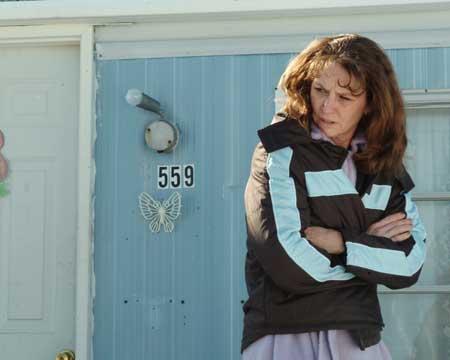
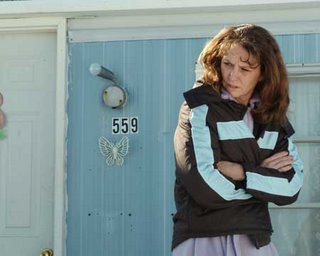 MELISSA LEO IN FROZEN RIVER. PHOTO BY JORY SUTTON.
A veteran character actor with more than 20 years of experience on the stage, television and big screen, Melissa Leo isn’t the type to get giddy over recognition, though she admits the reception she’s gotten for her performance as Ray Eddy in this year’s Sundance Grand Prize-winning film
Frozen River feels new. Having recently played scene-stealing roles opposite Benicio del Toro (
21 Grams) and Tommy Lee Jones (
The Three Burials of Melquiades Estrada), there hasn’t been much work since her four-year stint as Kay Howard on
Homicide: Life on the Street ended in 1997. But when Courtney Hunt approached her with the role of a struggling mom who takes drastic measures to give her kids a better life, Leo knew she had something special. Played with a tenacious desperation, Ray Eddy is a character audiences will not soon forget and whom Leo believes will never leave her.
Filmmaker sat down with Leo at the Sony Classics offices where she speaks candidly about her career and the role of the female actor in today’s moviemaking. —
Jason GuerrasioWhat attracted you to the Ray character? Let’s cut to the chase and make very, very clear that my entire career has been sort of taking whatever has been across the table. There was no picking or choosing. I remember after we shot the short Courtney asked me if I wanted to do a feature. I said, “Sure,” and for four years I would call that woman every seven, eight months and ask, “Are we making the movie?” There’s something I understood so deeply about Ray — the mothering and the desperation, which isn’t to say that I lived through Ray Eddy’s life myself but [I’ve been in] close enough proximity in different kinds of ways to feel that I had something no one else had to bring to the film — a willingness to be a person who has made some pretty bad judgments from time to time and makes no bones about it.
Courtney says in her interview that she wanted to make a film about women doing stuff, and that most films about women are talky relationship films. Do you think that’s true? Yeah — a lot of chatting with each other. Much more often we are “someones.” When I did
Homicide it became quite clear that everyone thought of Kay Howard as Danny’s partner. Well, I’m sorry, but
he was
her partner! She was the better cop — more experienced, a better person — but they wouldn’t write it that way. But I don’t like to engage in the conversation of, “Oh, no parts for women!” From the beginning of time there have been parts for women… but they used to have men play them. [
laughs] But women are a major part of the world so our stories are out there and every once in a while we get an opportunity to do something.
You played the character of Ray in Courtney’s previous short film. During the time you spent waiting for the feature, did you think about and work on the character? There have only been a couple of opportunities where the work is with me for some amount of time before I actually do it. More often it’s a remarkable handful of days and then we’re in and doing it. But with
Frozen River I had the script for some time. It’s not like I would pull it out all the time and write little notes, but there is something about a character being with you through years. [The character of] Kay Howard had that. One day I was Kay Howard and four years later she and I had both grown and changed. As an actor, that’s a fascinating thing to me. I call it filtering down. My actor’s tool is myself — I go through molecular restructuring so when the molecules of Ray Eddy are with me for years in one way or another, yeah, that’s some delicious work. Like when the costume designer brought me one pair of jeans after another to the point that I finally went to K-Mart with her and when I had Ray’s jeans on I knew it.
How is it to be on a successful TV show for four years and then when it ends have to go back out to find work? I could not get hired, not for anything. I couldn’t get hired to play police because they didn’t want that same policewoman, I couldn’t get hired to play victims because Kay Howard couldn’t be a victim. [
Homicide] really blocked me out of work, strangely enough. I loved the respect that I got from playing that part, but it didn’t help my career too much.
When Courtney looked for money for the feature she was often told that she needed bigger names to play the leads. Did that lurk at all in the back of your mind when you did this film? “I’m going to show these people what I can do." No, you carry a grudge like that and all it’s going to do is hurt yourself. [
long pause] I think
Frozen River aside, my industry is in pretty deep trouble because of that issue. There is something about “right casting” — not about how big the name is but about [an actor] being close to the character, or elevating it with [his or her] own experience and understanding. I can’t tell you the number of first-time filmmakers, people without a pot to piss in, saying, “Oh, no, we’re going to get ‘blah, blah, blah’ ” because then they can make their movie. Unfortunately “blah, blah, blah” is going to be a pain in the ass to work with, is going to bust their budget and make shooting more difficult because of their demands. And then there’s this really sweet independent filmmaking that is really about the project. Which isn’t to say that “blah, blah, blah” couldn’t play the part, but the necessity [of them playing it for financing reasons] is really dangerous for the industry.
How proud were you to see the attention that the film got at Sundance? Pride is not an easy emotion to come up in me, but yeah, I’m very, very proud of
Frozen River and what I brought to it. I know I made it a better film. It’s not because of me it’s a great film; it’s because of every single one of us who where there, Courtney Hunt, first and foremost. And her husband Donald Harwood, who raised the money, and every single one of those kids who froze their asses off with us and stayed in that dreadful little motel. It’s all on the screen, and that’s delicious moviemaking.
Labels: Web Exclusives
# posted by Jason Guerrasio @ 1/19/2009 03:44:00 PM
Comments (0)






 See the VOD Calendar →