Authors — Chuck Tryon
-
“Theatrical is Still the Event that Brands a Property for Decades of Downstream Consumption”: The Business of Media Distribution Author Jeff Ulin

Jeff Ulin, a former executive at Lucasfilm and Paramount, has spent a big chunk of his career thinking about one of the most vexing issues facing filmmakers and other media professionals today: the problem of media distribution. Ulin has recently revamped the first edition of his classic text, The Business of Media Distribution (published in 2009) with a second edition that addresses many of the radical changes to the media industries that have taken place since two significant events — the economic crash of 2008 and the widespread adoption of digital delivery tools — upset traditional models of distribution, changing […]
by Chuck Tryon on Nov 25, 2013 -
Cannes Film Festival 2013
For American independents, this year’s Cannes Film Festival felt like the end of an era, especially with the high-profile premiere of Steven Soderbergh’s final film, Behind the Candelabra, playing two decades after sex, lies, and videotape seemed to promise the emergence of a vital American independent film culture. These questions re-emerged not just because Soderbergh has announced that he is retiring from filmmaking, but also because he has been widely critical of a film industry that is increasingly focused on international blockbusters. But the events at this year’s Cannes also raised a number of questions about the role of the […]
by Chuck Tryon on Jul 18, 2013 -
Nebraska Star Bruce Dern on Alexander Payne and “the Dernsies”
This interview with Bruce Dern was originally published following the Cannes Film Festival, where Nebraska premiered. If you ever have the good fortune of getting a press pass that grants you access to a roundtable with a Hollywood star, there are few actors out there who could provide a better interview than Bruce Dern, who recently won a Best Actor award at Cannes for his performance in Alexander Payne’s comedic drama, Nebraska. A planned 20-minute roundtable with a few grizzled journalists turned into a half-hour sprawling monologue of memories and observations on movie production, gently flavored with imitations of Hollywood […]
by Chuck Tryon on May 26, 2013 -
Cannes 2013: Polanski’s Venus in Fur and Katrin Gebbe’s Tore Tanzt
My last day in Cannes brought about a number of mixed emotions: relief that the somewhat grueling schedule of waking up for early morning press screenings was coming to an end, disappointment that my time at the festival was over (and that I was shut out of the afternoon screening of Jim Jarmusch’s Only Lovers Left Alive, bringing unceremonious closure to my festival experience), and excitement that I have had the experience of attending a festival like Cannes where there is so much energy devoted to the idea of cinema. Two of the last films I saw at the festival, […]
by Chuck Tryon on May 25, 2013 -
Cannes 2013: Gray’s The Immigrant and Sorrentino’s The Great Beauty
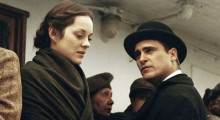
James Gray’s The Immigrant is Classic Hollywood melodrama, done incredibly well, a film that powerfully portrays the emotional journey of a Polish immigrant, Ewa (Marion Cotillard), and her pimp, Bruno (Joaquin Phoenix). It offers a powerful historical account of the connections between the mass immigration to the United States and the often desperate desire to achieve the American Dream, while also serving as a brutal reminder of the ways in which that dream was exploited by people who were willing to take advantage of new arrivals, many of whom were overwhelmed by their new home. Gray’s film borrows from classical […]
by Chuck Tryon on May 24, 2013 -
Cannes 2013: Payne’s Nebraska and Puenzo’s Wakolda
Alexander Payne’s Nebraska is an impressive achievement, a fresh and innovative take on that most familiar of genres, the road movie, one that takes conventions about the American heartland and turns them on their head. It’s also a story about a father and son learning to see and understand each other for the first time. The film opens with a shot of Woody Grant (Bruce Dern in what should be a performance that collects numerous awards) shuffling purposefully down a Billings, Montana, highway, his scraggly beard, limping gait and weathered face suggesting a man who has struggled for the little […]
by Chuck Tryon on May 23, 2013 -
Cannes 2013: Soderbergh’s Behind the Candelabra and Refn’s Only God Forgives
If Behind the Candelabra is Steven Soderbergh’s last film before he retires to pursue other interests, it serves as a fitting tribute to his fascination with celebrity and to his ability to depict complex emotional relationships in an accessible and engaging fashion. The film depicts the tumultuous relationship between Liberace (Michael Douglas) and his lover, Scott Thorson (Matt Damon), during the last few years of the pianist’s life, relating the story primarily from Scott’s perspective as he is welcomed to see behind Liberace’s widely recognized stage persona and to gain access to the person behind the image. When the film […]
by Chuck Tryon on May 22, 2013 -
Cannes 2013: Franco’s As I Lay Dying and Robichaud’s Sarah Prefers to Run
While I was in graduate school, many years ago, I wrote a master’s thesis on William Faulkner’s As I Lay Dying and have always loved the novel’s rich layering of the multiple, fragmentary points-of-view. Faulkner used to this technique — which he once described as “thirteen ways of looking at a blackbird” — to depict the Bundren family’s mock epic journey from their little hamlet to the county seat of Jefferson, where they have promised to bury the family’s matriarch, Addie. Because of my knowledge of the novel, I approached James Franco’s adaptation with a great deal of trepidation. Add […]
by Chuck Tryon on May 21, 2013 -
Cannes 2013: Kore-eda’s Like Father, Like Son and Miike’s Shield of Straw
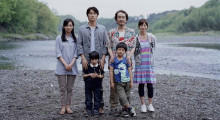
Hirakazu Kore-eda’s Like Father, Like Son engages with questions of family and identity, exploring what it means to be a father, using a plot device in which children from two different families are switched at birth, a detail that is only discovered when the sons are about to enroll in school. The film’s primary point of identification is Ryota, a young father and ambitious businessman who strives to provide for his family and also to ensure that his son will have every opportunity for success. This desire for success is conveyed from the very opening shot, in which Ryota’s son, […]
by Chuck Tryon on May 21, 2013 -
Cannes 2013: Farhadi’s The Past and Desplechin’s Jimmy P: Psychotherapy of a Plains Indian
Given that James Franco’s adaptation of William Faulkner’s As I Lay Dying will be playing at this year’s Cannes, it seems appropriate to recall one of the novelist’s most famous quotations when thinking about two of the festival’s more memorable films. Reflecting on the conflicts over race and national identity that tore apart the deep south where he lived, Faulkner wrote in Requiem for a Nun, “the past isn’t dead, it isn’t even past.” This persistence of the past — how it can haunt us in myriad ways — is central to two of the more powerful films at this […]
by Chuck Tryon on May 20, 2013