Cheryl Wang
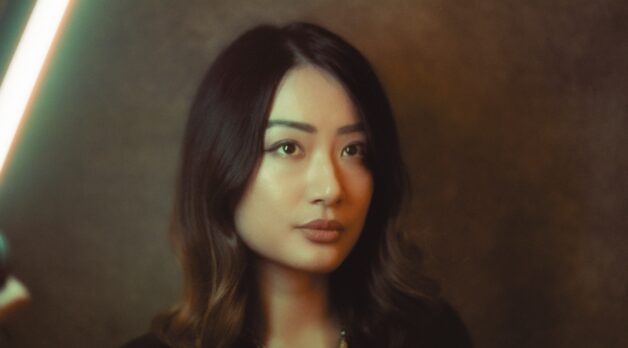 Cheryl Wang

After moving from her birthplace of Huainan, China, a small coal-mining town, to Shanghai for college, now-rising L.A.-based music supervisor Cheryl Wang studied corporate finance and took a telemarketing internship with CNBC in China. The foreign channel wasn’t broadcast there, so Wang “would call different five-star hotels and international residential buildings and say, ‘Hey, do you want to buy the TV card to put in your TV so you can watch CNBC and their programming?” A byproduct of the job was watching CNBC business documentaries as well as entertainment, like one of her favorite shows, SNL, on sister channel NBC. Other media positions followed, including working as an interpreter, translator and, in her first full-time job, a junior accountant at Oriental Dreamworks. (“That’s what they call it!”) Finally, she landed at IMAX, where she’d participate in multiple group WeChats where theater owners in China would upload box-office results that she’d import into spreadsheets and use to generate detailed financial reports.
But Wang had been wanting to move in a more creative direction, and she dreamed of New York ever since seeing a documentary on the city’s music scene as a teenager. At 25, she enrolled at Columbia University graduate film school, where she concentrated in creative producing. Always a huge music lover and listener—post-punk was an early passion, and she credits Joy Division with lifting her out of an early depression—she wound up focusing on sound as part of learning what every department on a film set does. “One winter break, I was the sound person for 14 first-year student films,” she says. She also developed her own work, including a short film, Hotter Than July, inspired by Stevie Wonder’s album of the same name, about a Chinese boy’s use of the record to ask a girl out, and a feature script about a radio DJ whose connection with a suicidal caller leads to a shared funeral playlist.
But in a seven-week post-production supervision class, a single session on music licensing and supervision stood out. “That was the first time I learned that ‘music supervisor’ was a real job,” Wang says. “It’s very similar to producing. You manage the budget, schedule and licensing; negotiate fees; and collaborate creatively. You’re bridging the film and music worlds.” She began interning with veteran music supervisor Joe Rudge in 2021; early work with him includes Ti West’s A24 picture X—“all late ’70s disco and rock, which is right up my alley”—and James Gray’s Armageddon Time.
After branching out on her own, Wang broke out in the supervision world with several noteworthy independent films released in quick succession, beginning with The Ballad of Suzanne Césaire, where her cues spanned vintage ’30s jazz to ’70s soul. SXSW premiere Bunny features a ’70s song by Garland Jeffreys, ’90s hip hop and ’00s New York indie rock, with a score by The Walkmen’s Hamilton Leithauser. And for producer Mynette Louie and director Eric Lin, she supervised the chilling Lucy Liu–starring Rosemead.
Perhaps the most challenging scene she has worked on recently is in the comedy Splitsville, which she associate-supervised for Rudge. “There’s a one-er where the female character moves through a revolving cast of exes and new lovers, with lighting, fashion, mood and the music shifting each time,” she says. “To find something cohesive yet eclectic to match the comedy’s energy and absurdity, we dove into catalogs worldwide, riffing on ideas together. After many rounds of searches and clearances, we landed on a mix of Italian ’70s easy-listening, Greek ’90s funk-rock, British ’80s synth-pop and American ’60s rockabilly—all baked into one scene.”
In July, having moved to Los Angeles, became head of supervision at the LA divsion of London-based music supervision agency Redfive, which marks a moment of stability after freelance life. She’s also repped by First Artists Management. “At this point in my life, I’ve been working in the industry since 2015 and have changed job titles so many times—accountant, distribution, producer, sound recordist, music supervisor,” she says. “I’m always looking forward to collaborating with more filmmakers, but I’m also thinking about what my voice will be if I start my own project.” Currently, that project is a Detroit-set feature she hopes to direct a proof of concept for next year—one she envisioned after coming across clips online of a ’90s local TV show, The New Dance Show. “It was kind of like the Detroit Soul Train, but people were dancing mainly to techno music, like Derrick May and Juan Atkins,” she says. She’s currently writing the screenplay, which she describes as being “about Black queer teenagers and the way they connected through music and dance.” —Scott Macaulay/Image: Devin Armstrong