LaTajh Simmons-Weaver
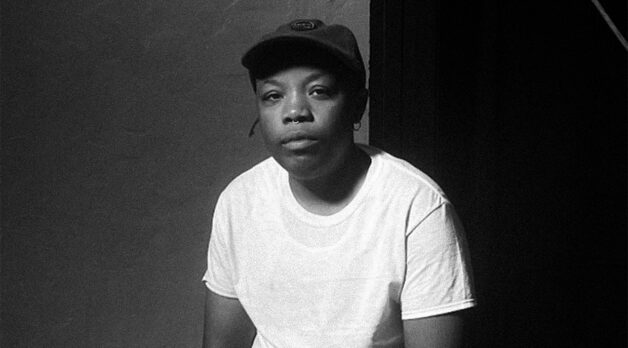 LaTajh Simmons-Weaver

“There’s a narrative that you should just make your art, and something good will come of it,” says writer, director and producer LaTajh Simmons-Weaver. But the path toward being any kind of artist is more complicated, they go on to say. Gatekeepers “give [artists] different notes and reasons why [they can’t make their art], and by the time they are able [to create] and are given the space, they’re exhausted. They’ve mastered the ask, mastered the fight, more than mastered the art. Now that I am getting more institutional support, I am realizing that those ‘yeses’ really matter.”
Weaver relates the above from their home in Oakland, California, by way of explaining the themes behind their latest short, Budget Paradise, which premiered earlier this year at the San Francisco International Film Festival before traveling to Frameline and BlackStar. Chester, a Black nonbinary painter, totes their easel, canvas and paint all over Oakland looking for a place to set up and make art. Each rejection carries a sting and propels Chester to another spot—in just under 14 minutes, Budget Paradise is a colorful, loving ode to the city—before an unexpectedly sensual ending that hard cuts to a blast of a slow-motion credit sequence. But given how personally connected Simmons-Weaver is to the themes of the film, why isn’t Chester a filmmaker, looking to set up their camera at some inviting Oakland location?
“I thought painting was the simplest metaphor,” Simmons-Weaver replies. The film is “not only about finding a space to be an artist; it’s also about finding space. People think the physical act of painting, you just go get paint and paint. It’s like writing—it doesn’t cost anything, right? But you can write all you want, and you still need to ask for support. And I know a lot of visual artists who are literally on the go with their easels.”
Simmons-Weaver grew up in Oakland and loved movies “but didn’t have any idea how they were made” or how to pursue a career in the field. There was a lot of violence in their neighborhood, and their parents “kind of made up extravagant stories to replace my perception of what was going on.” The realization that they hadn’t been given the truth about the world around them made them “want to see alternate ways of what’s going on” and tell stories of their own. At Berkeley City College, they learned film sets by working on friends’ skate and music videos and the subtleties of character and screenplay by studying with writer and director Becca Wolff, who has since has become their mentor.
Budget Paradise is Simmons-Weaver’s second film on the festival circuit this year. Sundance premiere Hold Me Close, directed with former partner Aurora Brachman (a ’24 25 New Face), is extremely different, a kind of constructed vérité doc about Black queer relationships that’s both disarmingly intimate yet also meditative and philosophical. “As two Black lesbians ourselves, we were looking for examples. We don’t have a lot of films that teach us how to love. We were wanting to talk to older Black lesbians who had been in a relationship for a while—to see people who are doing it, and for them to teach us.” Connecting with their subjects, Corrine and Tiana, over dinner, Simmons-Weaver and Brachman asked them to record their audio daily for three months and send the filmmakers the audio each night. “We pretty much edited this film with audio,” says Simmons-Weaver. “Then, we shot the things that we heard, like them cooking dinner or brushing their teeth.”
Simmons-Weaver also produces, a practice that began when they were hired to be director Savanah Leaf’s assistant on the feature Earth Mama. Most recently, they produced for Brachman and The Guardian the short doc When the Revolution Doesn’t Come, about the children of the Black Panthers.
As all this work exemplifies, Simmons-Weaver has “been getting more ‘yesses’” recently, including grants from Chicken & Egg, The Future of Film is Female, the East Bay Fund for Artists, and the Fleishhacker Foundation grant. SFFILM’s Rainin grant is supporting the screenplay development for their debut feature, No One Turned Away for Lack of Funds: A Queer Inclusive Memoir. “It’s about a queer Black game master who builds inescapable puzzle rooms, and it’s set in Oakland’s radicalized queer scene,” which Simmons-Weaver has just returned to after a stint in Los Angeles. “Oakland has a small but mighty film community, and the queer scene is unmatched,” they say. “I really wanted to come back and be immersed in that again.”—Scott Macaulay