Back to selection
An Interesting Question
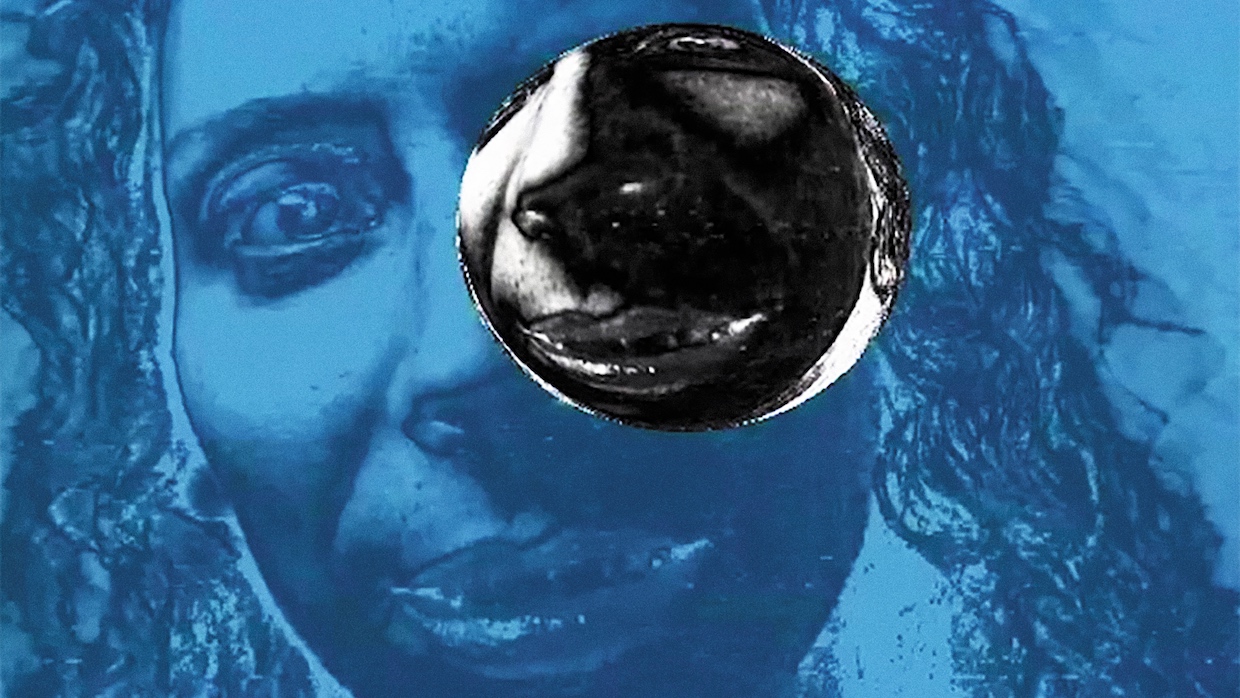 Benita Raphan's 2 +2 (courtesy of the Raphan Family)
 When Penelope Green, an obituary writer for The New York Times, called to speak with me about Benita Raphan in April 2021, I was still in a place between sadness and disbelief. Benita, who was one of Filmmaker’s “25 New Faces of Indie Film” in 1998, had made more than a dozen films across her career (and was in the process of creating a new one), when she died by suicide three months earlier on January 10, 2021. Benita’s decades-long struggle with depression and anxiety, magnified by the isolation and solitude of the COVID-19 pandemic—combined with the loss of her job and increasing frustration with COVID’s impact on the pace and progress of her new film project—had led to a foreboding sense of hopelessness and uncertainty about the future, coalescing into a dark and imperfect storm.
At the time of her death, Benita was working on a film to be titled An Interesting Question, a Guggenheim Foundation Fellowship–funded project which was to be a deep-dive into her life-long fascination with the inner life of dogs, or what the scientist in Benita casually called “canine cognition.” More than anyone I have ever met, Benita was the consummate dog-lover; I am not. Fortunately, that never got in the way of our relationship.
In the 12 years before her death, Benita considered me her “film mentor.” She also had several other people she thought of as mentors in her life: Marshall Grupp, her sound designer; Carin Goldberg, her graphic design teacher; Richard Wilde, her boss at the School of Visual Arts; and Ken Ramirez and Susan Friedman, experts in the field of dog training and dog psychology. My role in Benita’s creative life involved giving feedback on her films in their various stages of development and offering my advice on her grant applications, film proposals and major career decisions as they arose. I thought of myself as a cheerleader for her celebrations and sounding board for her film-related struggles.
Around the time of Penelope’s phone call, Benita’s mother Roslyn and her sister Melissa asked me if I might be interested in finishing An Interesting Question. My initial response was that no one could really “finish” Benita’s film—now itself a casualty of COVID-19—which was still very much in its formative stages. Even though I had seen several early rough cuts of An Interesting Question, years of watching Benita make films made me understand that there was no way I could anticipate where her quirky mind and alchemical process would ultimately take her—or her film.
Benita’s films have an ineffable authenticity, each one a uniquely layered equation that weaves form and content in ways that are unpredictable, complex and viscerally compelling. Her series of short films culminating in Great Genius and Profound Stupidity explores the lives and philosophies of innovators, visionaries and poets like Edwin Land, John Nash, Buckminster Fuller and Emily Dickinson. They are decidedly unguided tours through the mysterious landscapes of their subjects, exploring particularly evocative highlights and peculiarities of their unique visions and singular stories. Benita combined her love of knowledge and her passion for excavating a subject as deeply as possible, along with her world-class graphic arts skill set, into works of beauty, illumination and extreme visual sophistication. One of the things I love about Benita’s films is that they are almost impossible to classify. Are they lyrical biographies, experimental documentaries, poetic portraits or idiosyncratic essays?
My respect for Benita and my affinities for her undefinable approaches to documentary storytelling led me to the seed of a new and bolder idea: I told Ros and Melissa that while I couldn’t finish Benita’s film, I might be willing to inscribe something of it inside a broader project about Benita, imagining a portrait that looks at her life, death, work (in both film and design), celebrations, struggles and—if I did it right—legacy.
That’s how I became entrusted with the utterly miscellaneous personal and professional archive of a film artist whose life was suddenly cut short at age 58: myriad boxes and a few dozen Zabar’s bags (Ros lives down the block) filled with more than 40 computer hard drives; 16mm, 35mm and digital masters of all her films (and their outtakes); thousands of photographs and QuickTime files, a portfolio of design and typographical projects (including book covers, CD covers and collages published in the Op-Ed pages of the New York Times), driver’s licenses, passports, dog collars, her childhood dollhouse and even her old cello. I was also given access to a treasure trove of Benita’s hand-written notepads and notebooks, containing everything from quotidian shopping lists to poetic expressions of despair.
A few minutes into our telephone interview, Penelope said that she had just watched one of Benita’s films online and come away a bit perplexed. Having noticed my “creative advisor” credit at the end of the film, could I please help her make sense of Benita’s work? I told her that the fluidly layered montages of morphing shapes, graphics, distortions, magnifications, animations and mysterious forms that she found puzzling were all intended as “synaptic touches”—individually and collectively designed to trigger poetic associations, feelings and metaphors about her subjects in the viewer. Benita was interested in how the mind works—on both sides of the screen.
It’s been more than a year since I spoke with Penelope and began pouring through Benita’s archive. In that year the plot has thickened. After several months of painstakingly combing through Benita’s hard drives, I discovered video of an emotionally charged Benita saying, a few months before her death, that she was going to change the subject of An Interesting Question. The focus on canine cognition would be scrapped and replaced by a personal film about the ways in which the COVID-19 pandemic had profoundly affected people with emotional vulnerabilities and mental health issues.
The discovery of those video clips, inconspicuously labeled and buried amidst a thicket of files on an otherwise nondescript hard drive, would change the way I looked at Benita’s body of work and dramatically change the way I would conceive and construct my film about her. John Nash’s schizophrenia, Buckminster Fuller’s contemplation of suicide and Emily Dickinson’s agoraphobic isolation were all examples of successful and creative people who had to overcome harsh internal obstacles in order to reach their gifts and achieve their breakthroughs. Perhaps her choice of subjects—each in their own way—appealed to Benita (at least unconsciously) as representing elements of her own emotional and psychological journey. At least, that’s another interesting question Benita leaves behind.
Benita’s death made me realize that there was so much I didn’t know about her, so much I never asked, but also so much I never knew to ask. In the end, one way or another, I suppose I will be completing An Interesting Question after all. It just might not be the question Benita—or I—originally had in mind. That will be for the viewer to answer.