Filmmaker Videos
-
Watch: “A Tribute to Andrei Tarkovsky”

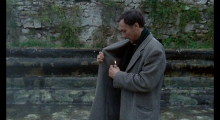
Movies in 5 Minutes made this Andrei Tarkovsky tribute featuring seven of his films. The video is the latest in a tribute series that has included Michael Mann, Ingmar Berman, and others.
-
Watch: Martin Scorsese on Stanley Kubrick, 2001
From 2001, it’s Martin Scorsese discussing Stanley Kubrick with Charlie Rose. They start with The Shining and go from there.
-
Watch: Seventy Years of Los Angeles, Then and Now
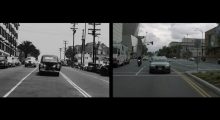
The New Yorker recently commissioned filmmaker Kevin McAlester to recreate a 70-year-old drive through downtown Los Angeles. The resulting split-screen tour of the same streets in the downtown L.A. neighborhood of Bunker Hill in the 1940s and today shows how much the streets have changed and the city has grown. By the 1950s, the neighborhood, which had previously featured some of the city’s most elegant mansions and hotels, had been turned into low-income housing, according to The New Yorker. The area was highlighted in several noir films as well as in The Exiles, the 1961 film which chronicled the lives of young Native Americans living in […]
-
Watch: Pasolini’s Eye Contact
“The eye of the camera always manages to express the interior of a character,” according to the late filmmaker Pier Paolo Pasolini. The latest video essay (above) by Daniel Mcilwraith at Fandor meditates on Pasolini’s use of the close-up to capture the interior of his characters. “Pasolini’s faces are often confrontational, breaking the barrier between screen and spectator. There is something unnerving, yet often playful, about making eye contact with those on screen,” writes Mcilwraith. What do you see when you look into the eyes of his characters? Check out the video essay above and draw your own conclusions.
-
Watch: How the Bourne Movies Changed Film Fights
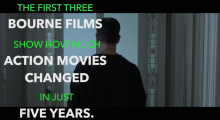
In his newest video essay, Kevin B. Lee breaks down how the Bourne series has changed the style of film fighting as the series continued. As he notes in a supplementary essay at Fandor, “At times it feels like a hodgepodge of fight shots dropped in random, non-linear order—something approaching an impressionist abstraction of action filmmaking. So it was somewhat of a revelation that, upon taking a fight scene from The Bourne Ultimatum and slowing it down to half speed, I could actually discern that one split-second shot from a fight linked up rather well with the next, in a spatially coherent linear sequence.”
-
Buster Keaton’s The General Turns 90 with Tour and Live Score
To celebrate the 90th Anniversary of Buster Keaton’s classic film The General, throughout August Portland’s historic Hollywood Theatre and Oregon Film will present a state-wide tour of the film with a new live score composed by film composer Mark Orton. Above you can check out a trailer for the film presentation. Considered one of the best comedies of the silent era, The General finds hapless Southern railroad engineer Johnny Gray (Buster Keaton) facing off against Union soldiers during the American Civil War. When Johnny’s fiancée, Annabelle Lee (Marion Mack), is accidentally taken away while on a train stolen by Northern forces, Gray pursues the soldiers, using various modes of transportation in […]
-
Watch: “Kubrick/Tarkovsky”
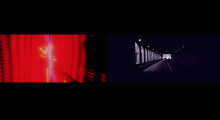
It’s one auteur illuminating similarities with another’s work in another split-screen video. This time around, it’s Stanley Kubrick on the left and Andrei Tarkovsky on the right.
-
Watch: 39 Staircases in the Cinema
This one is pretty straightforward: in honor of Alfred Hitchcock’s The 39 Steps, a supercut of 39 stairwells and their varied treatment across film history.
-
Watch: ’70s and ’80s Films Referenced in Stranger Things
A surprise critical hit for Netflix, the twisty sci-fi/horror/thriller/etc. series Stranger Things has also gained a great deal of attention for its knowing, deliberate references to classics of ’70s and ’80s genre films. Ulysse Thevenon has put together this split-screen video essay, with Stranger Things on the left and its reference point on the right. For another thorough overview in written form, check out Scott Tobias at Vulture.
-
Watch: “Lars Von Trier – The Deconstructionist”
The ever-divisive Lars Von Trier is re-examined by Lewis Bond in this thorough video essay, which examines the way the Danish provocateur breaks down rules about the forms of cinema and then recombines them. Comes with lots of context and an amusing press conference clip of Willem Dafoe explaining on-set improv in Antichrist, where he didn’t even know if he’d be naked or not before starting a scene.