Featured
Keep Sex Weird: An Intimacy Coordinator Roundtable

In Gregg Araki’s I Want Your Sex (2026), a wallflower Gen Z gallery assistant, Elliot (Cooper Hoffman), enters into a dom-sub relationship with his much older boss, art-world provocateur Erika Tracy (Olivia Wilde). For Elliot, intimacy is a gateway to self-exploration, and through messy experience, he grows more attuned to his own curiosities, likes, and dislikes. He also discovers that good sex is a dialogue—and that Erika, whose persona as a sexual explorer directly feeds her art, is maybe not the best role model for healthy consent practices.These themes of communication are central to the art and craft of intimacy coordination. Cultural debates around screen intimacy tend to question whether sex scenes move the plot forward on a very utilitarian level,… Read more
Remembering Sam Neill
 In the Mouth of Madness (1994)
I never got to meet Sam Neill, but I thought of him as a neighbor for a very specific reason: like me, he had sat in the front row to watch a movie at the Eglinton Theatre. There he is as cynical insurance investigator turned wild-eyed paranoiac John Trent at the end of In the Mouth of Madness (1994), cheerfully chowing down on some popcorn as he enjoys a 35mm print of what will seemingly be the last movie ever screened, in Toronto or anywhere else. Screenshots from that John Carpenter sequence kept popping up on my timeline in the hours following Neill’s death last week at the age of 78, and my melancholy at losing one of the great modern movie actors was tempered… Read more
La Clef Revival Occupies the Cinema
 Photograph by Chiara Marinai
I first heard about the reopening of the community-run cinema La Clef shortly after arriving in Paris this January. A friend, an American lecturer at the Sorbonne, took me there and proudly pointed at the two-story building with a signature key (clef) on its facade. “Do you know they used to illegally squat in the cinema for more than two years?” she asked. Founded in 1973 in Paris’s Latin Quarter, La Clef became known for championing independent and political films underrepresented in the commercial mainstream. After its owners announced plans to sell the building and closed the venue in 2018, a collective of cinephiles, filmmakers, and activists occupied the cinema for more than two years, organizing daily pay-what-you-can screenings while fighting to… Read more
No Picnic Feasts at Film Forum
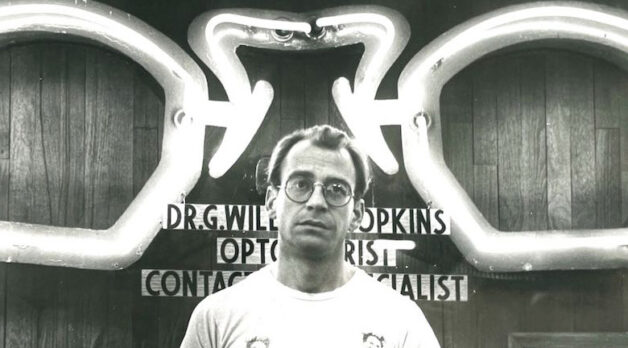 No Picnic (1986)
In 1985, downtown cinephile Phil Hartman used profits from the Great Jones Cafe, a beloved Cajun-inspired NoHo bar he cofounded two years earlier, to direct his first—and, to date, only completed—feature film, No Picnic. A noirish shaggy-dog punk comedy photographed by experimental filmmaker Peter Hutton on lustrous black-and-white 16mm, No Picnic is an episodic and ethnographic ramble around the Lower East Side (including the part of the neighborhood that had been rebranded “the East Village” by realtors in the 1960s). The film was completed in 1987, with support from Wim Wenders’s New York–based production company, Gray City Films, and with money Hartman received from a new business venture, Two Boots Pizza. (Hartman shot another film with Hutton in 1995 called Eerie, with Felicity Huffman and… Read more
Lost in the Funhouse
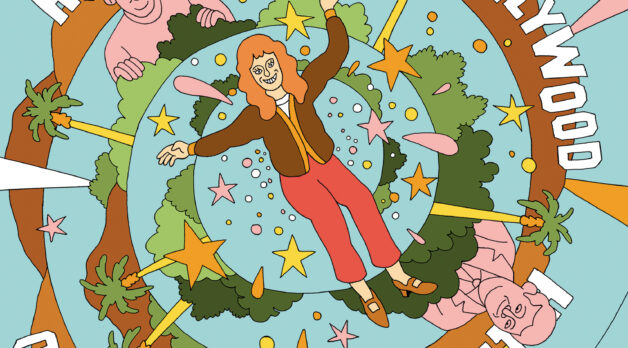 Illustration by Clay Hickson
Say you’ve built a career as a reliable sitcom mainstay and are forced to pivot when sitcoms go out of fashion in the 2010s. Along with every other actor angling to lead a prestige limited series, you work on a more naturalistic delivery and study your character’s motivations. But by 2026, the playing field shifts again. If you’re willing to sign away the rights to your likeness to the network, they can use artificial intelligence tools to insert you into any show. What do you do then? How do you stay indispensable to the industry? That is, more or less, the arc of Valerie Cherish’s television career. Valerie is the protagonist of the HBO show The Comeback (2005–26), played by former Friends (1994–2004) star Lisa… Read more
Do You Love Me Reassembles Lebanon’s Cultural Memory
 Do You Love Me (2026)
Lana Daher’s debut feature, Do You Love Me (2026), is a kaleidoscopic exploration of Lebanon’s cultural memory. The Beirut-based multidisciplinary artist drew from 70 years of found footage and archival material to assemble this visceral 76-minute portrait of Lebanese history, which premiered at Venice Days and is now playing at Metrograph in New York. Daher stitches together clips from her country’s independent cinema, newsreels, and home movies, causing the past and the present to collide and recontextualize each other anew. As Daher cuts between time periods, she toggles between scenes from action movies and newsreel footage of violence on the streets of Beirut, blurring the distinction between what is real and what is staged. Everyday civilians and intellectuals opine on the Lebanese Civil War… Read more