Back to selection
No Picnic Feasts at Film Forum
 No Picnic (1986)
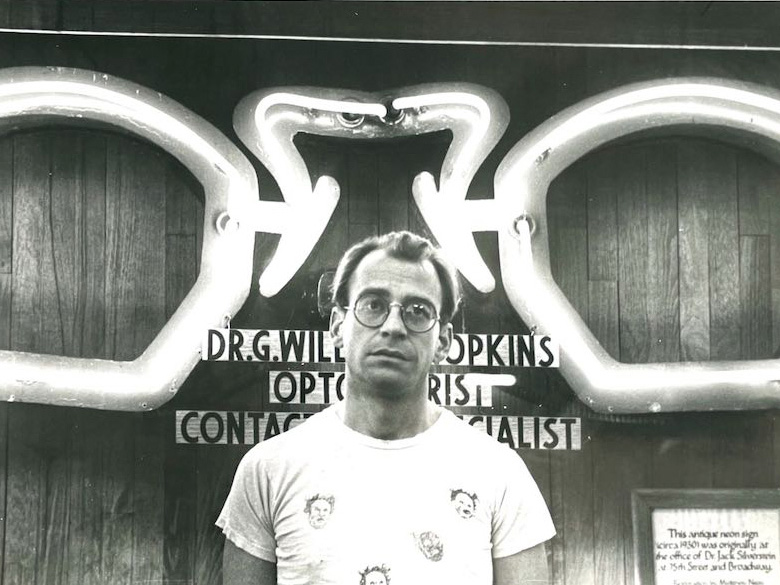
 In 1985, downtown cinephile Phil Hartman used profits from the Great Jones Cafe, a beloved Cajun-inspired NoHo bar he cofounded two years earlier, to direct his first—and, to date, only completed—feature film, No Picnic. A noirish shaggy-dog punk comedy photographed by experimental filmmaker Peter Hutton on lustrous black-and-white 16mm, No Picnic is an episodic and ethnographic ramble around the Lower East Side (including the part of the neighborhood that had been rebranded “the East Village” by realtors in the 1960s). The film was completed in 1987, with support from Wim Wenders’s New York–based production company, Gray City Films, and with money Hartman received from a new business venture, Two Boots Pizza. (Hartman shot another film with Hutton in 1995 called Eerie, with Felicity Huffman and Will Arnett, which he is now planning to complete.)
No Picnic premiered at Sundance that year, winning the cinematography award. Gray City hoped to buy the floundering St. Mark’s Cinema, which is glimpsed briefly in the film, and open it there, but Wenders’s company went out of business before that could happen. Eventually, Jonas Mekas stepped in and offered to open the film at Anthology Film Archives, on 2nd Avenue and 2nd Street, a perfect venue given the film’s setting.
The setting is indeed the real heart of No Picnic. David Brisbin brings just the right touch of warmth and wistful self-awareness to his performance as Mac, a 30-something former musician who scrapes up rent money by stocking jukeboxes and cigarette machines around town. Mac becomes romantically obsessed with a young woman he passed on the street, while another woman, his Canadian upstairs neighbor, pursues him for a green-card marriage. Mac is starting to feel like a relic, as are many of the small stores and clubs downtown. Hartman said that while making the film, “we were racing around to catch Adam Purple’s garden, Bleecker Bob Records, the Atlas Barber Shop, and all these places that were in danger of going, and all these people who we knew wouldn’t be around forever.” With its colorful cast of characters, the film is filled with performances and cameos by people who would later become familiar, including actors Luis Guzmán and Steve Buscemi and filmmaker Lewis Klahr. Its biggest star at the time it was made was the musician Richard Hell, in a cameo as an irate neighbor.
On the strength of a rave review by Manohla Dargis, then writing for The Village Voice, the film enjoyed a record-setting six-week run at Anthology in the summer of 1990. Dargis, who grew up in the neighborhood, lauded No Picnic as “one movie about the East Village that gets it right,” presciently describing it as “a valentine to a neighborhood under siege by realtors and galleries, uptowners and outsiders, a swan song to a languishing New York tribe.” For the next 35 years, No Picnic was rarely screened. Hartman was consumed by the success of Two Boots, and the film was available primarily as a VHS tape and later DVD on the shelves at the Two Boots Video Store. (Two Boots also housed the Pioneer Theater, a 99-seat repertory cinema, from 2000 until rising rents forced it to close in 2008.)
Jump cut to 2025, when a fortuitous connection steeped in New York indie film history brought No Picnic back to the public’s attention. Hartman had been a close friend (through his producer and then-partner, Doris Kornish) of Morris Engel, the codirector of The Little Fugitive (1948), a pioneering neorealist film about a boy who runs away from his Brooklyn home for a day at Coney Island that was a key inspiration for the French New Wave and a template of sorts for No Picnic. Archivist Mary Engel, the daughter of Morris Engel and codirector Ruth Orkin, introduced Hartman and his film to the programmer Jake Perlin, who—under the auspices of his company, The Film Desk—releases neglected cinema classics. By coincidence, Perlin had been a student of Hutton, the film’s director of photography, at Bard, and a fan of the Pioneer Theater, where he had his first film programming gig.
Perlin oversaw the restoration of No Picnic, which premiered this January in the “To Save and Project” series at the Museum of Modern Art, proclaimed by curator Joshua Siegel “a priceless artifact of New York’s pre-gentrification East Village.” Impressed by the response from a packed house at MoMA just a day after a major snowstorm, Film Forum repertory director Bruce Goldstein offered Perlin a slot for the film as part of the massive film series “Tenement Stories: From Immigrants to Bohemians.” Perlin pushed instead for a theatrical run. Goldstein was hesitant to take a chance on an unknown title, but was convinced by the enthusiasm of repertory programming manager Stephanie Gross and agreed to give it a run. No Picnic opened on Friday, April 17, with just two screenings per day. This was a particularly stacked weekend for the theater, which was also opening the Sundance favorite Mad Bills to Pay, a beautifully crafted low-budget gem filmed in the Bronx—a cinematic soulmate of sorts to No Picnic.
No Picnic sold out nearly all of its shows and emerged after a week as the theater’s top film, grossing more than $28,000. Held over, it was also the theater’s top film in week two, adding another $16,000. As the film’s total soared past $50,000 the following week, it was clear that this the movie was on its way to becoming a surprise hit.
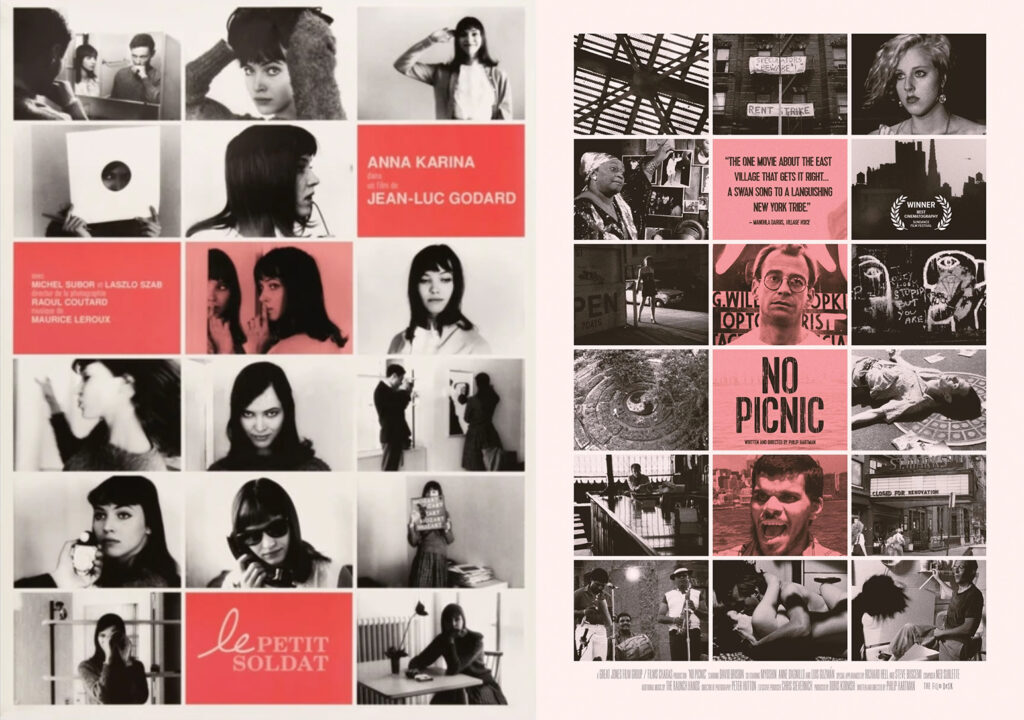
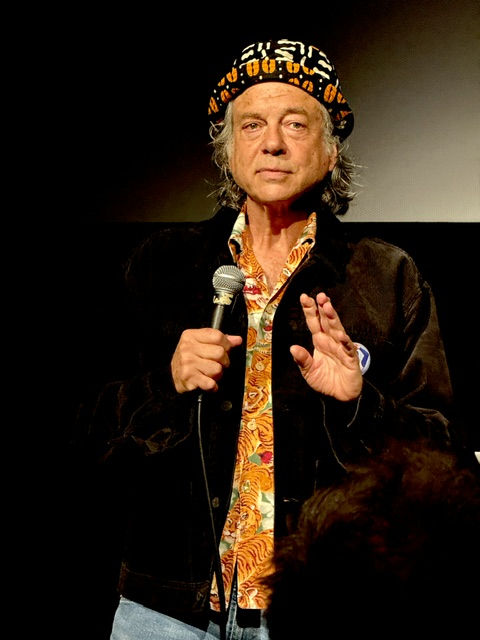
No Picnic benefited from The Film Desk’s dynamic trailer, which highlighted Hutton’s gorgeous imagery and was shown repeatedly for a full month during the wildly successful tenement series, and from a beautiful poster inspired by the poster for Jean-Luc Godard’s The Little Soldier (1963). It was also boosted by the charisma of Hartman, who did frequent Q&As and offered free Two Boots pizza slices to Film Forum ticket holders. But the real driving force behind the success was the way it resonated so strongly with a young audience.
“It started building and building,” Hartman told me. “It began with people our age coming, and within a few weeks, it was people bringing their kids. And then it was just the kids coming and bringing their friends.” By the end of its twelve-week run, the film had made $123,000, making it one of the theater’s top repertory runs of the decade, beating out Federico Fellini’s 8 1-2 ($120,000), Akira Kurosawa’s The Seven Samurai ($103,000), and nearly equaling Satyajit Ray’s Days and Nights in the Forest ($127,000).
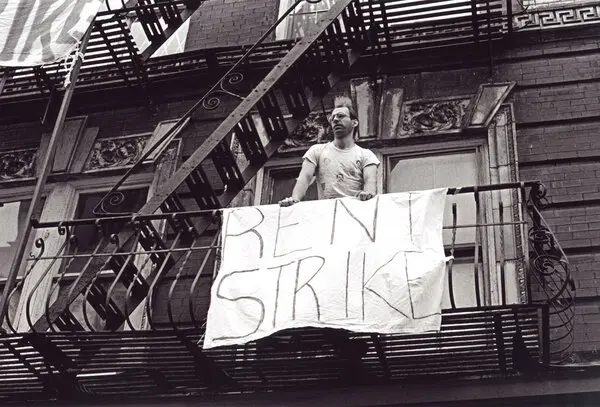
Early in the film, Mac muses about the neighborhood that is rapidly transforming around him: “The more things change, the more they stay the same. That’s what the French say. Fuck the French.… The more things change the more they change.” This duality is what makes No Picnic so compelling. It captures a predigital, pre-Starbucks urban landscape with record stores, dive bars, walkup apartments with kitchen bathtubs and wall-mounted phones, where neighbors organize rent strikes and visit each other through windows by way of the fire escape. And while it may be rooted in its time period, the struggle to pay the bills while leading a creative and meaningful life is, of course, eternal. Speculating on the film’s current success, Dargis told me “the film speaks to the familiar, relatable (evergreen!) issue of affordability,” noting that the only way she could afford to remain in the East Village at that time, despite having grown up there, was to live in illegal sublets.
Producer Christine Vachon, who was an uncredited assistant sound editor on No Picnic, paid for her work in free meals at Great Jones, mused recently about the film’s resonance. “I think it has this mix of being relevant to today because it’s about being able to afford a place, but it also is a world that’s sort of past.… It just manages to be sort of a perfect time capsule that in a funny way has folded back onto this time.”
For young filmmaker Meg Aubry, who lives in Ridgewood—a present-day analog, of sorts, for the Lower East Side of the ’80s—the film serves as an invaluable document for young people moving to the city. “We don’t really know the grounds we’re stomping on or the history of it. So it felt like it was an education in New York culture.” The movie also has something important going for it; it’s a lot of fun. “I love that it was kind of like a parody noir,” Aubry said. “It is willing to laugh at itself as much as it is willing to take itself very seriously. And I love a character-driven kind of vérité, a vignette-to-vignette type of story. It’s just one of those cool ride-along watches.”
I revisited the film at an afternoon screening in the last week of its run, with an audience of about 70 people of all ages. In a correspondence with Brisbin afterward, he reflected on the current fascination with No Picnic, “Young people in the East Village now have a sense they missed something and want to know what that time was like. Old folks like me like to remember their youth.” And echoing the sentiments of his character, “Phil and Peter showed us the end of an era, but not in a nostalgic or dystopian way. Things change, but some things stay the same.”
“You talk about terroir for a wine,” said Hartman. “I feel like there’s a terroir to No Picnic. Like you can feel the earthiness of the East Village and the rubble, the empty lots, the abandoned buildings. I think there’s something really appealing about that.” And based on its Film Forum success, it is a wine that has aged well. “It had time to ferment,” he said with a laugh. “It’s marketing genius to create something and then keep it a secret for 40 years.”