Back to selection
Lost in the Funhouse
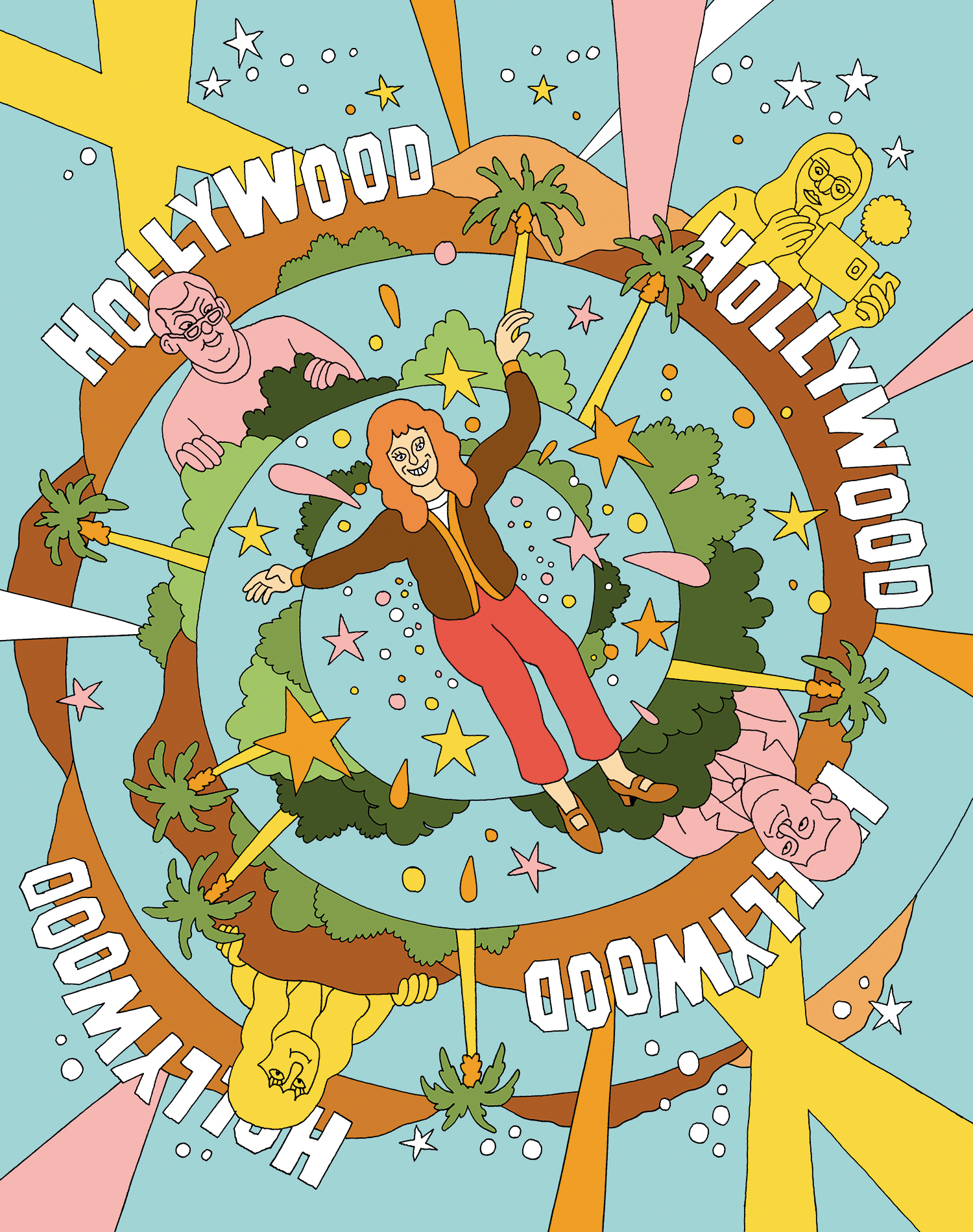 Illustration by Clay Hickson
 Say you’ve built a career as a reliable sitcom mainstay and are forced to pivot when sitcoms go out of fashion in the 2010s. Along with every other actor angling to lead a prestige limited series, you work on a more naturalistic delivery and study your character’s motivations. But by 2026, the playing field shifts again. If you’re willing to sign away the rights to your likeness to the network, they can use artificial intelligence tools to insert you into any show. What do you do then? How do you stay indispensable to the industry?
That is, more or less, the arc of Valerie Cherish’s television career. Valerie is the protagonist of the HBO show The Comeback (2005–26), played by former Friends (1994–2004) star Lisa Kudrow, who developed the series with Sex and the City (1998–2004) creator Michael Patrick King. After their mainstream hits, Kudrow and King set out to skewer the uglier sides of the industry with The Comeback, which garnered a cult following for its caustic rendering of showbiz. Earlier in her career, as a member of the LA improv theater troupe The Groundlings, Kudrow had created a character called Your Favorite Actress on a Talk Show, channeling the manic obsequiousness celebrities affect on late night. Pair that persona with Kudrow’s horror at the debasing nature of reality television—watching a woman vomit as her husband encourages her to keep eating a spicy soup on The Amazing Race felt like “the end of civilization,” according to Michael Schulman’s recent profile in The New Yorker—and Valerie Cherish was born.
Valerie achieved B-list status in the early 1990s on a schmaltzy workplace sitcom, I’m It!, for which she won a People’s Choice Award. In The Comeback’s first season, she returns to the backlot for a lowbrow multicam comedy called Room and Bored, in which she plays the dowdy Aunt Sassy alongside four hot-young-thing leads. Valerie is also starring in a reality series that follows her return to sitcomland; the show we are watching, The Comeback, is composed of raw footage from that endeavor. It’s a challenging format for the audience, who may be compelled to shield their eyes as Valerie gives her all to a performance of “real life,” and for Kudrow, who often performs alone. Particularly in the pilot, Valerie’s real scene partner is the camera. She smiles to seem pleasant, witty, and put-together until an inconvenience—a needy husband, a bratty stepdaughter, or a mean writer—compels her to flash a time-out hand signal to the camera, as though requesting a scene reset.
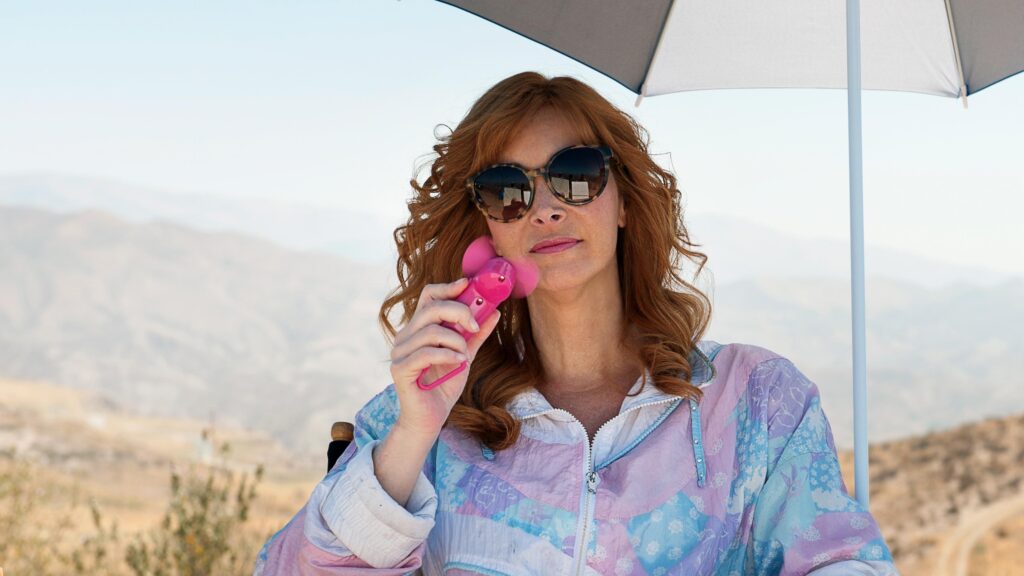
In the second season, which takes place in 2014, the show-within-a-show framing eventually falls away. Valerie tries everything, from launching a hair-dye line to dishing it out with Lisa Vanderpump in The Real Housewives of Beverly Hills, until she lands a lead part in an HBO dramedy written by her old nemesis, Paulie G. (Lance Barber), one of two fratty showrunners on Room and Bored. The show, called Seeing Red, is clearly inspired by their contentious relationship. It emerges that Paulie was battling a heroin addiction when they were working together, which explains his erratic behavior but not his intense hatred of Valerie. Paulie hates Valerie because she is too much—too eager and also too demanding—convinced, and convincing herself, that Room and Bored was more than a silly sitcom. On Seeing Red, Paulie paints Valerie as a literal monster, a sexual fantasy, and a downright bitchy girlboss type, but behind the scenes, he can’t control her image in the same way. He resents Valerie’s inability to submit to his authority as showrunner; she asks too many questions for someone leading a show about her persistent nagging. For her willingness to portray a less-than-flattering version of herself, Valerie wins an Emmy. “All these years, Red,” Valerie’s best friend and trusted hairdresser Mickey (Robert Michael Morris) gushes, “and you can really act!”
The prestige limited-series boom satirized by The Comeback’s second season marked the beginning of the industry’s path toward proliferating streaming services and vertiginous mergers. At the start of season three, Valerie stars in a cozy mystery series, Mrs. Hatt, which no one watches because it’s on a last-page-of-the-app-store platform called Epix. She attempts to keep up with the post-pandemic 2020s by hosting a podcast and hiring a sleepy, perennially injured Gen Z social-media manager, Patience (Ella Stiller), to boost her social channels. Valerie is ecstatic when she is offered a lead role and an executive-producer credit on a new multicam comedy, How’s That?!, to be filmed on the lot in front of a live audience, like in the old days. Brandon Wallick (an ever-chameleonic Andrew Scott), the president of the network, NuNet, flatters Valerie by calling her a “sitcom veteran” who tested positively with audiences nostalgic for breezy shows with a laugh track. The catch: How’s That?! will be written by generative AI.
Valerie hesitates, briefly. She may be unscrupulous, but she’s not obtuse. The season opens during the WGA and SAG-AFTRA strikes of 2023, whose demands included protection against AI. Valerie visits the picket line not out of any sense of duty or solidarity, but because her instinct is to go where the other actors are (she snags a picture with SAG president Fran Drescher for her socials). By the time she agrees to lead How’s That?!, her disconnect from the strikers’ demands is glaring. She knows that being part of an AI-developed show will hurt her reputation, at least among colleagues. And a sitcom with no showrunners goes against everything she knows and believes about comedy. But Valerie has never flinched in the face of what she doesn’t understand, and she has never hesitated to compromise on her beliefs. As the industry’s demands change, so does the value of an actress of Valerie’s caliber. She’s not a star, but she’s not not famous; not sexy, but not not beautiful; not old, but not young. If what they need is a reality star, she’ll be one. If they need comic relief, she’ll step up. If they need a dramatic actress of a “certain . . . gravitas,” she can be that, too. There is almost nothing Valerie won’t do to be recognized as a power player, which ensures her longevity in the industry but leaves her vulnerable to executives trained to exploit that drive.
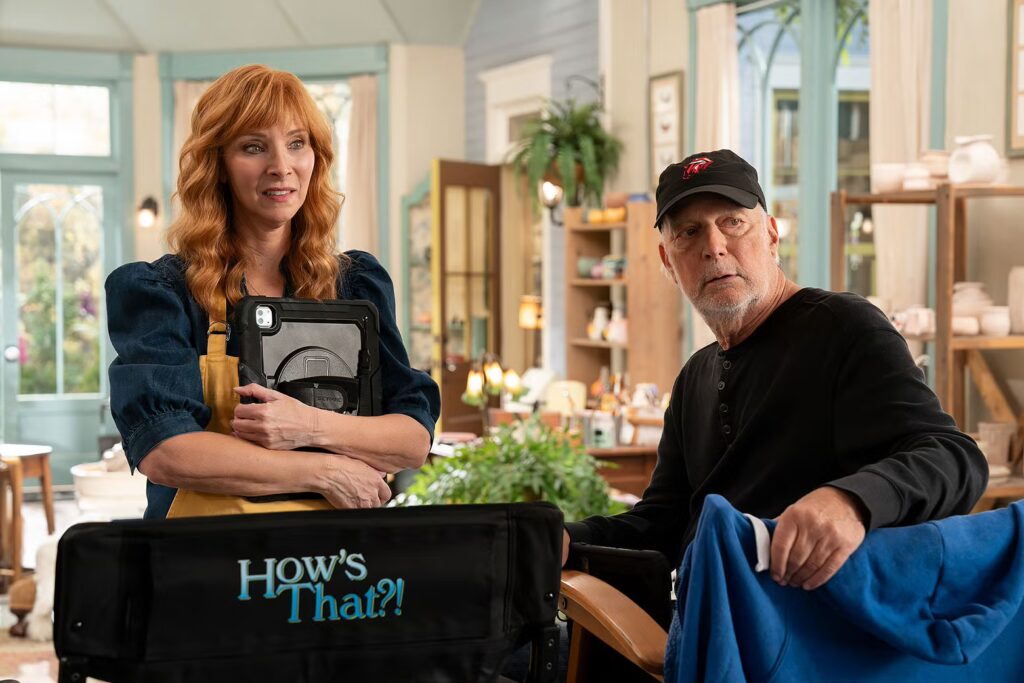
Many of Valerie’s frustrations boil down to the fact that her experience as a comedian counts for little when Hollywood sees aging actresses as disposable. In her forties, the only role she could book was a matronly counterpart to a sexy ingenue, Juna (Malin Akerman); ten years later, she played a shrill villain to the sensitive, aching male auteur. Now, with the help of AI tools, it is theoretically easier than ever for Hollywood to discard older actresses wholesale—as long as Valerie agrees to get scanned at “the Digital Dome,” which she does without even thinking about it. It would be easy to dislike Valerie; in fact, people tend to treat her with the kind of impatient, dismissive tone often reserved for children. Still, there is something irresistible about her futile but sincere effort to prevail and her unwavering faith in herself. Hollywood keeps trying to get rid of her, and she keeps proving that it can’t. No matter which stock character she’s asked to play, she finds a way to Val-ify it.
Valerie’s anything-goes ambition is undercut by her producer on The Comeback, documentary filmmaker Jane (Laura Silverman). When Valerie sees the final cut of the reality show, which is not about her triumphant return to the screen so much as it is about her desperate need for recognition, it strains their relationship. For Jane, it’s merely a stepping stone to more serious projects. Between seasons one and two, Jane wins an Academy Award for a short documentary about “lesbians in the Holocaust,” and then, in a show of principle that makes Valerie shudder, repurposes the gold statuette as a doorstop. Like Valerie, Jane is ambitious, but she is less inclined to keep working for an industry that wants to see her fail. The third season opens in 2023 as Valerie is in the midst of an ill-fated stint on Broadway and Jane is so exasperated by mercurial, hostile Hollywood that she has left LA altogether. When Valerie finds her again, in 2026, working at Trader Joe’s, Jane sees an opportunity to cut behind-the-scenes footage from How’s That?! into a documentary about the threat of AI to the entertainment industry. They strike a deal, but Jane refuses to sign an NDA, prompting Valerie’s quip to camera: “I thought this was about an actor’s uplifting return while she navigates a whole new television landscape!”
The Comeback has always held up an unflinching mirror to crises in the television industry, but this time, there is a deeper threat of obsolescence. To keep up appearances, NuNet hires a husband-and-wife writing team, Josh and Mary Abrams (John Early and Abbi Jacobson), to supervise scripts generated by the AI software, Allassist, known on set as Al. Josh is increasingly agitated at the fact that his name is attached to unfunny, sentimental slop, while Mary disengages from the project completely. “I’m not helping to build the scaffold that kills my profession,” she tells Valerie. But by lending her name to the project, she already is; so is Valerie. In trying to make How’s That?! work, it’s possible that her tendency to capitulate could have collateral damage beyond her individual experience.
Not that she has such a long view—Valerie has uncritically embraced novelty time and again for fear of getting left behind. In fact, the opportunity to pioneer narrative AI development seems to Valerie a reason to join How’s That?! She taps legendary sitcom director James Burrows (playing himself) to work on a few episodes. When he hesitates because there’s nothing new in it for him, she discloses that AI was involved in its production. Burrows is curious enough to give it a whirl, but he lasts only one episode. Great comedy, he reminds Valerie, emerges from real pain. She echoes him when she tells Brandon Wallick that How’s That?! will never be great without a real showrunner. But Wallick is not looking for great. He just wants something people will “leave on when they’re doing . . . whatever.”
The first time Valerie sees her AI-generated avatar—created from her scan at the Digital Dome—pop up on television, she’s taken aback. It appears at the end of an episode of How’s That?! to promote NuNet. Despite noting that the avatar’s arms “move funny,” Valerie seems conspicuously indifferent about having a digital version of herself available for the network’s purposes: “That’s okay,” she rationalizes. “They want to use me as a spokesperson.” Her strategy has always been to let the industry shape her image, anyway. Besides, her avatar may look like her, but it’s not her. It can’t Val-ify a character, a joke, or a situation. It doesn’t have that thing that makes us root for her, often despite herself—it doesn’t know how to turn real pain into great comedy.