Back to selection
Let John Early Cook
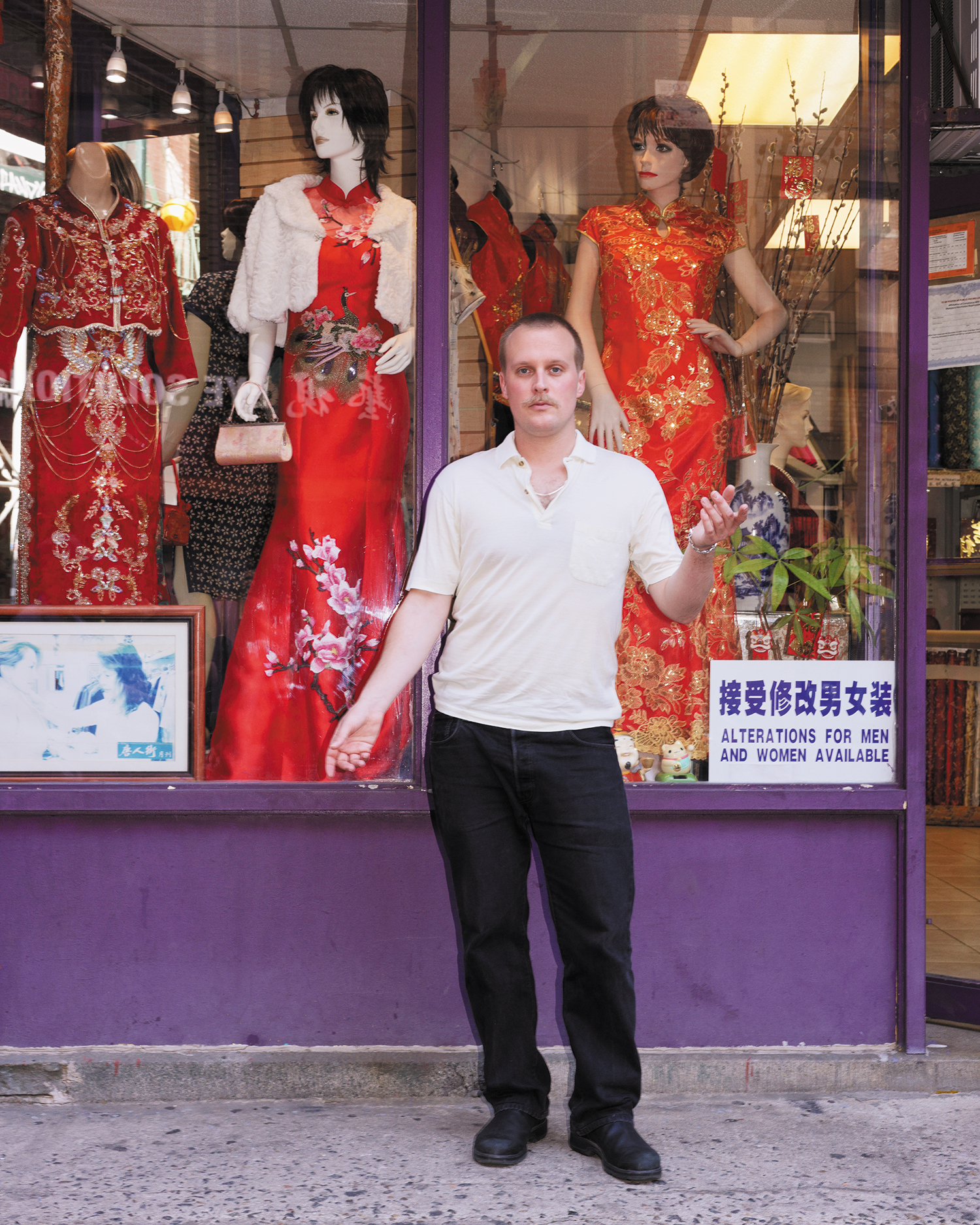 John Early (photograph by Eve Alpert)
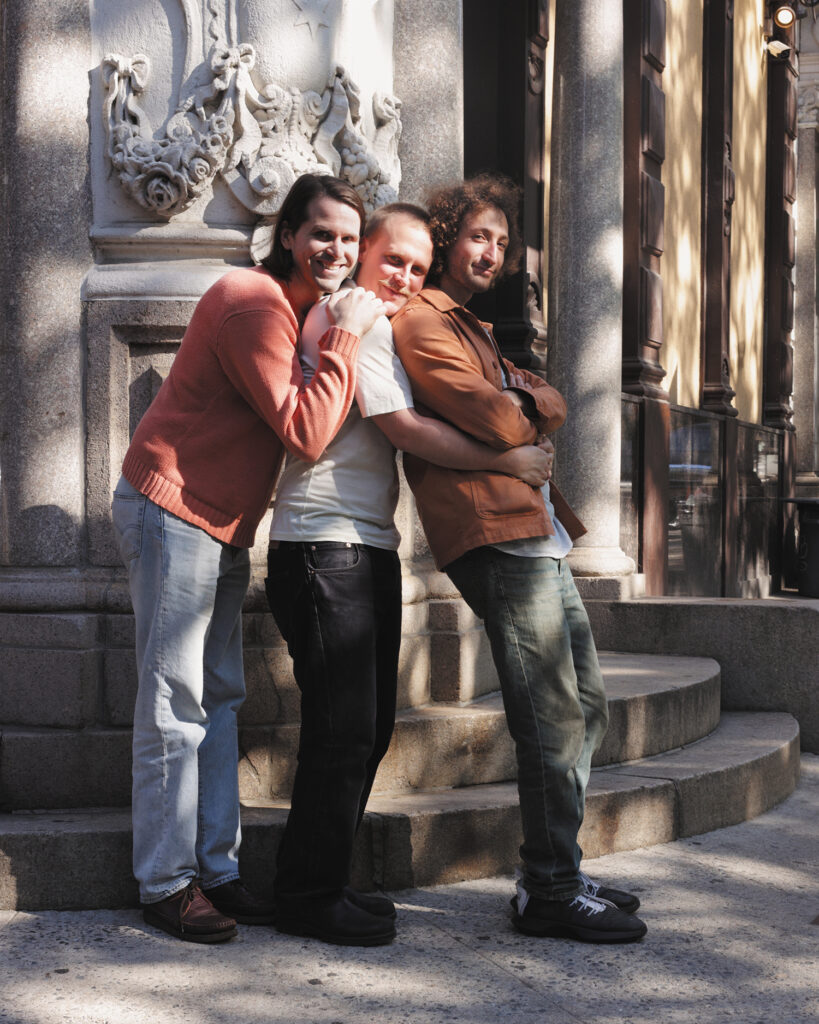
 On the first beautiful day in New York after a dreary spring of torrential rain and pervasive wind chill, my task was to infiltrate a tight-knit friend group. Over a round of ice-cold soft drinks at Chinatown’s Bar Oliver, the team that conceived the visual world of Maddie’s Secret (2025)—part critique of and part ode to 20th-century TV movies—giddily elaborates on the nature of their collaboration.
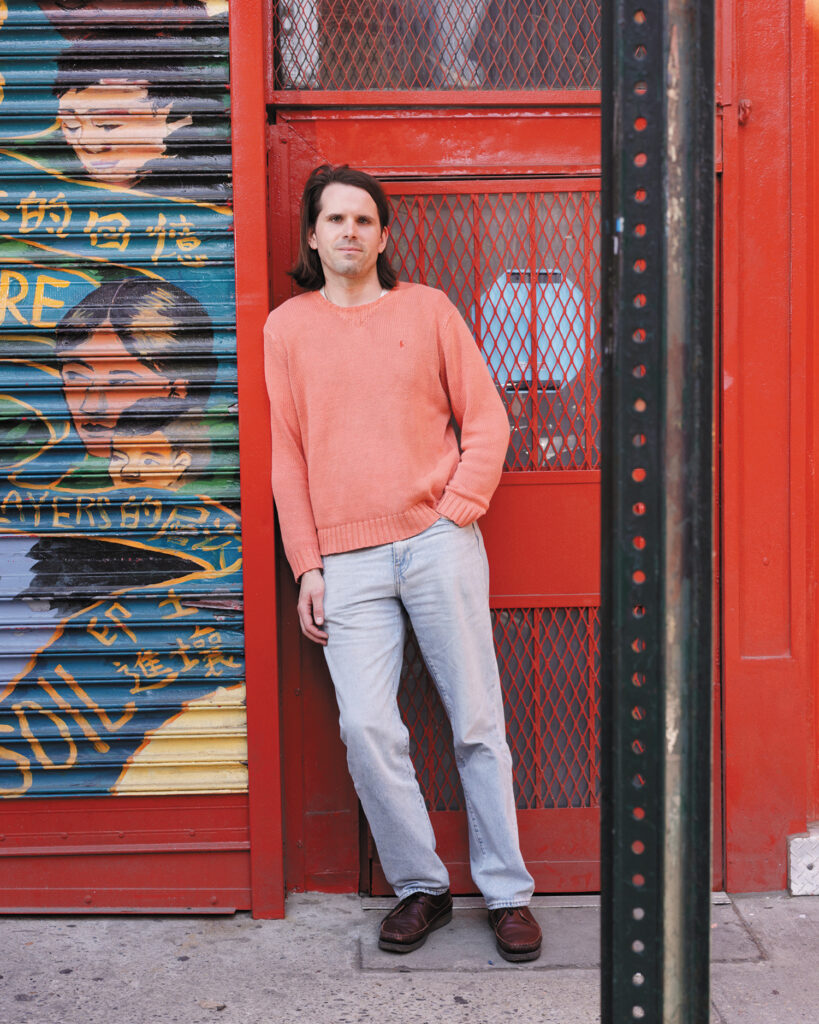
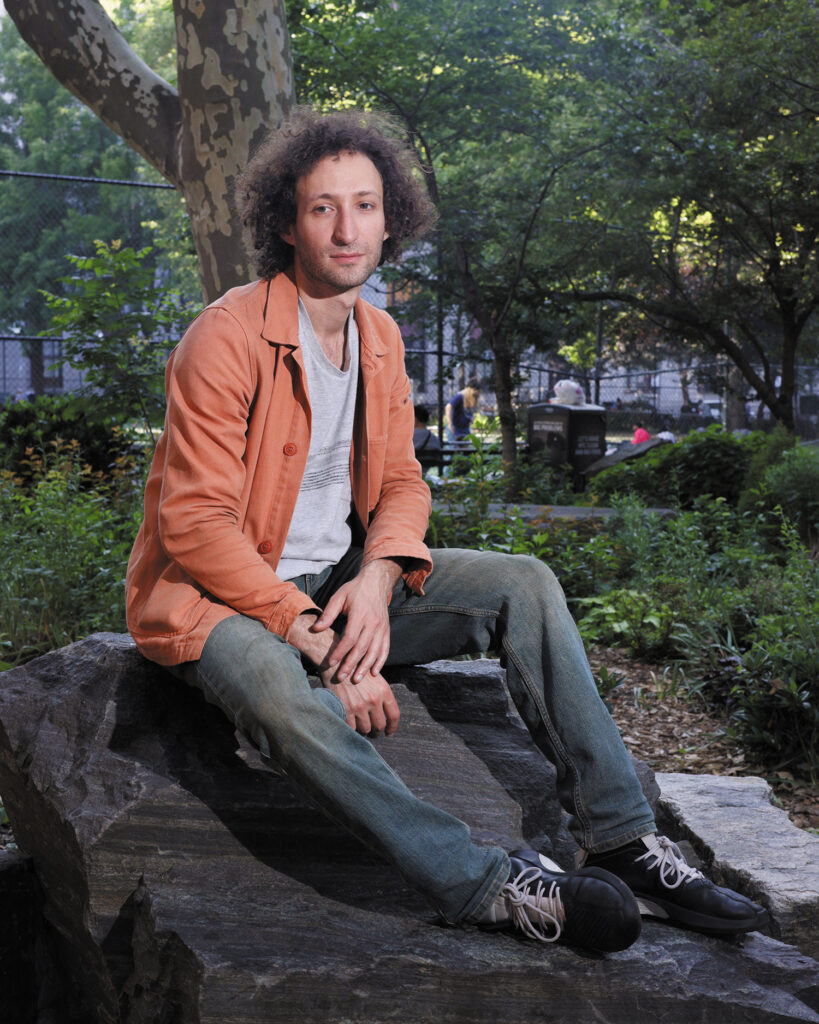
“There is a history between all of us that was not built on film sets,” says John Early, the film’s writer, director, and star, of his relationships with cinematographer Max Lakner and production designer Gordon Landenberger, who sit across from him in a cozy corner booth. Early got in touch with Lakner after seeing his work on the web series Zhe Zhe (2013–19), which centers on the misadventures of a group of girls, including future Maddie’s Secret costars Ruby McCollister, Leah Hennessey, and Emily Allan. As for Landenberger, he and Early used to date.
The trio communicates with a fluidity that eschews any trace of creative hierarchy. Early posits that this innate compatibility stems from the fact that both of his collaborators have a base of specialized knowledge outside moviemaking: Landenberger has a formal background in theater and has also worked on restorations of historic buildings (including the Upper West Side’s famed Dakota). Lakner is currently studying to be a psychoanalyst. (“As a cinematographer, I turn people’s words into images,” he says. “As a psychoanalyst, I’m turning people’s images into words.”) These disparate areas of expertise abet a singular, cohesive vision, a triumph that is all the more impressive because Maddie’s Secret marks the first time the longtime friends have all worked on the same project.
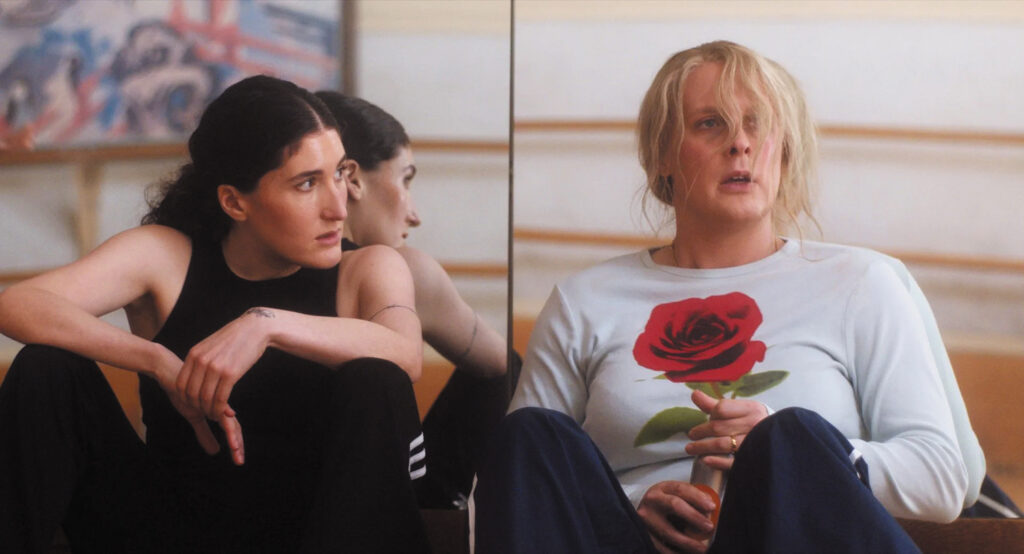
Early dons a wardrobe of angora sweaters and halter tops to embody the title character, a veritable goody two-shoes who works as a dishwasher for Gourmaybe, an LA-based culinary content brand. Even after a long day spent in the company of her crass boss, Zach (a bracing dose of Conner O’Malley), and the bitchy on-air chef, Emily (Claudia O’Doherty), Maddie’s light never dims.
She comes home and cooks an original concoction, an “eggplant smashburger,” for her fiancé, Jake (Eric Rahill), who films Maddie’s process and convinces her to post the video on social media. To the amateur chef’s utter shock, she achieves overnight virality. Her best friend and fellow dishwasher, Deena (an exquisitely off-kilter Kate Berlant), is elated, her enthusiasm barely concealing an obsessive crush on Maddie. Zach then presents her dream on a silver platter, offering her the role of a full-fledged Gourmaybe content creator.
Maddie jumps at the opportunity, but the pressure of proving herself ends up exacerbating her lifelong struggle with disordered eating. It doesn’t help that her mother, Beverlee (Kristen Johnston, playing what Landenberger cheekily describes as the prototypical “abusive San Diego mom”), quips about the camera “adding ten pounds,” nor that the comments on Maddie’s video mock her appearance (“Maddie the fatty,” squeals Emily as she reads off the nastiest of the crop to Zach).
In an effort to gain a semblance of control over her life and image, she begins purging the beautiful meals she has created and eaten. During an early rendezvous with the toilet bowl, Jake walks in on Maddie; she looks up at him, eyes bloodshot and masticated foodstuff caked in the corners of her mouth. “I’m pregnant,” she lies between ragged breaths. Her secret is safe for now, but keeping up appearances—even for a practiced perfectionist like Maddie—is only a viable option for so long.
The creative kernel of Maddie’s Secret emerged during what Early cites as the “Bon Appétit boom,” “that short window of time when they were producing these glorious videos that were shot in this gentle documentary way.” He and Landenberger devoured the Test Kitchen series during the COVID-19 lockdown. In summer 2020, however, a highly publicized scandal regarding the brand’s toxic workplace and egregiously low pay for employees of color caused Test Kitchen to shutter.
Early then noticed his algorithm shifting away from “very straightforward ‘filming yourself in your own kitchen’ videos” to cooking content that was overtly sexualized, even going so far as to emulate pornographic “blow-job angles.” “It felt very Verhoeven to me,” he laughs. “Meat slapping cutting boards, sandwiches being squeezed and juices oozing. It just felt very perverse.”
Indeed, Verhoeven’s Showgirls (1995), about another talented underdog who fights for fame in a cutthroat industry, was a reference for Maddie’s Secret. The films feel married in tone: despite Showgirls’s camp legacy, the performances are completely sincere.
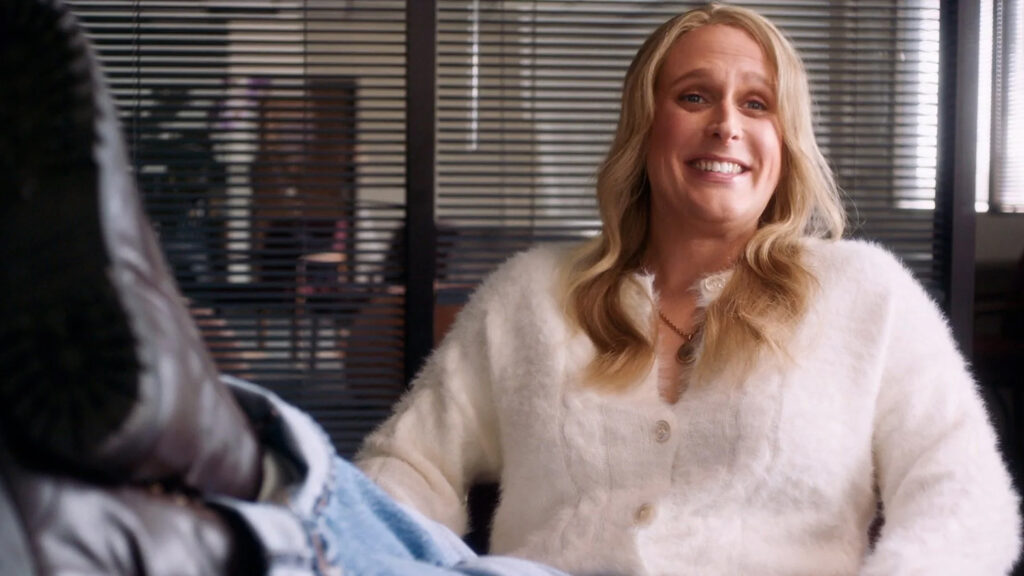
Although Maddie’s Secret contains a fair amount of winking at the audience—the dialogue is spoken in a staccato, slightly wooden manner, bolstering its distinct comedic sensibility—none of its characters are ever the butt of a joke. There’s an implicit sensitivity here. A more direct influence is the bygone genre of eating-disorder movies made for broadcast television, particularly Kate’s Secret (1986), which aired on NBC, a cautionary tale from which Early lifted much of the plot, plus Maddie’s wispy blonde fringe and good-girl persona. (Meredith Baxter’s Kate and Early’s Maddie even have the same melancholic blue eyes.)
Kate’s Secret also serves as an aesthetic reference point, as it likewise takes place in idyllic (but appearance-obsessed) Southern California. Both protagonists join rigorous dancercise classes, and the binging scenes share a back-alley seediness that recalls anti-drug afterschool specials. Above all, both films—despite their penchant for melodrama—convey utmost compassion for those with eating disorders. It’s clear why Early found Kate’s Secret so compelling: it’s surprisingly empathetic and well-researched when it could have easily repackaged shallow stereotypes.
Due to budgetary constraints, Early’s own Eastside home ended up standing in for Maddie’s. Landenberger and Lakner traveled from New York to Los Angeles an entire month before production and spent every day at Early’s home to meticulously plan the shoot.
Much like Maddie, the group was feeling a lot of pressure. This film marks Early’s first effort as a writer-director, and it’s also the first feature lensed by Lakner. Landenberger previously designed Now More Than Ever, Early’s 2023 HBO comedy special, as well as Stress Positions (2024), Theda Hammel’s thorny COVID commentary that stars Early as a germophobe named Terry Goon. (In a similar nod to nominative determinism, Maddie’s last name is Ralph.) The filmmaker was “very touched” by his friends’ willingness to do “essentially unpaid work” to transform his home into a set.
Landenberger hand-crafted ethereal curtains, a homey slip cover for the couch, and an adorable biscuit-shaped throw pillow that sits on top of it. It was convenient that Early’s house, like many LA abodes, contains readymade vintage details—“stained glass, built-in niches [with] glowing candlelight”—thus reflecting the aesthetic of 1980s TV movies like Kate’s Secret. The team decided that a certain fantastical element would also be baked into the film, heightening an underlying tone of comedic absurdity, despite Maddie’s struggles. “I never wanted it to feel polite and restrained,” Early says. “There are curtains blowing via a leaf blower in the house when the windows aren’t open.”
In spite of the myriad visual gags designed by Landenberger—including the “Hims-esque erectile dysfunction ad” with a prominent eggplant emoji that inspires Maddie’s viral recipe—he often found himself inspired by the film’s sadder moments. “The very first idea that I had when I read an early draft of the script was the crib,” he says, referring to a gorgeous wood bassinet that Jake brings home to substantiate Maddie’s fabricated pregnancy.
“He’s building a whole life with this person that’s based on this very flimsy lie.” The mobile that hangs above the crib features an array of felt figures, all of them “animals that you can eat,” despite Maddie’s vegetarianism. “No matter what animal the camera lands on, I wanted it to be giving a side-eye, as if it’s this Greek chorus commenting on the action,” Landenberger says. After production wrapped, the team gifted the mobile to a “dear friend” who was actually pregnant.
The biggest aesthetic feat appears in the second half of the film, when Maddie checks into an inpatient treatment program. The women she meets there—including her roommate, a sweet-natured yet infantile woman (Vanessa Bayer) and a gang of temperamental but supportive it-girls (the stars of Zhe Zhe)—are vital players in Maddie’s road to recovery. The team managed to secure a vacant wing at an otherwise active facility, which offered the “softest, sweetest” color palette of all the locations they toured but also a disturbing drawback: Early recalls with an uncomfortable chuckle that they could hear the screams of real patients through the walls. Lakner was able to make “minimal” tweaks, like inserting less clinical-looking battery-powered LED lights inside the building’s existing fixtures. For him, it was about “building the realistic elements we couldn’t control into the film’s fairy-tale look.”
“It’s narratively bleak, but still visually a little enchanted,” Early echoes. “But then, the enchanted scenes also have some intentional grit of reality,” Lakner adds.
The most foundational nonfiction reference for Maddie’s Secret is Lauren Greenfield’s documentary feature Thin, which aired on HBO in 2006. Landenberger was particularly motivated to lift specific details from the documentary, including a “talking stick” that is used during group therapy sessions. “I wanted to encapsulate a lot in that one prop,” he says of the green and blue fabric–covered wand, which features incongruously festive tassels on either end. “It’s incredibly infantilizing. It looks like a toy for children, but it’s also a bastardized Native American object.” The group giggles in agreement. “I’m one-sixteenth Mi’kmaq, so we were allowed to use that,” Early winks. After a beat, he leans over and speaks directly into my recording phone: “No, really, I’m serious.”
The heaviness of the film’s themes never becomes entirely dreadful; Maddie’s Secret is, without a doubt, a future camp classic. “There are these really subtle ways we made something very bleak still feel okay,” Early explains. “My fear with the second half of the movie was that it would feel like a betrayal of the first half. I never wanted it to just fall into grittiness—yellow, sour. I wanted it to still feel like you’re being led through a girlish fantasy.”
The team repeatedly invoked the melodramas of Douglas Sirk with reverence. For Lakner, they were the most tangible touchstone when it came to choosing lenses and filters. “I knew pretty early that I wanted to use Cooke’s Panchro set, which are the same lenses used in A Star Is Born (1954), Douglas Sirk movies, and thousands of films from that era,” he says. “In particular, I wanted the lens [to be] breathing.” He looks over at Early, then teases, “Now you know what that is.” Early beams. “I do.”
Early became obsessed with capturing “roundness,” a feature he feels is pronounced in 20th-century films from Polyester (1981) to Muriel’s Wedding (1994). “Big round eyes, a big round face,” he says, cupping his hands along imaginary convex lines. “There’s something goofy and open and sweet about it.”
To heighten this quality, Lakner adopted an unconventional method. “I tested filters by Tiffen and Hollywood Black Magic,” the cinematographer says. “They come in [increments of] quarter, half, one, and two. Most cinematographers use one-eighth. We stacked two and one on top of each other, and it ended up being pretty beautiful.” Early sighs in agreement: “It was so glowy.”
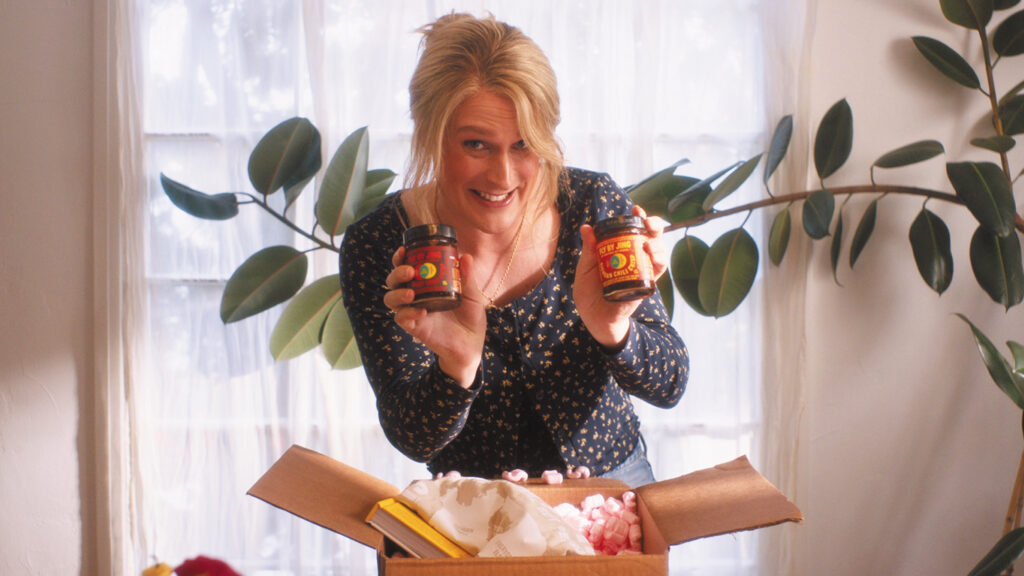
The crown jewel of the film’s production design is, of course, the food. The team worked without a consulting chef or food stylist, but Early and Landenberger proved more than capable of curating the on-camera cuisine. “John was really the chef of cuisine on menu planning,” the latter claims. “He’s a little bit more attuned to the LA restaurant scene.” But then, a bombshell: “Actually, I used to work on food photoshoots for Bon Appétit. I was a prop stylist, so I have clocked quite a few hours of watching food stylists work.”
As the brains behind the bites, Early found himself poking fun at LA-specific culinary trends. “There’s a whole LA aesthetic that is very Thai street food: bright oranges, pinks, and purples,” Early says over our collective snickering. “I keep saying it’s like Maddie is Cinderella if Cinderella worked at Sqirl,” referring to the Eastside bistro that was lambasted in a 2020 viral review concerning mold in their homemade jams. In a recent New Yorker profile, the restaurant’s origins are aptly described, at least for Early’s purposes, as a “millennial fairy tale.”
To source Early’s mounting list of eccentric ingredients—“marjoram, Meyer lemon, sambal oelek, yuzu”—they would venture to LAX-C, an “industrial supermarket” filled to the brim with foreign products. “We’d find something like a green Thai cake mix, and it would set us off into this special palette,” says Landenberger, who would then experiment on dishes with two art assistants “who were amazing, and both of whom, thank God, knew how to cook.”
Before we part ways, Early insists on connecting the four of us in a text thread so that they can send over production photos and additional thoughts via voice note. Early has been incredibly busy of late—starring in Wallace Shawn’s play What We Did Before Our Moth Days and conducting Q&As at Metrograph for a series he curated on the beloved playwright and performer, Wallace Shawn: The Master Builder.
Somehow, he finds time between all of his commitments to continue our conversation. “I kind of stumbled into this narrative device of a food influencer with bulimia,” Early says as we revisit the topic. “There really does seem to be this excessive, indulgent obsession with food right now. The decadence does not seem accidental. It seems like a kind of weird hedonistic binging we’re all doing before civilization collapses.”
Landenberger sends over a trove of sketches and photos of props that he designed. Particularly striking are vigil candles featuring decoupage that accompany the film’s teariest scene; Ruby McCollister’s character emblazons a self-portrait on hers, in which she looks both radiant and like a “goblin.”
When I ask Early whether something he had said in a previous interview still holds true, that he wants to continue to work within a small budget so he can hire his friends “without investors getting scared,” he sounds utterly confident. “I mean, the goal with working at this budget level and hiring my friends is that if I get to make a movie for more money, [investors] will see the work they did for Maddie’s Secret, and they can just keep coming along with me,” he says in an ebullient voice note. “I do want more money for my next movie, just to have a little more time so things can slow down a little bit, or so that preproduction can include paid rehearsals. But I don’t want to have much more money because then you start having to hire actors that are seen as bankable, and I really don’t wanna do that.”
But Early might be just the kind of bankable actor he’s talking about: he’s been justly celebrated for roles in Fort Tilden (2014), Search Party (2016–22), Eternity (2025), The Comeback (2026), and most recently, She Keeps Me Young (2026), which just premiered at the Tribeca Festival to warm reviews. Like Maddie, he might not realize just how charming and radiant he and his cohort already are.