Back to selection
Short Film Confessions Redux
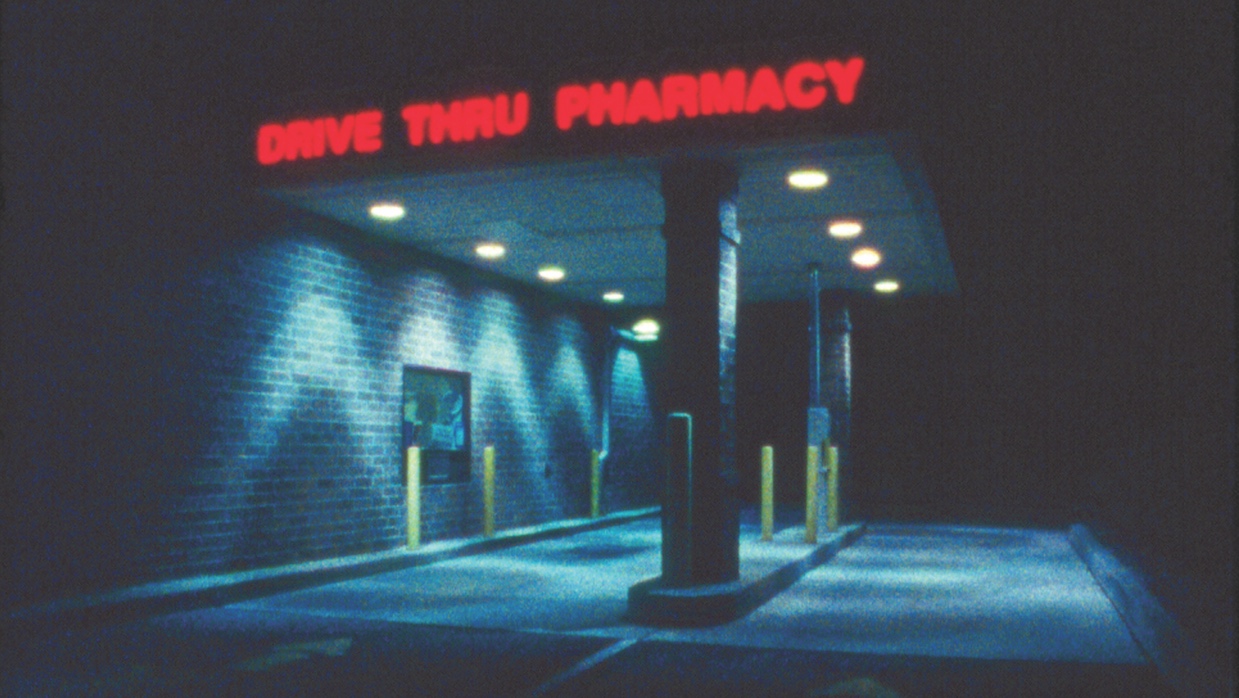 In Order Not to Be Here, courtesy of Deborah Stratman
 Thirteen years ago, I wrote an article for Filmmaker: “Confessions of a Short Film Programmer.” In my introduction, I hinted at the most brutal clichés filmmakers should avoid (uncleared movie posters on the walls, a protagonist drinking from a Jack Daniel’s bottle, revealing a character to be a mime), but I didn’t want to completely wallow in the negative. After all, as a programmer of short films at Sundance, I’m fortunate to have such a cool job, even if it also happens to be the only job I’m capable of doing professionally.
Since the publication of that article, the world of short films has changed quite a bit. But having worked for 25 years as a festival programmer, and since 2001 at Sundance, I’ll say that right now is the best time ever to be making shorts. Production costs are low, the possibility of getting an audience is high, and filmmakers can take the kind of big risks that are rare in features and television.
Over the past year, I’ve been interviewing a number of filmmakers I’ve programmed at all the various fests at which I’ve worked. I’ll be publishing these interviews, which are full of advice to new filmmakers interested in short films, in a book that will also contain observations by my fellow programmers. We’ll discuss what makes a successful short, whether that’s artistic quality, audience popularity or both. Here’s a quick sample from some of those interviews.
Jay and Mark Duplass’s feature films have played around the world; they have an HBO series currently on air and a big Netflix deal to make movies. Before all that, they sent to Sundance a short film they shot one afternoon on one mini-DV tape with Jay running the camera and Mark acting. Why that simple? Because at that point, they had already made two feature films that failed miserably and still have never been finished.
“We weren’t particularly frustrated because we [thought], ‘What the fuck do we know anyway,’” Mark remembers. “I guess because we came from the suburbs and had no connections, we had this inherent humility in us — like, ‘Oh, we suck, and we don’t know what we’re doing, and if we’re going to get there we’re going to need so much help.’”
After college in Austin, Texas, the Duplass brothers developed a small editing company to pay the bills and learn more about filmmaking. And they started saving up a lot of money to self-finance a first feature.
They also stayed humble. “We were living in Austin on $17,000 a year eating peanut butter and jelly sandwiches,” Jay says. “And that’s not an exaggeration. We didn’t buy anything. We didn’t do anything.”
He continues, “You make a thousand decisions a day when making a feature, but only like 22 of those decisions are really, really important … And there’s no way for you to know what those are unless you’ve started small with short films.”
The Duplasses’ debut feature cost $70,000 and had everyone in town working on it. It has some amazing scenes and demonstrates technical know-how, but, as the filmmakers describe it, they had not yet found their voice. They didn’t know the story they needed to tell or how to tell it, and the film failed in a narrative sense. They made a rough cut and had one screening, but it was obvious then the film wouldn’t be very good, so they shelved it.
With their money drained by a feature too bad to finish and Jay about to turn 30, desperation set in. The brothers weren’t in debt, but they were still living on PB&J in an apartment complex behind a strip club.
Realizing that the two of them could, as Jay says, “show up to a party and be charming and entertain people,” they wondered how to get those moments into a film. Says Jay, “What’s the barrier? What’s the problem?”
Jay and Mark went to their parents’ house and made a second feature — this time for only $500. It was an interesting experiment, but no one has seen this film either. However, the reduced budget did allow them to develop the scrappier, hands-on production skills they continue to use today.
Oddly enough, right before their first feature shoot, Jay and Mark had made a quickie short film with one camera and no money called The New Brad. While they were working on their to-be-shelved feature, it developed a pre-internet viral audience, being traded on VHS tapes all around Austin. The brothers didn’t think the short was well-made, but it did exhibit their off-the-cuff realism, with Mark acting and Jay handholding the camera, imitating real life as much as possible. As The New Brad became a local hit, the Duplasses realized another short, not another feature, might be the better way to go.
Feeling inspired, Mark challenged Jay to come up with an idea for a short in the time it would take him to go out and buy a new miniDV tape — a short that could be made with one actor and could be set in their apartment. The result was This is John, based on Jay’s own experience struggling with creating an answering machine message for actors coming to an audition. He nearly had a nervous breakdown because not only was he not sure how to make the feature, he couldn’t even make the audition message right.
Jay still thought they needed a crew, but he also remembers, “We didn’t feel that we had the right to ask people to help us anymore.” Mark says, “I never thought about that, but it might have been why [the crew] was just the two of us.”
Jay says, “We call it the ‘available materials school of filmmaking.’” They took Jay’s embarrassing, hilarious situation of the answering machine and changed it to be a regular guy without the film connection. They made one 20-minute take, then edited it down to seven minutes with their friend David Zellner, who had a lot of experience making shorts. And then they submitted it to Sundance. We thought it was funny, and we played it. The Duplasses then made two more shorts before, finally, their “first” feature, The Puffy Chair.
When we look at submissions for the Sundance Film Festival, we simply hit play and judge a film just like any audience member sitting in the theater would. And we want to discover new voices. So, when we watched Una Hora Por Favora (2011), we had no idea who director Jill Soloway was. Only after we programmed it and met her did we learn that, at 45, she was a new voice in directing films but had worked in television for many years.
“I had a lot of experience in the TV business,” Soloway remembers, “but I could not get any of these people to let me direct an episode. I was bonking my head against some sort of weird ceiling.”
Soloway had been a show runner on big series, including Six Feet Under, but the vibe conveyed to her was to concentrate on the writing and producing for now. Meanwhile, she would see unknown directors come out of festivals and be asked to direct television right away.
Between shows and low on money, she felt it was time to try and move her career forward. “I decided to make a short as a way to just sort of empower myself to have something other than my résumé. Something to show that said, ‘This is my voice, this is the way I see, this is my sense of humor.’”
While on a walk with Michaela Watkins, Soloway and her close friend joked about how hard it was to find love in Los Angeles, wishing they could just hire a man from Home Depot to come watch TV at home. A couple of days later, they realized they could turn this humorous idea into a short film. Soloway would direct, and Watkins would act.
Even with years of writing experience, it took time to work out the beats of the short. Soloway remembers her first rough cut: “I showed it to some friends, which is the most excruciating part of making something. The thing I always remind people not to forget to do is to leave enough time to share it with people and then be willing to listen to their feedback.”
What is now the beginning, middle and end of the short, with the character walking on the same set of stairs talking to her mother on the phone, were all added after Soloway’s rough cut screening. Adding this second layer, which clarified the short’s theme and provided opening and closing moments, turned the short from a group of interesting scenes into a full film. After the short, Soloway was able to make her first feature as director, Afternoon Delight, and then she created the show Transparent.
About directing actors, Soloway says, “I adjust performances by talking to actors about action. You know, what are you doing in this beat? And then we try to feel the doing together. The feeling can be melting. The feeling can be seducing. The feeling can be calcifying; it can be exploding. There’s a book called Actions: The Actors’ Thesaurus. Just the specifics of these thousand verbs that you can feel.”
When she directs today, Soloway still experiences many of the same feelings as when she made that first short. Indeed, you don’t become numb to the process. “So many people make films as a piece of evidence to gain friendship, a piece of evidence to gain power or a piece of evidence to gain a job,” she says. “Just make them for the purpose of understanding what your voice is like and keep making things until you start to see things.”
Building on that note, one of the best things I have noticed since my original article is that filmmakers don’t need to relegate shorts to just the early part of their careers.
Deborah Stratman makes films nonstop. When I wrote my earlier article, I mentioned her fantastic In Order Not To Be Here, a 33-minute short that took images of suburban surveillance and studied the ways in which we deal with fear and security. It’s no surprise that the film still resonates so loudly today.
Since then, she has made tons of shorts, some as brief as two minutes long. She has made multiple features, including one of my favorite films about America, O’er the Land (2009). And Stratman has made these films in no particular order, believing that there are no rules as to what you should do “next.” Her feature, The Illinois Parables, premiered at Sundance and the Berlinale in 2016, and then she finished a 15-minute short. She has also made physical art installations and written cool articles, like one about a meteor for This Long Century. She creates art, and it doesn’t have to always be in the same form.
Don Hertzfeldt has made a career of shorts. He made Rejected in 2000, which played festivals around the world, won awards and is a cult classic. He kept making shorts by himself or with a few friends. After making a trilogy of shorts, he edited them together into a feature, It’s Such a Beautiful Day, and released it to theaters in 2012. Then, he made a hugely successful Kickstarter to remaster all his shorts for a Blu-ray release. He even got to make a couch gag for the opening of The Simpsons.
Now, his new short, World of Tomorrow Episode Two: The Burden of Other People’s Thoughts, is one of the most anticipated films to hit the festival circuit and VOD in 2018. He has plans for a feature and episodic series. With shorts, he’s been able to retain complete creative control and build a strong fan base, and he plans to continue making new short films.
Success comes from the quality of the film, not the number of minutes it takes to watch.