Authors — Filmmaker Staff
-
“Character, as Always, Proved to Be King”: Directors Susan Froemke and John Hoffman | Rancher, Farmer, Fisherman

During its development, production or eventual distribution, what specific challenge of communication did, or will your film, face? How did you deal with it, or how are you planning to deal with it? The biggest challenge was working concurrently with an author who was profiling the same subjects but in a different medium. Print and film lend themselves to different ways of storytelling. The flood of information constantly coming at us from the author, with so much color, complexity, and detail, took time to sort through and evaluate in terms of what was best suited to film. We sometimes suffered […]
by Filmmaker Staff on Jan 19, 2017 -
DPs Bob Richman, Buddy Squires and Thorsten Thielow on Rancher, Farmer, Fisherman
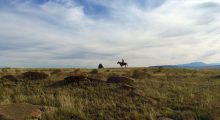
It took a team of four seasoned documentary DPs to capture the stories of Rancher, Farmer, Fisherman. Shot in Montana, Kansas and Louisiana, the film documents the lives of three men (the titular rancher, farmer and fisherman) who act as environmental conservationists in their respective fields. Directors Susan Froemke and John Hoffman have the action unfold in a vérité fashion, which stresses the land and the people who work it. Among the DPs they hired for the project were Bob Richman (An Inconvenient Truth), Buddy Squires (The Central Park Five) and Thorsten Thielow (30 for 30). Below, these three cinematographers discuss the unique challenges […]
by Filmmaker Staff on Jan 19, 2017 -
“Mistakes Are What Make Life Interesting”: Director Helene Hegemann | Axolotl Roadkill
During its development, production or eventual distribution, what specific challenge of communication did, or will your film, face? How did you deal with it, or how are you planning to deal with it? Axolotl Overkill is about a 16-year old girl, but was never supposed to be the typical coming-of-age odyssey that shows a teenager who struggles with the world just to find her place in it in the end. We always felt like we needed to do something different and to really make it relatable to how a young person feels – instead of showing her from the outside and […]
by Filmmaker Staff on Jan 19, 2017 -
A Slice of Southern Life: DP Dustin Lane on Dayveon
Hailed one of Filmmaker‘s 25 New Faces in 2016, Amman Abbasi makes his Sundance and feature film debut with Dayveon. The film stars Devin Blackmon as a 13-year-old kid coping with the violent death of his older brother in small-town Arkansas. Given the setting, age of the characters and Abbasi’s lyrical approach to the story, the film has strong echoes of George Washington by David Gordon Green, who served as an executive producer here. Below, Filmmaker speaks with Dayveon DP Dustin Lane about his connection to the American South, shooting in a small town and his visual approach to this story. Filmmaker: How […]
by Filmmaker Staff on Jan 19, 2017 -
“How Can You Make an Elephant Communicate Different Emotions?”: Director Kristen Tan | Pop Aye
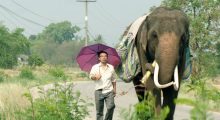
During its development, production or eventual distribution, what specific challenge of communication did, or will your film, face? How did you deal with it, or how are you planning to deal with it? How can you make an elephant communicate different emotions? This was a challenge I found myself saddled with during the production of Pop Aye. Obviously, there’s a tight balancing act involved here. I did not want the elephant to be cloyingly expressive or overtly cute — we’re not making a children’s film here. I wanted him to have the same kind of nuanced and naturalistic performance as […]
by Filmmaker Staff on Jan 19, 2017 -
“Film Has a Unique Ability to Transcend Barriers”: Director Amman Abbasi | Dayveon
During its development, production or eventual distribution, what specific challenge of communication did, or will your film, face? How did you deal with it, or how are you planning to deal with it? One of the great powers of cinema is its ability to create empathy and communicate with the world. How people live, what people dream of, what we all struggle with. Ultimately it’s all pretty similar and, in my opinion, film has a unique ability to transcend barriers of place, time and condition to allow us to understand we all are more alike than different. In my opinion, […]
by Filmmaker Staff on Jan 19, 2017 -
Dispatches from Thessaloniki, Macao and Cucalorus
Thessaloniki International Film Festival By Ray Pride What everyone in Greece has known since 2008 is — well, no one knows. In late December, the eurozone lenders again withdrew short-term relief measures for the demolished Greek economy, partially prompted by a one-time relief payment to impoverished pensioners for Christmas. A local observer said the current goal in Greek politics is to see “who can be less hated than all the others. Trust in political parties is rock bottom.” Greece is still in crisis, still reeling and contracting, although there are hopeful signs at street level, in cafes and tavernas, in this centuries-old, […]
by Filmmaker Staff on Jan 18, 2017 -
Super 8
The Verso Book of Dissent Some readers may find useful — for contemplation, inspiration and action — this anthology just out from Verso. Edited by Andrew Hsiao and Audrea Lim, it’s a collection of manifestoes, poems, songs and screeds from the history of opposition to authority. (Verso Books, $14.95, out now). 50 Song Memoir Writing songs for The Magnetic Fields, Stephin Merritt has generally had some kind of thematic guideline for each album: 69 Love Songs (self-explanatory), Distortion (ditto), et al. 50 Song Memoir, his first Fields album since 2012, may seem to be well in keeping with his previous […]
by Filmmaker Staff on Jan 18, 2017 -
Ruptures and Disturbances
The Killing of America The recent Severin Films Blu-ray/DVD release of the 1981 documentary The Killing of America marks the first time this notorious cult item has ever been commercially distributed in the U.S. in any form — ironic, given that it’s a film about a particularly American issue made by two American filmmakers, but it apparently hit too close to home at the time. So despite being a top 10 box-office hit that year in the country that actually produced it (Japan), the film never saw the light of day in the U.S. other than an extended run at New […]
by Filmmaker Staff on Jan 18, 2017 -
Listen: Walter Murch in Conversation (Part Two)
Yesterday we shared part one of a podcast conducted with Walter Murch conducted by Glenn Kiser for the Dolby Institute Conversations with Sound Artists series. In this second part, Murch discusses how Apocalypse Now changed the state of film sound, why going to film school could be a good idea, and using sound effects to express a character’s emotional state.
by Filmmaker Staff on Jan 12, 2017