Chheangkea
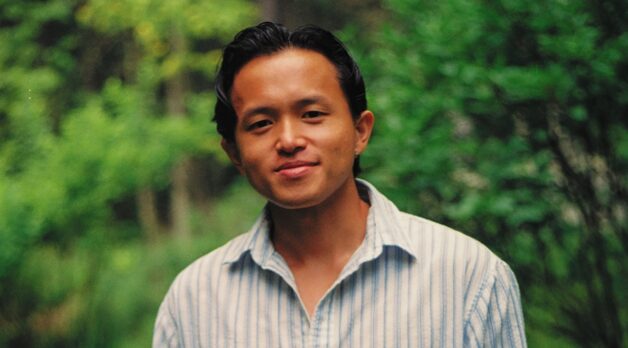 Chheangkea

Grandma Nai Who Played Favorites, Cambodian American director Chheangkea’s heartfelt 19-minute thesis, is both a poignant coming-of-age drama and a humorously deadpan ghost story. In the Sundance-award-winning short, it’s Tomb Sweeping Day in Cambodia when an extended family arrives to clean the gravesite of their grandmother—but Nai, said grandmother, is deflatedly observing her family’s every move, joined by another dead woman one grave over who shares her disappointment. Rather than respectfully honor their matriarch, the family prays for wealth and expensive cars, rushing through their ceremonial activities before moving on to the evening’s real main event: meeting the woman their 29-year-old son is going to become engaged to. Sensing that her grandson is hesitant about the engagement, Nai and her deceased sidekick follow the family to a karaoke bar, where it becomes clear this young man is queer.
Born and raised in Cambodia, Chheangkea shared a home with parents, siblings, cousins and his grandmother, also named Nai, who passed away when he was seven. Chheangkea’s parents operated a backyard recording studio and oversaw the daily production of music videos to accompany each newly recorded song. “In Cambodia back then, every song had to have an accompanying music video so that it could be used for karaoke later on,” he explains. Chheangkea played roles in front of the camera while learning the craft of filmmaking: “I grew up being on these sets, seeing makeshift cranes and sitting next to editors for hours.”
As a young boy, Chheangkea observed older male cousins majoring in architecture; arriving in Massachusetts for a fresh start with his mother and brother when he was 11, he believed his interests would gravitate toward a similar career path. “I was best in math and science,” Chheangkea says, “subjects I learned back in Cambodia and could apply here. With English and history being the subjects I struggled with the most, I thought, ‘I guess I’m a nerdy, geeky, science guy.’ All of these things seemed to confirm that I was an architect.” Chheangkea went on to earn a bachelor’s in architecture from MIT. After graduation, believing that he was destined to be a visual storyteller, he enrolled at NYU.
Skin Can Breathe, Chheangkea’s first short (made as his second-year project), follows a Cambodian American teen attracted to another male swimmer at school. When his mother picks him up after practice, she berates her shy son’s appearance, claiming girls will never date him if he doesn’t get a significant makeover. While the gap in emotional connection between parent and child is wider in Skin Can Breathe than in Grandma Nai, queer Cambodian men yearning for acceptance from female authority figures in their lives is the recurring narrative throughline. “Growing up queer and feeling different, I somehow formed this internal alliance with the women I [associated] with having some form of [shared] unequal [opportunity], whether I communicated this with them or not,” Chheangkea says. Accordingly, his debut feature, Little Phnom Penh, “spans over two ever-changing decades, from post–Khmer Rouge Phnom Penh to early 2000s California, [following] a Cambodian woman as she grapples with her identity, family and love amid profound cultural and historical upheavals.”
Chheangkea is adamant about not wanting to focus on the 1970s Cambodian genocide carried out by Pol Pot and the Khmer Rouge that continues to define his country for much of the world. “Everything people know about Cambodia comes from one horrific period in our history and our temples,” Chheangkea says. “While society was—and is still—affected by it, that wasn’t my core memory. When you go through such a huge tragedy, people don’t talk about it; they move on, so a lot of my memories are of people figuring out what exactly that looks like and trying to create better lives for their families. For me, the Cambodian experience isn’t the genocide; it’s figuring out how to be happier and how to make life easier for your family and yourself while dealing with all the other facets of life that might be negative. I want to dedicate this early part of my career to putting out a fuller version of what being Cambodian looks like.” —Erik Luers/Image: J P Cheuvront