Cinematographers
Interviews - Cinematographers
Featured
A Film To Read: Matiás Piñeiro, Tomas Paula Marques and Gabi Saidón on You Burn Me
 You Burn Me
New York-based Argentinian director Matiás Piñeiro’s work is without a doubt, a celebration of intertextuality. After continuously exploring the female roles in Shakespeare’s comedies from 2011’s Rosalinda up until 2020’s Isabella, he was drawn to a text which seemed impenetrable,… Read more
“Congratulations, That Shot was Terrible”: DP Matthew Temple on Late Night with the Devil
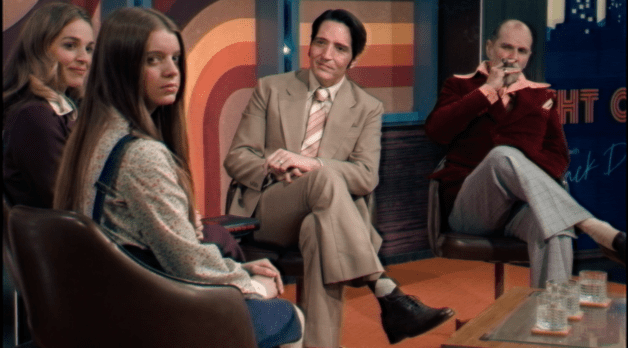 Laura Gordon, Ingrid Torelli, David Dastmalchian, and Ian Bliss in Late Night with the Devil
I typically have two problems with found footage horror movies. First, it’s often hard to believe the characters wouldn’t simply drop their cameras once the body count begins. Just as the haunted house movie must present a sufficiently logical reason… Read more
Shooting in ILM’s New StageCraft Volume Virtual Production Facility: DP Pierre Gill on Percy Jackson and the Olympians
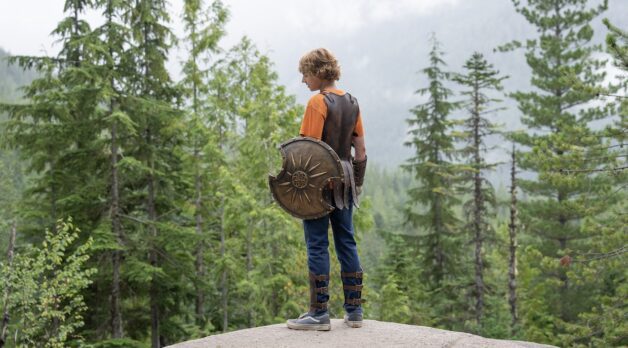 Walter Scobell in Percy Jackson and the Olympians
In the first season of Disney+’s Percy Jackson and the Olympians, the titular teenaged demigod and his compatriots travel across the country, with stops from St. Louis to Las Vegas, on a mission to prevent war among the Greek gods.… Read more
“A Frankenstein Set of Lenses”: DP Matthew Libatique on Maestro
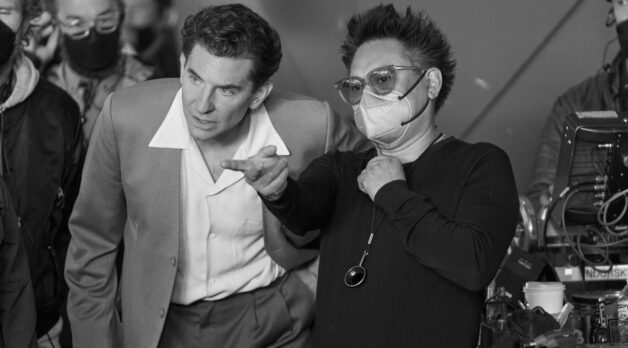 Bradley Cooper and Matthew Libatique on the set of Maestro
25 years ago, Pi—a $70,000 indie about an obsessive mathematician shot on 16mm black and white reversal stock—put cinematographer Matthew Libatique on the map. In the intervening quarter century, Libatique has earned three Academy Award nominations and shot multiple films… Read more
-
Women in the Wilderness: How Nat Geo’s Queens Aims to Close the Gender Gap in Natural History Filmmaking

When National Geographic’s Janet Han Vissering and Wildstar Films’s Vanessa Berlowitz got the idea to make Queens, a six-part natural history series about female animals made by an all-woman production crew, they knew it would be a challenge. Only something like five percent of wildlife filmmakers are women, a number far short of the 20 to 30 percent average across the entertainment industry overall. They didn’t know how hard it would be, though. “On the camera side, before Queens there were probably about five women who’d had the opportunity to get to the ‘premium wildlife’ level of work,” Berlowitz explains. “There […]
-
112 Days in Iceland: DP Florian Hoffmeister on True Detective: Night Country
The diversity of cinematographer Florian Hoffmeister’s output makes it difficult to typecast him. The German DP won an Emmy for his work on a BBC version of Great Expectations and followed with the Rowan Atkinson spy spoof Johnny English Strikes Again. Then, in succession, he lensed the Scott Cooper horror flick Antlers, the Apple prestige drama Pachinko and Todd Field’s Tár, picking up an Oscar nomination for the latter. But with True Detective: Night Country, Hoffmeister returns to a previous specialty–unsettling subzero horror. Hoffmeister’s work on AMC’s The Terror followed an ill-fated 19th century artic expedition. He’s back to frigid […]
-
The “Film Look” and How The Holdovers Achieved It
A working digital colorist or cinematographer in 2024 is likely all too familiar with one particular question: “Can we get the ‘film look’?” A decade into the age of digital sensors as the increasingly dominant and default shooting format, filmmakers at all budget levels are increasingly looking back at celluloid for inspiration. Phenomena once seen as drawbacks to be minimized—grain, chromatic aberration, anamorphic distortion, lens flares, halation—have not only become desired, but, if hordes of YouTube camera gurus are to be believed, “cinematic.” That is, these elements associated with this particular image formation workflow are essential to what constitutes “cinema,” […]
-
Endoscopes and Racing Drones: How a NatGeo Team Filmed A Real Bug’s Life
How do you film something that’s only about 2.5 millimeters long? What about thousands of those little somethings—pavement ants, in this case—all working together to dismantle a hot dog, perched amidst on a New York City sidewalk? That’s a question Bill Markham and his team had to figure out when putting together National Geographic’s A Real Bug’s Life, available now on Disney+. Ostensibly a sort of “real life” tribute to A Bug’s Life, which celebrated its 25th anniversary last year, A Real Bug’s Life follows different bugs in their natural habitats, all in service of teaching viewers how they live […]
-
“Tell the Story That’s on the Page Thoughtfully and Compassionately”: DP Nathan M. Miller on Penelope
Mel Eslyn, the head of Duplass Brothers Productions and the director of TIFF 2022 premiere Biosphere, makes her first directorial foray into episodic television with Penelope. Penelope tells the story of an alienated 16-year-old girl who venture into the wilderness to escape from society. Nathan M. Miller, who served as cinematographer on Eslyn’s Biosphere and has worked on several other Duplass Brothers productions, took on the job again for Penelope. Below, he emphasizes the series’ naturalist aesthetic and no-frills approach to lighting. See all responses to our annual Sundance cinematographer interviews here. Filmmaker: How and why did you wind up being the […]
-
“Debra is Incredibly Skilled at Recognizing What Will Remain Salient”: DPs Sean Hanley, Kefentse Johnson and Eric Phillips-Horst on Conbody VS Everybody
Conbody VS Everybody sees Debra Granik (Stray Dog) returning to documentary after 2018’s Leave No Trace and also breaking into the world of episodic series. The film follows Coss Marte as he creates a gym inspired by his own prison work outs in hopes of breaking the cycle of recidivism. Two episodes of Conbody VS Everybody will premiere at Sundance 2024. Below, series cinematographers Sean Hanley, Kefentse Johnson and Eric Phillips-Horst share how they all got involved in the film, how their personal styles blended with Granik’s and the challenges of shooting a series over many years. See all responses to […]