Back to selection
Perfectly Imperfect: A Missive From LAFM 2026
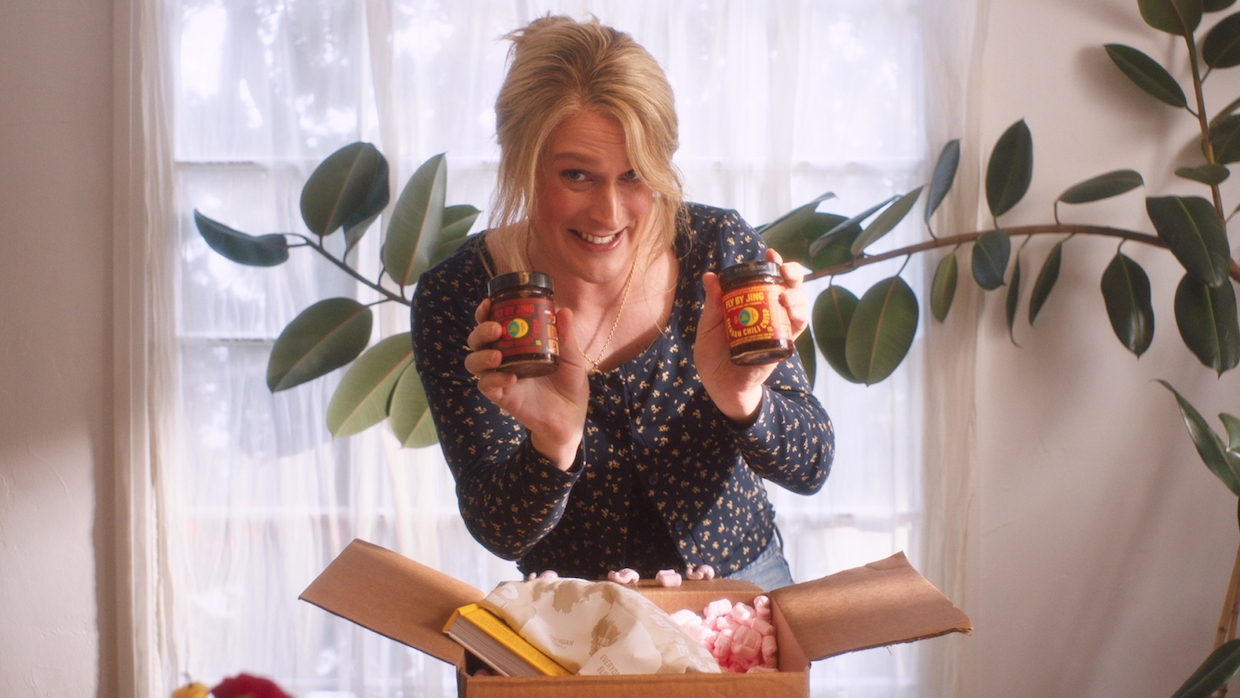 Maddie's Secret
 It’s impossible not to glamorize Los Angeles. Or at least this is how I feel every time I visit. The towering palms, seaside breeze, and temperate weather make everything easy to romanticize. This is an impulse that New Yorkers don’t regularly succumb to, what with incessant mass transit delays, post-blizzard poop pile-ups (we can only hope that these dumps were produced by dogs), and whatever environmental ill has been causing the wind to manifest as a city-wide vortex. After experiencing one of the harshest winters in recent memory, donning a light jacket and mini skirt to attend LAFM’s opening night at Vidiots in Eagle Rock was practically life-affirming. If the worst thing I had to complain about while staying in Los Angeles was the traffic, I got to thinking that this really might be where one moves for a taste of the good life.
I heard this sentiment regularly echoed among Angelenos, among whom I was delightfully enmeshed during the third edition of the film festival. When disclosing that I had traveled from New York to come to LAFM, people would politely reply in passing, “I love New York, but I could never live there.” When I offered the same opinion about LA, I was met with quizzical looks: “Really?” Even among film industry types, the fact that New York is one of the best cities for moviegoing couldn’t beat the consistent benefit of warm, sunny weather.
Whereas locals felt assured, LAFM itself has been experiencing a reckoning of sorts. Last year, the festival parted ways with major sponsor MUBI due to the distributor and streamer receiving a $100M investment from Sequoia Capital, a venture capital firm whose portfolio also includes Israeli defense tech firm Kela. Now that LAFM is solely co-presented by Mezzanine and the Kino Film Collection, Kino Lorber’s streaming arm, I kept hearing murmurs about the festival feeling more scaled back than usual.
Maybe the parties weren’t overwhelmingly open bar, the Eastside venues a bit too spread out for marathon viewing, and the films themselves a bit less buzzy than previous programs—but have the bigger, more monied festivals actually been serving their communities, and the filmmakers creating work within them? Particularly in Los Angeles, where several festivals have shuttered in recent years, LAFM steps up to serve a much-needed cultural purpose. If a fun party or big-name celebrity happens to manifest as a result, that’s great. But unlike other festivals, these aren’t the prevailing reasons to attend.
The fabric of Los Angeles was palpable in the opening night selection, Maddie’s Secret, the feature debut from writer/director/star John Early. Though the filmmaker was, ironically, in New York City for his theatrical turn in Wallace Shawn’s What We Did Before Our Moth Days, the largely LA-based cast, who I coincidentally sat right in front of, giddily emoted during the entire screening. Early plays Maddie, an almost sickly-sweet food influencer who struggles with bulimia when she’s off-camera. Her ultimate aspiration is to be absolutely perfect in the eyes of every person in her life, among them her buddy Deena (a scene-stealing Kate Berlant), vulgar boss (Conner O’Malley in a well-calibrated bit part), naive fiancee (Eric Rahill), bitchy on-air rival (Claudia O’Doherty), and even her narcissistic mother (Kristen Johnston). She’s nearly achieved her desired façade of flawlessness—save for her soft physique. Of course, Maddie’s titular secret can only be kept for so long, and the film straddles a tonal line between melodramatic TV special and abrasive alt-comedy. Surprisingly, this juxtaposition works to temper each genre’s weaknesses: emotional moments don’t feel trite thanks to well-timed humor, and these moments of levity never negate the raw humanity of each character. No character is simply presented as a cheap punchline, even the horde of Girl, Interrupted–influenced patients that Maddie encounters at a treatment facility. The film’s production design is also impeccable, owing to Gordon Landenberger’s ability to repackage present modern-day ephemera as ’80s pastiche. Early has essentially figured out a way to evince how absurd eating disorders actually are, delicately puke-flecked toilet bowls and all. Particularly in a city like LA, where your surroundings and celebrity neighbors all seem so impossibly beautiful, I can imagine that Maddie’s reality must have hit hard as hell.
Los Angeles stood at the epicenter of broader American anxieties in Isaiah’s Phone, easily the standout of the festival. Caleb described Da’s moviemaking methodology quite aptly, but the film also possesses a staggering cultural potential. One of the first conversations I had after landing on the tarmac at LAX was about whether the discourse surrounding Kristoffer Borgli’s The Drama is ultimately productive. While the debate still clearly rages on, I think that a film like Isaiah’s Phone is the ultimate antidote for those who deem The Drama to be socially irresponsible or glibly sensationalistic. Indeed, the adolescent plight feels markedly familiar, at least compared to my own experiences: romantic rejection, social stigma, and a lack of general autonomy abound. But the power of the film is not that it ends with a shocking moment of violence, nor that it distills such a raw, real portrait of teen strife by being entirely shot and partly conceived by its teen star Isaiah Brody. Its power stems from the fact that each and every one of us—even if you were “popular” in high school or didn’t grow up with cell phones—can relate to feeling like Isaiah does. The fact that the film ends so provocatively encourages the viewer to probe deeper than cursory arguments surrounding the distinctly American phenomenon of school violence. Since LAFM is one of the few festivals that has opted to program Da’s film, I’m left feeling as if people are more interested in arguing about representation than, well, actually representing reality.
I was happy to conclude LAFM by watching a restoration of Lino Brocka’s Macho Dancer, which in my mind paired quite well with Early and Da’s films. Set in Manila’s queer sex work scene circa 1988, Brocka’s film deals with occupational hazards that span sexual assault, human trafficking, addiction, and employer exploitation—yet the film itself is emphatically lighthearted. At the same time, it is careful to highlight the distinct pressures that befall dancers, particularly a lack of genuine social and romantic intimacy. The film’s melodramatic slant is both a product of its time and culture (Early’s fascination with the ’80s, in this sense, feels appropriate), yet its exploration of male-centric struggles works to buck common cultural misconceptions, as does Isaiah’s Phone, which also contains a central queer thread. Brocka’s film might not be perfect—my biggest gripe was with a lack of potent chemistry between lead actors Daniel Fernando and Allan Paule—but is anything that is truly interesting?
LAFM is not striving for perfection. It exists as a community hub, a platform for experimentation, an oasis in LA’s film-festival desert. Yet I’m happy to remain an outsider—isn’t that more conducive for discovery, anyway? Back in New York, I stepped in dog shit on my way to the train, but the wind has calmed down a bit. I can wait a year before returning to LA.