Back to selection
Considerations
Covering the annual film industry awards races, with sharp commentary on the pictures, the players, the money, and the spectacle. by Tyler Coates
Hacks and The Comeback Beat the Odds
 The Comeback
 The Comeback always seems to coincide with a new existential crisis facing television. In 2005, the HBO comedy series—created by Michael Patrick King and Lisa Kudrow, and starring the then recent Friends actress as a former sitcom star desperate to return to the spotlight—was a cutting satire about reality TV, which threatened to cheapen the medium with its low costs and tabloid-friendly drama. The show’s initial limited run garnered a cult following, and HBO revived it in 2014 when reality TV had achieved a certain level of legitimacy—but the industry was on the cusp of an overhaul with the impending streaming wars, churning out so much “prestige” TV that the adjective soon meant nothing.
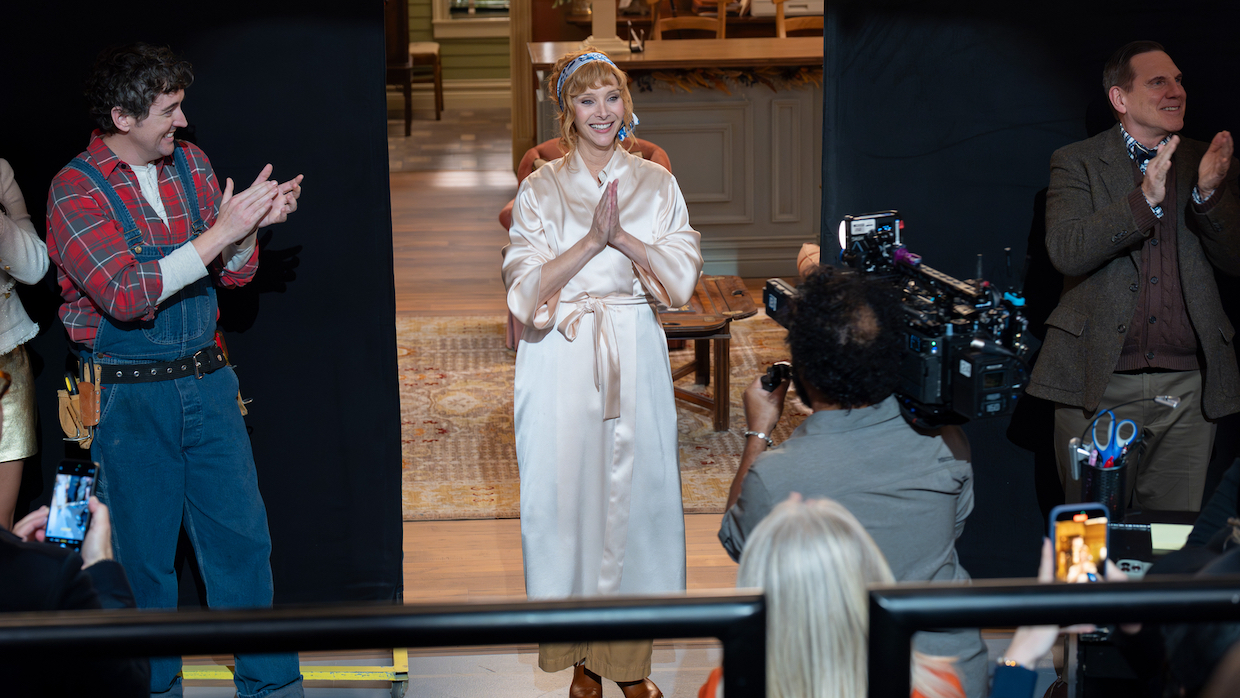
Twelve years (and a pandemic, two major strikes, and a lot of corporate contraction) later, Kudrow returned for Valerie Cherish’s swan song. The third (and final—this time HBO means it) season sees Valerie take on artificial intelligence after booking the lead role on the first sitcom to be written entirely by AI. Doing double duty as one of the show’s executive producers, Valerie is caught in an ethical and creative dilemma. An entire cast and crew, including Valerie herself, depends on the show for their jobs as production in Hollywood dries up. But the joke-writing machine that spurts out an overwhelming amount of plagiarized material (Valerie’s fellow sitcom vets recognize lines they’ve delivered in previous shows) directly threatens the livelihoods of TV writers and the entire medium that made Valerie a star.
Valerie has always been the butt of many of The Comeback’s jokes, her desperation for fame and attention dependably setting up emotional pratfalls. But she is also the show’s hero; one can’t help but root for Valerie despite her own humiliating desire for attention, thanks to Kudrow’s underlying charm—not to mention the underlying sexism and ageism she faces in the industry. And the fact is that she’s surrounded by people just as self-obsessed as she is. The third season breaks from the mockumentary format, and the result is a more propulsive watch, in which Valerie takes charge to fight harder than ever to save the day (and, potentially, the livelihoods of TV writers who have until now served as her chief antagonists in Hollywood).
One has to imagine that Hacks creators Lucia Aniello, Paul W. Downs, and Jen Statsky are fans of The Comeback. Their Emmy-winning HBO Max comedy series—a platonic love story of sorts between Jean Smart’s aging standup comic Deborah Vance and her Gen-Z comedy writer, Ava Daniels (Hannah Einbinder)—is also a showbiz satire, with Deborah attempting over several seasons to break the ultimate glass ceiling for a female entertainer: hosting a late-night comedy show. In Hacks’ penultimate season, Deborah achieves that goal, only to have the rug pulled out from under her, quitting the show rather than acquiesce to the network’s demands that she fire the outspoken Ava as its lead writer. The fifth and final season sees Deborah, like Valerie Cherish, desperately trying to hold onto her stardom and reclaim her voice after being silenced by a non-compete clause in her network contract, which prevents her from performing for a year. The season four finale, featuring Deborah’s downfall, aired just weeks before CBS canceled The Late Show with Stephen Colbert, making the season five storyline about corporate censorship even more timely.
Valerie and Deborah represent an endangered species of TV icons; their star status could quickly fade should they be so bold as to slow down and enjoy all that they have already achieved. Amid the underlying humor of their premise, the creative teams behind both shows—and the veterans who play their protagonists—bring an emotional depth to these two women, who have seen both the highs and the very low lows in their time as entertainers and lived to tell the tale. There’s an underlying optimism in both The Comeback and Hacks that offers a bit of comedy-fueled resistance against industry collapse.
AI also serves as a bogeyman in Hacks when Deborah, chasing any possible revenue steam as she mounts a comeback show at Madison Square Garden, meets with a vest-wearing venture capitalist who wants to license her likeness and material (and thus, Ava’s creative work) for a large language model called QuikScribbl. It naturally inspires an Ava monologue about the dangers of AI and its narrative of inevitability. (“This is exactly like when a fucking random-ass diner puts a sign out front that’s like, ‘Best Waffles in America,’” Ava shouts. “According to who? The people trying to sell the fucking waffles!”) It isn’t until the tech bro suggests Deborah use the machine to write her jokes for her that she recognizes the threat it poses—as well as the insulting implication that a machine can do a seasoned comic’s job.
That threat is more nuanced in The Comeback, where AI is less of a monster and more of a pathetic joke. Yes, Valerie’s latest multi-cam sitcom, How’s That?!, is hokey and dated, no matter that it airs on the Big Tech–funded network NuNet. The scripts written by its proprietary AI, Allassist, are good enough, but stale; when a joke doesn’t get a laugh from the audience, the machine produces more alts than any actor could reasonably try out on stage—and most of them aren’t funny. Valerie soon learns that the writers cannot really be replaced, even if it means there’s one or two fewer people on set to insult her. A computer can’t dismiss or diminish her talent as an actor, but it also can’t give her anything real to work with. And there’s nothing particularly efficient about making TV (or any creative endeavor) much less human. “I saw every one of those jokes coming, and so did you,” veteran TV director James Burrows, playing himself, tells Valerie after shooting the pilot. “Surprising only comes from a group of writers huddled in a corner, beating themselves up to beat out a better joke.”
It’s fitting, of course, that we’ll now see these female-fronted HBO shows pitted against each other in the Emmy race. Hacks is a 12-time winner, including Best Comedy Series for its third season, four consecutive Best Actress wins for Smart, and last year’s Best Supporting Actress win for Einbinder. The Comeback, despite its cult following, was never a hit with Emmy voters; Kudrow earned Best Actress nominations for its first two seasons, while its two other nods were for writing and casting in season one. Coming off the heels of The Studio’s sweep in the comedy categories last year, I wouldn’t be surprised to see another showbiz satire collect this year’s comedy series Emmy—and Hacks has the edge. While a Jean Smart/Lisa Kudrow tie for best actress is as unlikely as seeing Deborah and Valerie share a meal at the Polo Lounge (I’m saving that for my fan fiction), it would be a satisfying ending for two TV characters and their real-life counterparts who have survived these evolutions in the medium, despite all odds.