Richard Linklater
-
Cinema Eye Honors Announces 2015 Heterodex Nominees

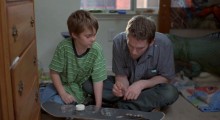
The Cinema Eye Honors for Nonfiction Filmmaking today announced the five nominees for its annual Cinema Eye Heterodox Award, sponsored by Filmmaker Magazine, a publication of IFP. The Cinema Eye Heterodox Award honors a narrative fiction film that imaginatively incorporates nonfiction strategies, content and/or modes of production. The five films nominated this year for the Cinema Eye Heterodox Award are: Boyhood directed by Richard Linklater Heaven Knows What directed by Josh and Benny Safdie A Spell to Ward off the Darkness directed by Ben Rivers and Ben Russell Stop the Pounding Heart directed by Roberto Minervini Under the Skin directed […]
by Filmmaker Staff on Dec 8, 2014 -
Watch: Richard Linklater and Wes Anderson’s The Grand Budapest Hotel Q&A
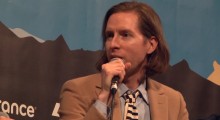
This post-SXSW screening Q&A for The Grand Budapest Hotel is a few cuts above average. For one thing, Wes Anderson, Jason Schwartzman and music supervisor Randall Poster get to have Richard Linklater as their moderator, which makes for a higher class of question and a more relaxed rapport between two sympatico filmmakers. Native Texans who’ve both worked with animation, Linklater and Anderson are equally ready to discuss the films of Max Ophuls and which Stefan Zweig books in particular they have or haven’t read. Other highlights: Poster talks about how they arranged to record with a full balalaika orchestra, Anderson […]
by Vadim Rizov on Nov 4, 2014 -
Watch: Richard Linklater’s Perception of Time
Friday afternoon, the Los Angeles Times ran a piece entitled “Kenneth Turan Takes A Critic’s Lonely Stand On Boyhood,” in which the film critic relays his alienation at finding Linklater’s latest short of a masterpiece. The article is less concerned with flushing out his exact grievances with the film, but he does say that he finds the “12 years, one cast,” aspect to be “a bit like a gimmick,” failing to achieve the breadth of Apted’s Up series. In my opinion, the viewing experience of watching the actors age is what makes the film special, overshadowing the more prosaic events in each of Mason Jr.’s 12 years. […]
by Sarah Salovaara on Aug 4, 2014 -
35mm Colors in Digital Translation in Boyhood
One aspect of Boyhood that’s been relatively underdiscussed (assuming there are any such left) is its use of 35mm, which has been widely noted but little parsed. Richard Linklater’s repeatedly noted that the primary reason for shooting on film over 12 years was to ensure visual continuity from one year to the next. This doesn’t mean he’s a Luddite in any way, as he explains in comments from a recent screening at the BFI on technology’s pros and cons: There is nothing more stable than a 35mm negative. Had I started on the best HD camera back in 2002, I’d […]
by Vadim Rizov on Jul 22, 2014 -
Kodak Moments: Rick Linklater on His Award-Winning Long-Game Masterpiece, Boyhood
This interview with Rick Linklater about his Boyhood originally appeared as the cover story of our Summer, 2014 issue. As the film wins Best Picture from the New York Film Critics’ Circle, is is posted online for the first time. Time, along with its cousin memory, are among modernity’s great artistic subjects, with the title of Proust’s masterwork, In Search of Lost Time, articulating the journey of countless authors, playwrights, and filmmakers to creatively capture the sensations and meanings of our rapidly receding past. Among the latter have been directors whose films have reached for these passing years with any […]
by Scott Macaulay on Jul 17, 2014 -
Watch: Dennis Hopper, Richard Linklater and the Russian Dynamite Trick
From January through May this year, Richard Linklater hosted a series of screenings at the Austin Film Society of his favorite films from the ’80s followed by post-screening Q&A’s. One of his selections was Dennis Hopper’s perverse 1980 tour-de-force Out of the Blue. After the screening, Linklater had a story to tell about seeing Hopper present the film in Houston in 1983 and then taking those in attendance to a racetrack, where he surrounded himself with sticks of dynamite and set them off. You can first watch Linklater describe the evening in question and Hopper’s thinking — that the simultaneous […]
by Vadim Rizov on Jul 16, 2014 -
When Independent Film Anticipates An Audience
The arrival of summer blockbuster season and another Transformers installment means it’s time for critics to take to their think pieces and argue why Hollywood’s lowbrow, cash cow economy harms the more artful realm of independent film. The New Yorker’s Richard Brody, meanwhile, had the good, iconoclastic sense to pen an article entitled “The Real Threat To Independent Film,” whereby he concludes that the field’s dismantler does not lie within Hollywood, but in independent film itself. “The most audacious low-budget American independent filmmaking,” writes Brody, “is threatened much more significantly by misplaced critical praise for art-house mediocrities than by Hollywood.” […]
by Sarah Salovaara on Jul 8, 2014 -
Richard Linklater’s Five Keys to Filmmaking
Richard Linklater’s Boyhood arrives in theaters next Friday, and the press blitzkrieg is well underway. In addition to a recent, incisive profile in The New Yorker, a relatively compact piece popped up in Fast Company that offers insight into Linkater’s process. Less practical than theoretical, the article addresses five bastions of great storytelling, according to the consummate independent filmmaker. I’ve excerpted my favorite points below. Find Your Form First “There are a lot of stories in the world, and I spend all my time thinking about how to tell them. That, to me, is the cinematic element. That’s the hard part: the right narrative form […]
by Sarah Salovaara on Jul 4, 2014 -
Trailer Watch: Richard Linklater’s Boyhood
Trailer cutting is an art in itself and more often than not the results undersell or miss-sell the very package they promote. So goes this slightly corny bumper for Richard Linklater’s masterpiece, Boyhood, though as I recall from my knee jerk reaction to the Coldplay-scored opening sequence, any glimpse of heavy handedness in the film is not worth fretting over. It’s simply one of the most profound viewing experiences I’ve ever had and the less you know going into it, the better. That one of the more holistic family portraits in film has earned an R from the MPAA is an egregious error. IFC Films […]
by Sarah Salovaara on Apr 25, 2014 -
True/False Diary 2: Actress, Killing Time, Boyhood
Full disclosure: I consider the industrious Robert Greene a friend, but that makes me no less cautious in deeming his new film Actress a big deal. This collaborative psychodrama follows and subjectively sculpts his friend/neighbor Brandy Burre’s attempt to simultaneously separate from her longtime boyfriend and return to the acting world she left for suburban motherhood. (Greene’s written for Filmmaker about deciding to premiere his fourth feature at this year’s True/False.) Burre is introduced in a bright red dress standing before a kitchen sink, moving in ambiguously charged slow-mo. Is it true that, as she muses, “I tend to break […]
by Vadim Rizov on Mar 5, 2014