Back to selection
Moments of Flight: Lili Taylor and Amalia Ulman Go Birding
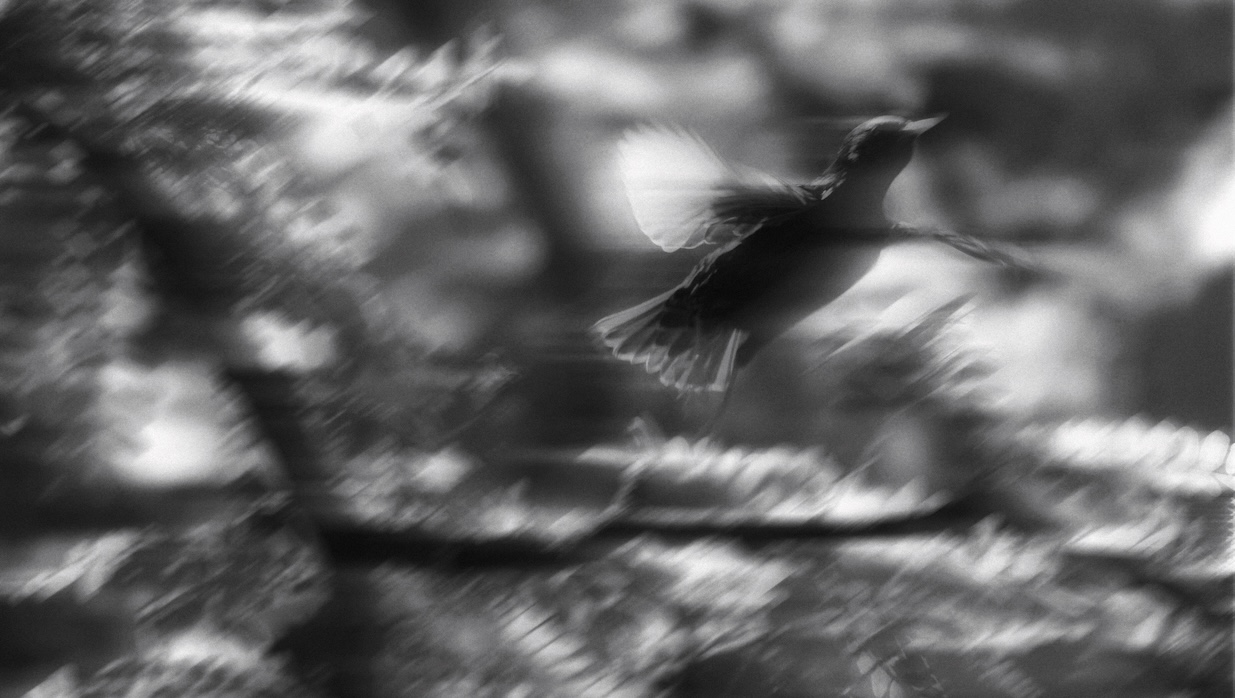 Photo by Amalia Ulman
 I was listening to the radio when Lili Taylor came on the air to talk about her first book, Turning to Birds: The Power and Beauty of Noticing. I immediately got excited: I have loved Lili’s work (Dogfight, Arizona Dream, Short Cuts, Prêt-à-Porter, The Addiction, I Shot Andy Warhol, Things I Never Told You, Pecker) for the longest time, so learning that she was a birder only added to her immensely cool aura.
Until now, my relationship to birding had been via New York’s most famous bird, Flaco the owl. He took a fancy to one of the water tanks on my block and spent the last two weeks of his life there, until February 23, 2024, when he was found on the pavement on West 89th Street. I had read he was somewhere in the neighborhood, and then, one winter night at 8:00 p.m. sharp, he started cooing very loudly. I immediately knew it was him. My cat ran to the window and I followed, thrilled about the celebrity visit. I couldn’t seem to get a glimpse of him from my window, so I ran downstairs, where I encountered a big man with a huge lens. He was a professional birder, of course, so I asked him where Flaco was, and he crudely told me that I would never see him (without his equipment and years of experience, that is). I walked around in my pajamas looking up, gave up and went back home to listen to the sweet coos. That became a routine of sorts, and for the next few days my cat Gemi and I would patiently wait for those sad, horny, nightly coos. Flaco was looking for an impossible love—he was the only owl in the United States of his kind and would die without mating.
When I learned that I was going to meet Lili Taylor to chat about birds, I thought of that mean birder and decided I couldn’t show up without renting a giant paparazzi lens apt for birding. So, I asked my birder friends and got my hands on the biggest, fastest, most powerful lens. Carrying the huge heavy lens box, I headed to the spot Lili had chosen, a relatively untouched four-acre woodland just outside the Hallett Nature Sanctuary that was only opened to the public recently and found her at the pond, armed with her binoculars and an infectious curiosity.
Taylor: I had never even known there was this whole little wildlife [Hallett Nature Sanctuary] area in there. It just opened to the public. We’ll go in there. I’ll show you.
Ulman: You were saying that it was closed for about 80 years?
Taylor: Oh, yeah. It’s so cool that you can get off at 59th Street and come into this.
[Lili, my friend Moises and I enter the Sanctuary.]
Ulman: Wow, this is so beautiful, I wasn’t familiar with this area at all, although I should be because I don’t live far from here. I’m on the Upper West Side. I feel like I’m always visiting the same pockets of nature.
Taylor: Yeah, exactly—patches, right?
Ulman: I read in your book that a common question you get is, “Who was your spark bird, the one that got you into birding?” You wrote that you don’t really have one bird in particular to give credit to this awakening. Was there any other animal, from a different species, maybe, that got you interested in the animal kingdom? (Who was your Holga?)
Taylor: I had rabbits and mice that I liked as pets. But I guess pets are a little bit different than something in the natural world. One special connection I did have was with a prairie dog.
Ulman: Where was this special prairie dog?
Taylor: I was filming [Outer Range] out in New Mexico and started to notice them around. Then, I realized, “I really like these guys.” I didn’t know much about them, so I looked up “prairie dogs New Mexico” and discovered that they are in trouble. They’re landlocked, which means they are stuck in these areas, and if they’re not helped by humans they’ll die. Then, I found out there are people that feed them, and I started to feed them, too. You have to buy carrots, lettuce, celery, and you chop it. When you have a truck full of it, you take these big buckets, go around and throw it down the holes where they live.
Ulman: Are they picky with food?
Taylor: No, they just can’t access food because they are landlocked.
Ulman: Just like P-22, the mountain lion, and all the other wildlife in Los Angeles, right?
Taylor: Exactly. I like anything that’s living, and doing something to help is always nice. Look at this tree: I think it’s oak. If you were going to plant any tree, this is the tree that’s the most beneficial to everything. It hosts 532 species of butterflies and moths.
Ulman: I didn’t know that! Tell me more about native plants; I’ve read that you have planted them in your own garden in Brooklyn.
Taylor: Well, it was a breakthrough for me to realize that all plants have names and come from somewhere. I didn’t know any of that. But native plants are not in any of the nurseries because they don’t sell well and don’t make any money. It is easier to find them online. [Lili spies a bird] Oh, that’s a robin! Right now, if you see a bird, there’s a good chance that it could have some young somewhere, like a nest. I realized that birds don’t just eat bird seed, from feeders; they actually have to eat the insects on plants or berries. The birds that are from here only know how to eat certain plants, and since most of the plants that are here are not native to this land, what they provide is not nutritional for the bird.
Ulman: Yes, I was fascinated by the idea that you may have a beautiful garden in your backyard, but that it couldn’t feed any of the birds. I love that you took the initiative to change this, to plant some native plants to create this sort of pitstop for these birds to feed themselves the way they know how.
Taylor: Exactly. They can eat invasive plants like oriental bittersweet but don’t get anything nutritious from it. It doesn’t take a whole lot to help out birds, which is so cool. A little goes a long way.
Ulman: When I lived in London, I noticed that every house has a backyard, and all those backyards are sort of interconnected and home to a lot of wildlife. It’s like the city has a double life with all the foxes and other creatures.
Taylor: So, the animals can move throughout… that’s huge. As you know, with P-22, that lack of interconnectedness is a problem. But they’re building those corridors above highways, and those are working.
Ulman: Let’s try to find some birds. Are you able to differentiate the sounds of birds when you hear them?
Taylor: A little. Certain families, like warblers— that’s what I was just hearing. There are about 30 species of warblers. Their calls are very complex, and it’s not easy, but I’m trying to get better. What I’ve been doing is using this app [Merlin Bird ID]: it’s like Shazam for birds. This is a quiet time in the day for birds, but I’m sure there’s a hungry bird around. A lot of birders are out by 6:30, but a lot of birds [that] eat insects wait till the sun comes out. I was seeing a lot of action around from 7:30 to 9:30.
Ulman: Do you ever photograph the birds or just use the binoculars?
Taylor: Sometimes I take a picture so I can learn about them when I get home. But, yeah, it’s a big difference. I almost feel like if I were to get into photography, there’d be a learning curve, and maybe I wouldn’t enjoy the act of watching the birds so much.
Ulman: I feel like there’s a big difference between being in the present moment and admiring a bird as opposed to having to photograph it, which is kind of like hunting. I find the whole photographic aspect of birding sort of macho.
Taylor: Yeah, well, and big, big, big lenses, right? I wonder why? [Laughs]
Ulman: Yeah, some of these lenses cost about $20,000, like a car. I think I enjoyed more the act of sitting near my cat and looking at whatever she’s looking at without having to document it.
Taylor: Exactly. It’s very different. There’s a cat bird over there!
All these little funny sounds—the “pspspspspssss” you’re hearing are birders doing this thing called fishing to bring the birds out. I wonder if it’s supposed to be either the sound of a predator or of their young? I don’t like to do it because I don’t like to bother them. What if they’re working on something—maybe a nest? I could try to bring that cat bird out, but why?
Ulman: Absolutely. I love how birding has become like a meditation technique for you, something you can do anywhere while you’re shooting a film. So many moments on a set are spent waiting around. It’s nice that you’re turning this aimless waiting into something beautiful and meaningful. I know a lot of actors have a hard time waiting. Was there any birding experience on set that was particularly special?
Taylor: Actually, I’ve had a lot of cool experiences birding while shooting films, but the big one was probably in Bulgaria. I kind of took the job to see the birds. Oh, there’s the cat bird! You’re gonna get a good shot.
Ulman: I will try…
[I proceed to shoot the way recommended to me by my birder friends, with a very fast shutter speed. It is not very loud, but in a peaceful environment like this, the noise stands out and resembles a machine gun.“Tatatatatata!”]
Taylor: That American robin was just calling! That’s kind of an alarm—they are saying to other birds, “There’s a problem, the camera!” Do you hear that call right now? He’s telling other birds that there’s paparazzi. And that’s the cardinal. That’s the sound I’m more familiar with. And I think there’s a blue jay! Looking up into that tree with binoculars just feels so nice, you know? I feel transported—I really needed to come in here today. Oh, there’s a raccoon!
Ulman: He’s huge!
[A huge, fat and sleepy raccoon inspects the lens case and later proceeds to cross from one side of the path to another right in front of us. He looks like a hungover college student in South Park pajamas covered in Doritos crumbs.]
Taylor: Just want to make sure he’s not rabid, you know?
Ulman: How does one determine that?
Taylor: If he were rabid, I think he would be coming for us right now.
Ulman: He seems alright. He doesn’t care about us.
Taylor: He’s probably so used to people at this point. If he were rabid, he would be coming straight at us because the virus needs to find another host. That’s why they go after you with ferocity and act insane. But this one, he’s not insane. He knows what he’s doing, so we’re okay. It’s just weird that he’s awake at this hour; that’s why I was a little concerned. This is when they should be asleep. But maybe he didn’t get a good sleep.
Ulman: It’s loud in Manhattan.
Taylor: I wonder where that raccoon sleeps. I wonder if he’s sleeping somewhere near here. He seemed very—
Ulman: Comfortable. Like this is his bedroom.
Taylor: Central Park raccoons are probably on a whole other level.
Ulman: Noise pollution…. I also wanted to ask you about light pollution. I saw a video of you done for the Cornell Lab of Ornithology initiative Lights Out for Birds about how turning off the lights in New York City protects the birds from collisions while they migrate. It made me think of how baby sea turtles, instead of heading to the sea, following the moonlight, get confused and crawl the opposite direction, toward city lights, and subsequently their demise. So, people volunteer to ensure hatchlings reach the ocean.
Taylor: I didn’t know! Similarly, birds are drawn into light, then come into Manhattan and either can’t get out of the city or collide with buildings. Cats are the number one cause of death and then, number two, is collisions. Although I think habitat loss is probably the main cause…
Ulman: I heard that in Flaco’s case, even though he collided with a building, his cause of death was rodenticide.
Taylor: Yeah, but the city didn’t want to report on that because—you get the point.
Ulman: Yes, the New York rats.
Taylor: But they have worked on taking away the rodenticide in certain parks when the hawks are breeding because a lot of hawks were dying, too.
Ulman: My last question is about preservation and your work with bluebirds and the National Audubon Society.
Taylor: I [don’t work with them] officially. I’m just a bluebird monitor.
Ulman: What does that mean?
Taylor: If you put up a bluebird box that you can open from the side, you can go in and see how they’re doing. If the nest is in bad shape, you can repair the nest. You can pull out snakes or bugs. And, of course, there’s house sparrows, which are the main killer of bluebirds. So, as a monitor, I try to ensure that they can reproduce and that the babies can fledge.
Ulman: That’s really cool. I read that they’ve managed to restore the population.
Taylor: Yes, in the 1930s, and that’s really because of these bluebird boxes.
Ulman: In your book, you mention Mihaly Csikszentmihalyi, the psychologist who coined the definition of flow. You talk about the difference of how time passes or is actively absorbed.
Taylor: Yeah, you know, there’s two kinds of time. There’s chronos, and then there’s a time called kairos. Kairos is the kind of time we’re experiencing in here.
Ulman: Yeah, I have a hard time mixing the two.
Taylor: I know, me too. It’s one or the other. And it’s tough with film because filmmaking is so chronos. Whoa, that’s a Canada jay!
Thank you Adam Leonti, Patrick Steadman, Forrest Alamasi and Moises Ramirez for all the birding tips.
All photos by Amalia Ulman.
Turning to Birds: The Power and Beauty of Noticing is available now from Penguin Random House.