Back to selection
Industry Beat
by Anthony Kaufman
Silver Linings Playbook: Meet the New Indie Distributors
 Wicker
 Has there ever been a good time to launch an independent film distribution company? Maybe not, admits Danielle DiGiacomo, former executive at Utopia and The Orchard, and one of the partners at a new distribution outfit launched at Sundance called Subtext. “We’ve always been operating under the shadow of giants, and it’s always been an uphill battle,” she says.
“But we think the market has been correcting itself over the last few years,” says Subtext co-head Brian Levy. “And that we are now on the precipice of fertile ground for new opportunities.”
Subtext is not alone. In the past several months, a number of new companies have rushed into theatrical distribution. This capricious market has finally regained some traction, thanks to higher-end indies like Hamnet and Marty Supreme performing well at the box office, an increase in younger moviegoers returning to theaters, and streaming companies realizing they need even more films to fill their vast libraries.
It’s the basic law of supply and demand. Says one industry insider, “The streamers understand that movies that are released theatrically perform better on their platforms. So now, there’s this outgrowth of new indie distributors that can provide them the content.”
Most of the new companies are following one of two familiar models. The top-down, bigger-spend approach involves releasing and marketing films wide to make a box office splash before selling to a streamer. The nimbler and more targeted bottom-up approach entails tapping niche audiences and grassroots support to fuel transactional (TVOD) rentals and purchases on platforms like Amazon Prime and Apple/iTunes (and potential licensing deals from a streaming [SVOD] company, if they’re lucky).
While the jury’s still out on whether any of these companies will thrive and survive, their existence alone inspires cautious optimism. As Rena Ronson, partner and head of UTA Independent Film Group, says, “A broader pool of domestic buyers strengthens the marketplace by reducing the risk that films leave the festival without U.S. distribution, ultimately creating a healthier and more stable marketplace.”
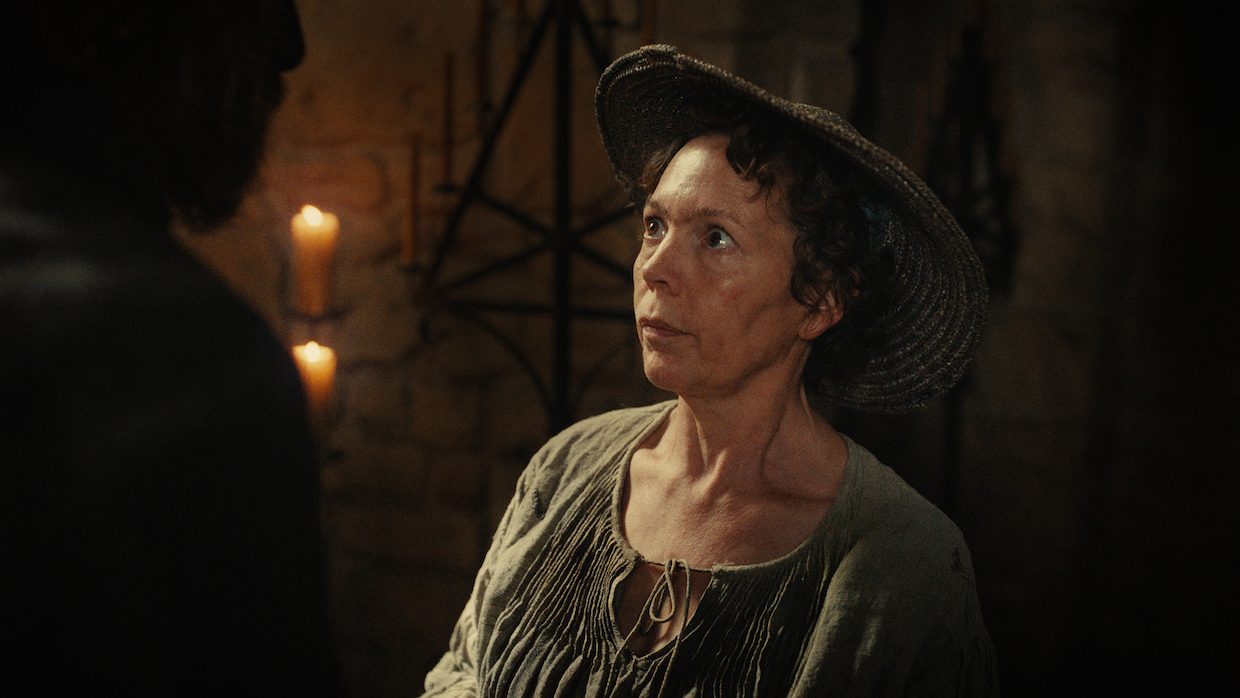
One of the largest and well-funded of the bunch, Black Bear, the production company behind Train Dreams, launched its distribution arm last year. It made its first Sundance deal, brokered by UTA’s Independent Film Group, by acquiring Wicker, a twisted romantic drama starring Olivia Colman. In January, it released a Jason Statham actioner across 2,726 theaters. There is also Row K, a creation of investment company Media Capital Technologies with the help of CAA Media Finance Group, which is also taking a Lionsgate-ish approach, but hit a snag recently as reports emerged of cash-flow problems and executive exits.
“A lot of people thought the theatrical market was going to die, but in fact, it’s coming back,” says Row K co-chairman Christopher Woodrow, citing under-40-year-olds as the fastest growing ticket-buying demographic.
“When people are scared or think it is not the right time for the industry, maybe it is the right time,” he continues, “because you’re able to get films for less than you would otherwise.”
But the challenges of the arthouse marketplace have already impacted Row K’s strategy, even in the early months of its existence. After its first release, Gus Van Sant’s Dead Man’s Wire, acquired out of the 2025 Toronto International Film Festival, earned just over $2.2 million at the U.S. box office on over 1,100 screens, the company was forced “to evaluate and refine our strategy as a new entrant building in a highly competitive marketplace,” Woodrow and other co-founder Raj Singh noted in a statement, noting a shift towards “prioritizing commercially viable titles.”
Other new distributors include Sumerian Pictures, which made headlines with its acquisition of Sundance breakout and Dramatic Grand Jury Prize winner Josephine; Joint Venture, which just released Andre is an Idiot as its first release; and Rich Spirit, focusing on films by BIPOC and diasporic directors, such as BLKNWS: Terms & Conditions. There are also new boutique distributors, such as Watermelon Pictures, focusing on Palestinian and Arab-centered films; Obscured Releasing, born out of RJ Millard’s marketing and sales company, Obscured Pictures; and producer-driven outfits like Willa and Cartuna x Dweck
“A lot of amazing stories with amazing filmmakers were getting shelved,” says Andre is an Idiot director Tony Benna, who was surprised when his film didn’t close a distribution deal after its successful Sundance launch last year. “Luckily, Joint Venture came on board,” he says, “and they are building as much buzz as possible, so the streamers won’t have to.”
Part of Joint Venture’s strategy—as the company’s name suggests—is to join with various partners to generate interest in its releases. Because Andre is an Idiot is a tragicomic portrait of a man with colon cancer, for example, the company is partnering with different cancer groups to help fuel awareness not just about the film but about the importance of cancer prevention procedures. “I think that our film can hopefully work on many levels,” says Benna. “People think it’s funny, but the more lives we can save the better.”
For many of the new distribution outfits, it’s all about using whatever leverage they have to identify and motivate the niche audiences for every film they release. Rob Williams, president of content strategy for Sumerian Pictures, which is planning seven to eight releases a year, says the company, which is an outgrowth of music label Sumerian Records, “has built up a strong online following through music.” It’ll use these “direct connections,” he says, to reach the “younger target audience” for its first major release this year, Mile End Kicks, a TIFF premiere about an indie music critic.
Subtext, which is “hyper-focused on music documentaries,” says DiGiacomo, is also tapping into the built-in audience of music fans. The company is dedicated to eventizing its releases with music performances, limited edition merchandise, and special Q&As. Its first release, Gregg Allman: The Music Of My Soul, about the Southern rock icon, will go out this summer.
“I know it may sound like a cliché,” she says, “but people really do crave experiences and being part of a community and a tactile experience, where they’re relating to other people and other fans.”
Because “discovery is getting harder on SVOD,” says Levy, for these films’ digital release, “we believe that there’s a renewed opportunity with a targeted marketing approach to activate those audiences to go to theaters and TVOD, especially if there’s nowhere else to find your film except for rental or purchase.”
Obscured Releasing co-head RJ Millard agrees. “We’re looking for films with a targetable audience that we can reach for a low cost,” he says. So far, for the new outfit, that’s meant three small documentaries, Stop the Insanity: Finding Susan Powter, Endless Cookie, and Starman, while it’s also prepping two LGBTQ+ fiction titles, She’s the He and Blue Film.
But it’s not going to be easy. Obscured Releasing’s co-head Bill Guentzler admits that TVOD sales are not as robust as they once were, which only puts more pressure on these films in the theatrical space.
As has been proven over the years, theatrical distribution for independent films has always been challenging, with many companies fading away after trying to make a go of it, including Open Road Films in 2019 and most recently Metrograph Pictures. So, while the current influx of new companies may be welcomed, the upsurge isn’t necessarily a panacea for the sector. As one film executive says, “It’s certainly nice to have more momentum in the marketplace, but we’re rolling the dice with these distributors who may not exist in a couple of years, so let’s wait and see.”