Back to selection
If Youth Knew: Chie Hayakawa on Renoir
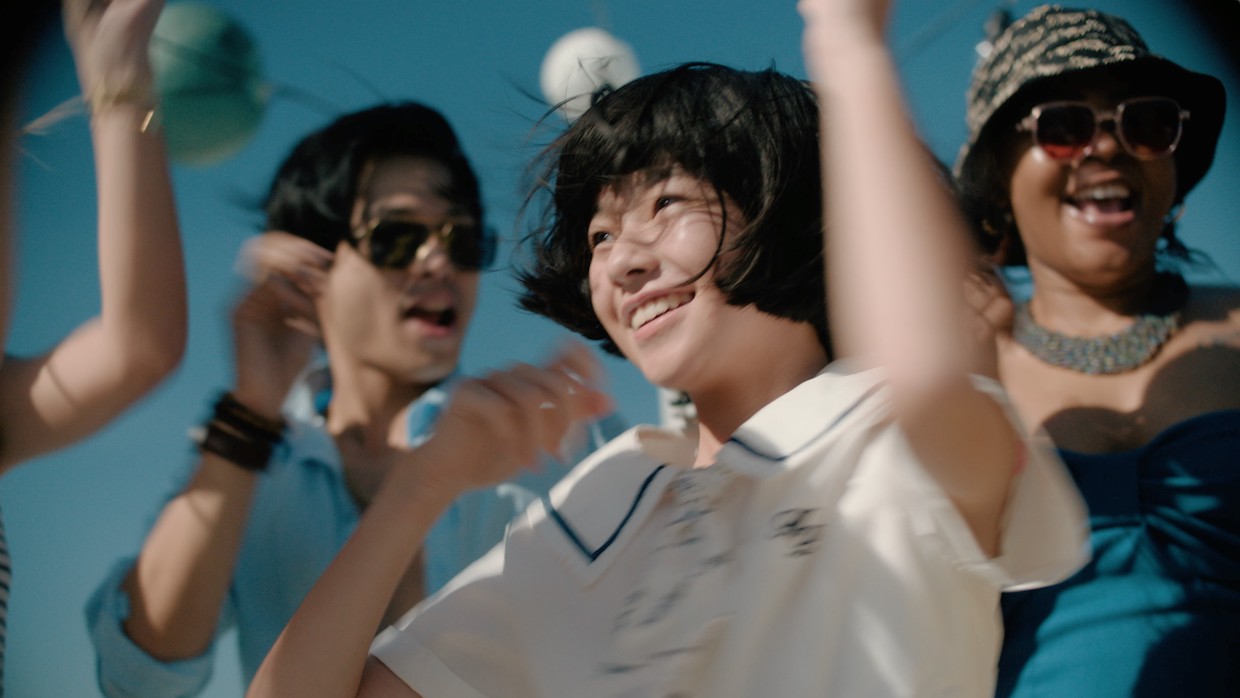 Renoir
 Chie Hayakawa’s Renoir (2026) focuses on Fuki (Yui Suzuki), a preteenage girl whose perspective on life is darkened and complicated over the course of her father’s terminal illness. The film is set in 1987, a year or so into Japan’s “bubble period,” when financial and real-estate speculation radically reshaped the country’s economy a generation after its “miraculous” postwar recovery. This boom time becomes the backdrop for Fuki gaining awareness of the people around her and the consequences of her actions; a chance encounter with a reproduction of Auguste Renoir’s 1880 oil portrait of the eight-year-old Irène Cahen d’Anvers provides her with a clue into her own taste, and how she wants to carry herself moving through the world.
Renoir takes things from Fuki’s perspective, contrasting her inner life (including an unmistakable interest in the macabre) with the mundane day-to-day rituals and societal expectations accorded an 11-year-old. The film is in an entirely different register from Hayakawa’s breakout debut, Plan 75 (2022)—in which the Japanese government implements an incentivized euthanasia program for senior citizens in order to stem the country’s population crisis (it is estimated that one-third of all Japanese people will be older than 65 by 2050). Renoir is a more mysterious and perhaps even riskier narrative proposition, exploring how to reconcile one’s own suffering with that of others. For the way they avoid pat catharses and cheap sentimentality (while also acknowledging the latter’s role in the psychic landscape of late childhood, in Renoir’s case) the two movies form a fascinating diptych in their respective approaches to grief.
Renoir is currently playing at IFC Center in New York, and opens this Friday at the NuArt in Los Angeles before expanding to other cities via Film Movement.
Steve Macfarlane: Just how autobiographical is Renoir?
Chie Hayakawa: I’d known I wanted to make a film like this since I was the same age as Fuki. My primary inspiration was my own experiences, but I was also very inspired by Shinji Somai’s Moving [1993], as well as the films of Edward Yang, particularly Yi Yi [2000].
Macfarlane: I think Yui Suzuki, playing Fuki, gives one of the great child performances of our time. How did you know Suzuki was the one?
Hayakawa: We found her through a conventional audition process. I was ready to see 100 or 200 people if that’s what it took to find the right person, but actually, Yui was our very first candidate. What caught my attention was that she would do everything just slightly different from how I had imagined the character would, saying things differently or moving in a different way. Her expressions surprised me. She had absolutely no hesitation. She was not afraid of the camera at all. She had a very childlike essence, but also a very mature one, and they were kind of coexisting within her. And during the audition she did the same imitation of a horse that you see in the film. She said that was her special skill. It totally stole my heart, and that evening I wrote it into the script.
Macfarlane: The film is pretty subtle about taking place in the 1980s, but there are some signifiers: the kids dance to a Yellow Magic Orchestra song at camp, there’s a nerve-wracking subplot where Fuki “befriends” somebody over a phone chat service, and she watches a lot of VHS tapes…
Hayakawa: I feel very thankful that my childhood did not happen during the time of smartphones or the internet. It’s harder today to get in touch with what’s real, and personal relationships are more complicated and difficult. Renoir takes place before this happened, at a time when the rest of the world still felt so far away. Programs like the psychic on the television were very popular, and everybody watched the same stuff. To me, there’s almost a carefree quality to people’s willingness to believe in things like that. Because the world abroad was very admirable, but also felt deeply mysterious. And it was an optimistic time; in Japan, people genuinely believed that the future would be brighter.
Macfarlane: The film has several subplots, or through-lines; one of the most fascinating for me was about Fuki’s mother, who is dealing with the imminent death of her husband, being obligated to attend a course on how to interact with her coworkers and employees…
Hayakawa: One of my big motivations in wanting to make this film was to depict the loneliness that these adults feel; Fuki’s father is also very isolated. I wanted to depict a mother who was having difficulty managing her anger, so much so that she was attacking the people around her. My own mother was the type of person who had difficulty controlling her anger, and I remember being very upset by that as a child. But when I was around 20 I realized what an isolating experience it was for her, to be constantly expressing her anger and falling into hysterics, and I actually began to feel very sad for her. If I made Renoir when I was younger, I probably would have depicted the mother as a bad person. Now I understand her feelings much better. People who have these types of issues are very lonely. Her needing to go through that training was one way to depict this loneliness. The fact that her company requires her to do it is very humiliating for her, and that adds to her anger, but it’s also where she meets somebody who sees the good in her.
But another aspect is that this concept of an anger-management course came from the United States. This type of thing is popular in Japan today, but I thought it might reflect the way things from the West, or from abroad, were considered superior in the 1980s.
Macfarlane: The title comes from a reproduction of Irène Cahen d’Anvers, upon which Fuki becomes fixated. Why this painting?
Hayakawa: In this period following Japan’s immediate postwar economic growth, there was a strong sense of wanting to catch up with the First World, and many Japanese people looked to America and Europe with a sense of admiration—immense admiration toward the culture, the art, and even the history of the West. One manifestation was this trend where people would purchase replicas of paintings, European masterworks. It was very common to find these fake paintings in the homes of Japanese people; the painting in the film is actually one I begged my parents to buy me, and they did so from an ad in the back of a newspaper.
Macfarlane: Where is the painting now? What’s your relationship to it as an adult?
Hayakawa: It’s probably in storage at my parents’ house. The one I had was actually much bigger than what you see in the film. The paintings were often sold in these very gaudy, Gothic frames. Having a painting like that displayed in the typical Japanese home, which is tiny, is just such an odd thing, and I find it fascinating. There’s an innocence there which I find representative of many Japanese people’s outlook at that time.
Macfarlane: Can you elaborate on what’s changed since then? Obviously part of the answer is globalization and the technological changes you mentioned, but those apply worldwide. I’m curious how you would describe the shift in attitudes in Japan, if there has been one.
Hayakawa: I think people everywhere are very concerned about the future today, and that is felt across all of Japan. The society of Japan is becoming older, and the population is in decline; there is anticipation that there will be some kind of collapse within society, separate from the more obvious economic decline. The older generation has memories of the bubble period and often thinks the old ways are better. So they’re unwilling to accept change or try to come up with new ways, and that’s been going on for decades. In general, I think Japanese people are experiencing a feeling of helplessness. They aren’t able to fight or resist the various problems of the country, and there’s a general sense of giving up.
Macfarlane: This touches on your previous feature, Plan 75, as well. Here in the US, it’s pretty much exclusively described as a science-fiction film, which strikes me as odd, but maybe that framing helps get the movie in front of people?
Hayakawa: Yes, when the movie showed abroad and people described it as a dystopian sci-fi story, I thought that was a very fresh, interesting interpretation. Personally, I never thought of it as science-fiction, rather as depicting a world parallel to our contemporary existing society.
Macfarlane: What was the reception of Plan 75 within Japan? That context is missing here, and Japan is noted for its aging population, like you said.
Hayakawa: What I remember very well is people describing it as “scarier than a horror movie,” because people were saying it could happen in real life, perhaps even in the near future. Now, we do not have a system in Japan like the one in Plan 75, however there are other things happening in society that feel relevant, such as the idea of valuing or marginalizing other people in terms of their productivity. These things are constantly discussed in Japan. Four years prior to making Plan 75, I made a short film version that was included in an omnibus film, and people said the idea could never happen in real life. Between the time of the short and the feature, COVID happened, and suddenly people were able, or forced, to shift their perspective, and it began to be seen as almost an inevitability.
Macfarlane: I’ll confess that I do think of Plan 75 as a “COVID movie,” because theaters had only just been able to reopen recently when I saw it, and because of the paradigm shifts you’re describing. In the United States, the deaths of the pandemic forced a kind of widespread denial and alienation, which is connected to what you’re talking about: who is deemed important, at least according to market logic. It’s not homeless people, and it’s rarely the elderly. On the other hand, American society is gridlocked by the fact that there’s an older generation who had an easier way of life; there’s a class of politicians in their seventies, eighties, and nineties who have gotten rich and refuse to relinquish power.
Hayakawa: The bigger concern within Japan is the discrimination faced by the older generation, particularly in being called a burden. Of course, in Japan we also have a powerful class of older people, but the issues surrounding our aging society are reflected more broadly in the majority of these elderly people, who are very much struggling economically.
Macfarlane: I’m wondering if you can help me place Renoir within the context of the contemporary Japanese film industry.
Hayakawa: So many films in Japan are based on best-selling novels, or they are adaptations of manga, or live-action adaptations of anime. These are the hit films that emerge for the domestic market. I don’t know the actual statistic, but I would imagine maybe 90% are based on preexisting IP, which is considered the least risky type of investment…
Macfarlane: And you’ve never wanted to direct something like that?
Hayakawa: I think of anime and manga as media that I respect on their own, separately, so I don’t think I would want to adapt them into a live-action film. I would be interested in adapting a novel, if there was a story I really enjoyed.
Macfarlane: Both this and Plan 75 are international coproductions. Is that uncommon?
Hayakawa: In Japan there are very few funding opportunities for a first film that’s also based on an original script; for that reason, we looked to Europe, which has many grants and opportunities for debut features. There are also sections in film festivals dedicated to first features. So we were successful in finding that support for Plan 75, and I always knew I wanted to go the same route with Renoir, as much as possible. Our crew was Japanese, but my development process was not so Japanese, so I struggle to describe myself as part of the Japanese film system. But now there are many foreign directors working on films in Japan, and Japanese directors going abroad as well, so I think the national borders are becoming blurred or obsolete; it’s not such a big deal to operate internationally.
Macfarlane: This is also your second time working with cinematographer Hideho Urata. Can we talk about the differences in style, and how you work together? I feel like the camera moves a lot more in Plan 75, and maybe the takes are a bit longer, but both films are very strong in terms of shot composition.
Hayakawa: In Plan 75, all the scenes of the Filipino care worker were shot handheld, because she’s supposed to be the most lively character in the ensemble. What I want to stress is that this was my first time making a feature film, and I didn’t know how to be on set. Many Japanese filmmakers start out as an assistant director; I did not have this experience. So Urata-san was very patient in explaining how things were supposed to go, how I was meant to behave on set so things ran well, et cetera.
Macfarlane: There’s an interview where you said you gathered the cast and crew on the first day of filming Plan 75 and said, “To be honest, I’m really not sure if this movie is going to be any good.”
Hayakawa: I don’t remember saying that!
Macfarlane: It’s from the Hollywood Reporter, when Renoir premiered at Cannes last year.
Hayakawa: Well… that’s a bad director. [Laughs.] To be honest, I would say Urata-san and I worked very improvisationally. At that time we were still in lockdown, with very strict rules about people entering Japan from abroad; Urata-san was coming from Singapore, and he only got into Japan 10 days before we started production. So he wasn’t involved in location scouting, and we had very little face-to-face interaction before filming started. We did have a lot of phone calls and Zooms about what films we liked, and we discussed the script at length, but it didn’t get into what shots I wanted or what the look of the film was going to be. Through these other long conversations, I learned that his sensitivity to image-making is very similar to mine, so once we were on set I didn’t have to say much for him to produce these images that I really loved.
Macfarlane: And what about the first day shooting Renoir?
Hayakawa: By the time we made Renoir, many of the crew members were returning from Plan 75, and by now these were people I trusted very much. The opportunity to work with them allowed me to ease into my role as director, and play up my strengths. So it was very relaxed in comparison.
Macfarlane: I saw this film in my hometown, at the Seattle International Film Festival, and it was a bit of a reprieve from a trip mostly focused on taking care of my mother, who is in her late seventies and has leukemia, as well as visiting my brother, who is raising two small children. So it really hit the mark. I think grief, or loss, is a very solitary experience, even when the people around you are well-intentioned about it.
Hayakawa: When a person dies, so many other people reach out, and yet that is one of the loneliest periods in human existence. It’s strange.
Macfarlane: When something like that happens, people want to show sympathy but maybe don’t know how, if they haven’t been through it themselves. Some can become very selfish as a response; others turn their backs because they don’t know what to say and they feel bad about that.
Hayakawa: What you just said made me remember something from my own childhood, when my father was about to pass. I imagined that the funeral would happen, all my school friends would be there, and they would be actively trying to relate to me and feel my pain. And I remember feeling excited about that, while also carrying a tremendous sense of guilt, or shame, for even thinking that thought while my father was dying.
Macfarlane: It’s interesting that Fuki gains that experience for the first time, and it is isolating, while you’ve also described the movie as being about her learning to empathize with others.
Hayakawa: Another thing I remember is that it was as if my mother was the main character at that funeral. All of our family and friends were there, being so kind to her and helping her, and she was very strong all throughout my father’s illness. But at the funeral itself she lost her balance, like she was about to faint. I remember thinking, and even saying to my older sister, it was as if she was acting out the role of a widow from a movie or a television show. It feels bad to say, but when a family member dies, it’s a very layered, strange thing. At least, that was my experience when I was young.
Macfarlane: To me the film ultimately feels more sober than romantic, but it’s also very visually beautiful. Especially since you’re describing it as a time of optimism, I’m interested in the way you counterbalance this kind of wistful, summer vibe with the isolation you described earlier, and the creeping onset of grief.
Hayakawa: I wonder if the film’s nostalgia feels more sober because my overall memories of girlhood are memories of feeling worried, stressed, lonely, or isolated. I’m not sure if this is typical or not. Maybe a “typical” person has happier memories of childhood, but I think mine have a strong sober element.
Macfarlane: These films form an interesting duo, in part because of the despairing quality of Plan 75, while Renoir deals intimately with a young girl’s coming into awareness of death and other things… Both are tough in their own way, but ultimately works of compassion. What’s your personal attitude about the decline, or anxiety, you described earlier?
Hayakawa: I’m a pessimist, but I haven’t completely lost my sense of hope either. I try to be an optimistic pessimist.