Back to selection
Scary Movie and the Wayans’ Spoof Empire
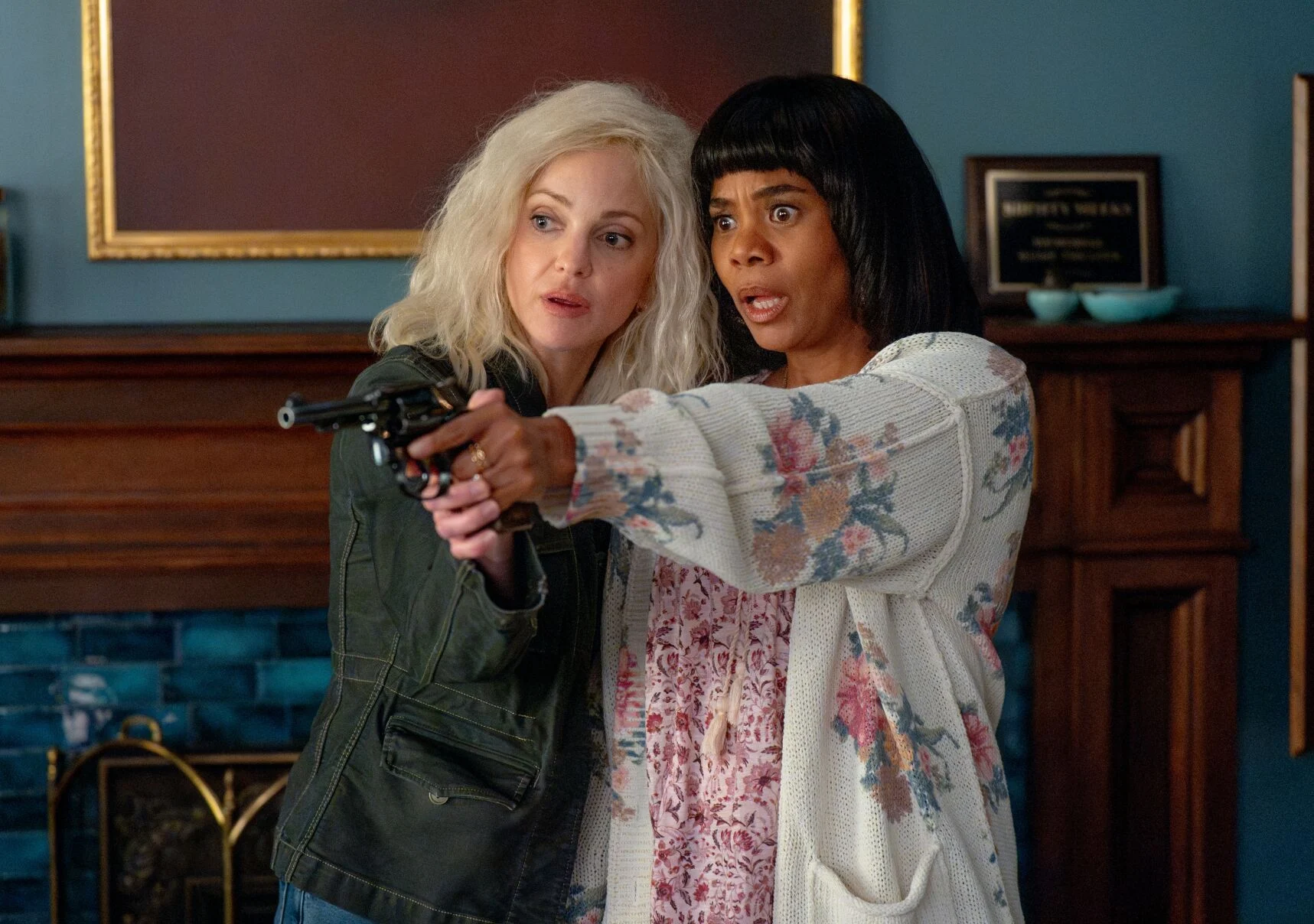 Scary Movie (2026)
 The latest installment in the Scary Movie franchise is the sixth, though the numeral is pointedly left off the title. This is a form of protest. The Wayans family collectively disowned the three films made in their absence—Scary Movie 3 through 5 (2003, 2006, 2013)—after a compensation dispute with the Weinsteins in 2001, a grievance which became the subject of the new film. Scary Movie (2026) is very much in the tradition of a Wayans spoof: a horror-comedy legacy sequel lampooning its own form as it serves up an incisive critique of the entertainment industry. It retains the offensive humor cherished by the franchise’s core fanbase and reviled by its critics, pissing and farting on genre conventions all the way to the bank.
The film’s laughs are largely derived from object-permanence callbacks, both to the previous films and to contemporary horror cinema, taken over the top primarily by the youngest Wayans brother, Marlon. But with nearly the entirety of the original cast back together after 25 years apart, there are also moments of profundity as the actors express genuine warmth and joy at their on- and off-screen reunion, back home with the franchise that helped launch several of their careers. The capacity for genuine emotion represents a surprising wrinkle in the profane formula the Wayans innovated and have relied upon to captivate audiences for four decades.
“We grew up on great comedy,” Robert Townsend tells me. “Blazing Saddles, Kentucky Fried Movie, that’s where it started for me and Keenen.” Townsend and Keenen Ivory Wayans have been friends and collaborators since their earliest days in comedy, their sensibilities shaped and refined by greats like Sid Caesar, Mel Brooks, and Paul Mooney. But in terms of form, perhaps no one group was as impactful as the comedy team of David Zucker, Jim Abrahams, and Jerry Zucker (ZAZ), whose hyper-dense spoofs are distinct from those of Mel Brooks and other long-form parodists for their up-to-the-minute (and sometimes quick-to-expire) cultural references.
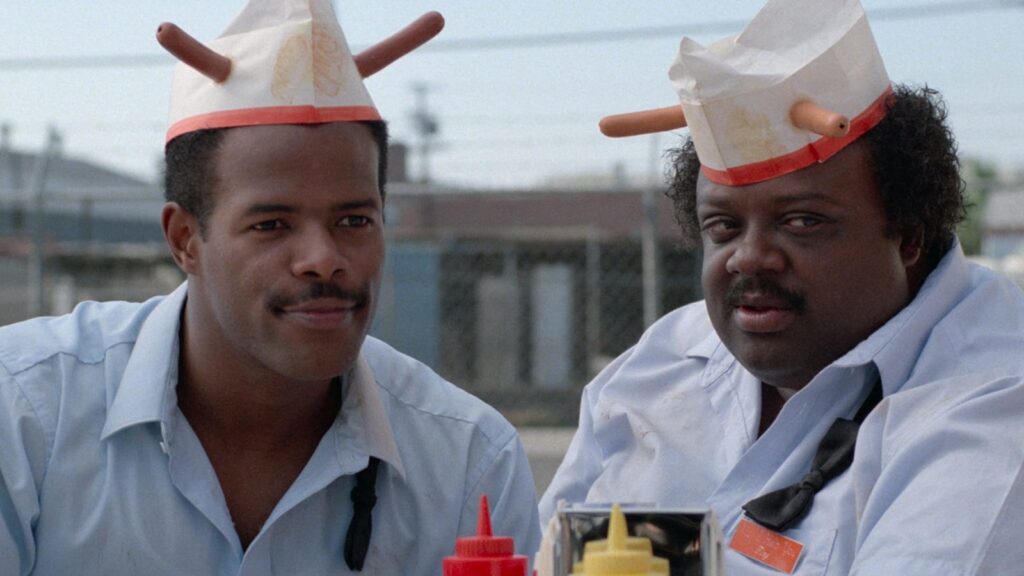
ZAZ’s Kentucky Fried Movie (1977), directed by John Landis, was inspired by the antiauthoritarian quip-heavy comedy of the Marx Brothers, the pop-cultural send-ups of Mad magazine, and Ken Shapiro’s Groove Tube (1974). Its plotless sketch reel of newscasts, commercials, and film parodies exhibits the trio’s slightly racy and slightly offensive dumb humor that, as Jim Abrahams has said, served as counterprogramming to the divisive politics of the 1970s: “Vietnam was still going on. You had all these political elements: Nixon, Watergate, feminism, Black Power. And we just steadfastly ignored all politics. And I think that’s part of why people liked it.” The modern spoof film—the hyperactive, joke-a-minute, reference-packed genre-referendum comedy with a narrative frame—was innovated by ZAZ in 1980, when Airplane! (1980) “elevate[d] stupidity to an art form,” as Abrahams said.
With Hollywood Shuffle (1987), the Wayans and Townsend added to the ZAZ recipe The Richard Pryor Show’s (1977) bite of racial satire and turned cinematic karaoke into a mode of cultural criticism. They set their sights on genres that had historically been pitched to Black audiences—Blaxploitation, the “hood flick,” horror films—roasting these films and their makers for pandering to and insulting their audiences with lazy, tired conventions. The Wayans family defied the odds, creating something of lasting critical and commercial value with the limited resources historically afforded to Black filmmakers. They built a dynasty of revolutionary, subversive spoofs in defiance of the white Hollywood power structure.
That project started with bits like “Sneakin’ in the Movies,” a Siskel and Ebert–style critics’ clip show that allowed Townsend and Keenen to parodize both the films themselves and their own reactions, offering a Black perspective on white racist fantasies like Dirty Harry (1971). “We were finding our way. We didn’t know what we had,” Townsend says. As the pair sat with their dailies, watching the disconnected sketches they had filmed, it dawned on them that they could string these pieces together with a coherent narrative about the Black actor’s struggle for creative fulfillment and honest representation.
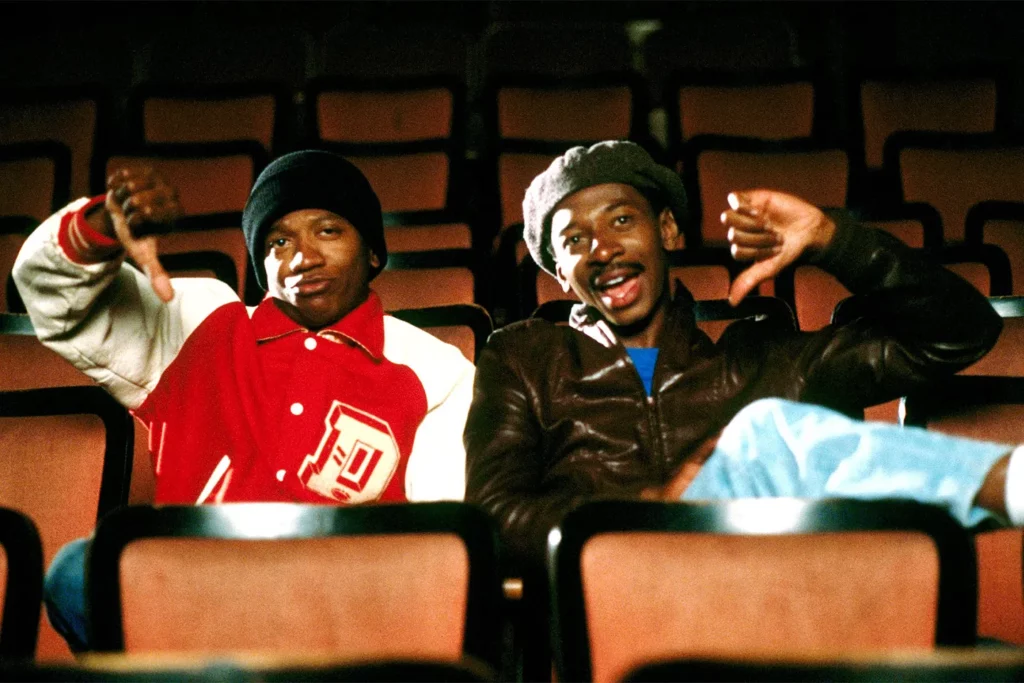
The success of Hollywood Shuffle gave Keenen the clout to launch two projects that announced him as a creative force in his own right: I’m Gonna Git You Sucka (1988), and In Living Color (1990–94). The latter is a vicious sketch show that shifted the national consciousness and sense of humor. It does not content itself with simply calling out racism, but also levels nuanced, intelligent, angry critiques of Black culture as mediated by the white power structure—a call that comes from inside the house. Sacred cows were slaughtered on a weekly basis—Michael Jackson, Mike Tyson, Michael Bolton—in skits encompassing everything from music-videos, to Home Shopping Network segments, to film trailers.
In Living Color served as finishing school for the Wayans, condensing the style that would next find its expression back in theaters with Don’t Be a Menace to South Central while Drinking Your Juice in the Hood (1996). The film takes Hollywood to task for the diagrammatic inner-city coming-of-age stories it had cranked out in the early 1990s, beginning with brilliant films like Menace II Society (1993), South Central, Juice (both 1992), and Boyz n the Hood (1991), whose success inspired studio executives to mine Black trauma, imprisonment, and death for popcorn entertainment. The Wayans film is brimming with anger over these negative stock portrayals and opportunistic cynicism.
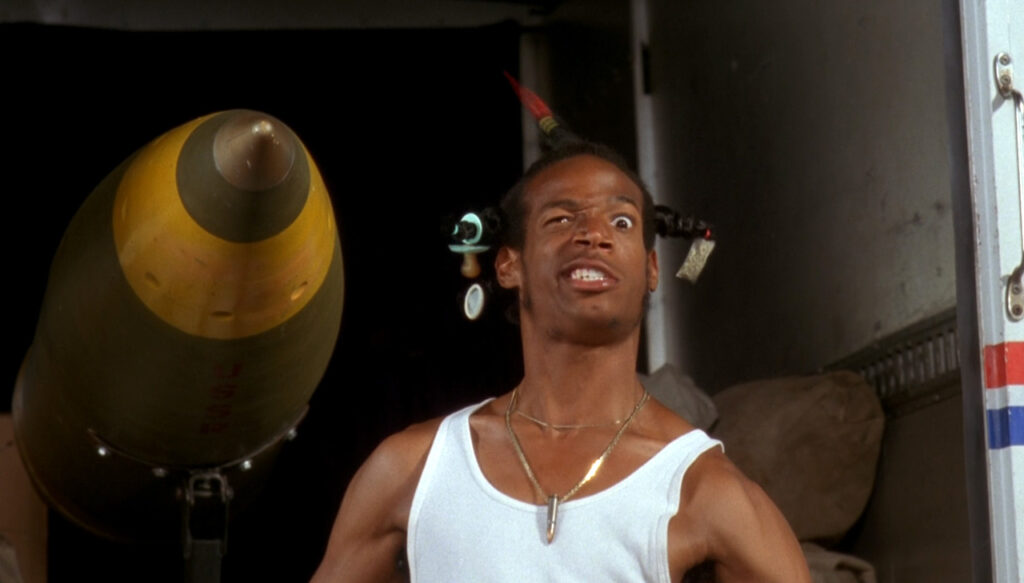
Marlon plays Loc Dog, mainly spoofing Larenz Tate’s O-Dog from Menace II Society, a Tybalt-by-way-of–AmeriKKKa’s Nightmare figure that became a prerequisite for practically every 1990s hood flick. Loc Dog is an absurdist riff—with braided armpit hair and a nuclear arsenal in the back of his stolen mail truck—the type of character Townsend was sick of auditioning for when he decided to make Hollywood Shuffle. A decade later, Marlon is calling out the kind of caricatures that can spring from the pens of Black writers as well as white. It’s a significantly more complex piece of cultural criticism than Airplane!’s jive-talk bit.
Next came Scary Movie (2000), in which the Wayans formula reaches its ruthlessly efficient final form. It riffs on the prevalent teen slasher revival films of its era but likewise takes the piss out of whatever else was popular at the moment. The comedy is anarchic, freely mixing forms highbrow and low: shot-for-shot spoofs, heightened dialogue quoting other films, and meta cameos. Then there are the regrettably mandatory bits punching down at gay and disabled people, and the equally mandatory host of gross-out gags.
Most of the films the Wayans pick through for gags in Scary Movie feature a predominantly, if not entirely, white cast. In his 1997 review of David Mamet’s The Edge, Roger Ebert coined the phrase “The Brother Always Dies First,” corroborating a common complaint of Black viewers. Subsequent analysis has cast some doubt on this premise, but the trope speaks to a larger problem of representation in horror. There are multiple jokes in Scary Movie that address the tension inherent when you place three Black actors (Regina Hall, Shawn and Marlon Wayans) at the center of a horror film, however skewed and skewering the premise. Its jokes present prevalent stereotypes blown up to ridiculous proportions, tiptoeing the line between goofy nonsense and social critique.
Like every Wayans and Townsend project discussed above, Scary Movie made a lot of money on a comparatively small budget, turning $19 million into $278 for Dimension Films. A sequel was immediately greenlit for release a year later; despite the addition of master satirists like Chris Eliott and David Cross to the mix, you can feel the strain of the condensed production timeline in the final product.
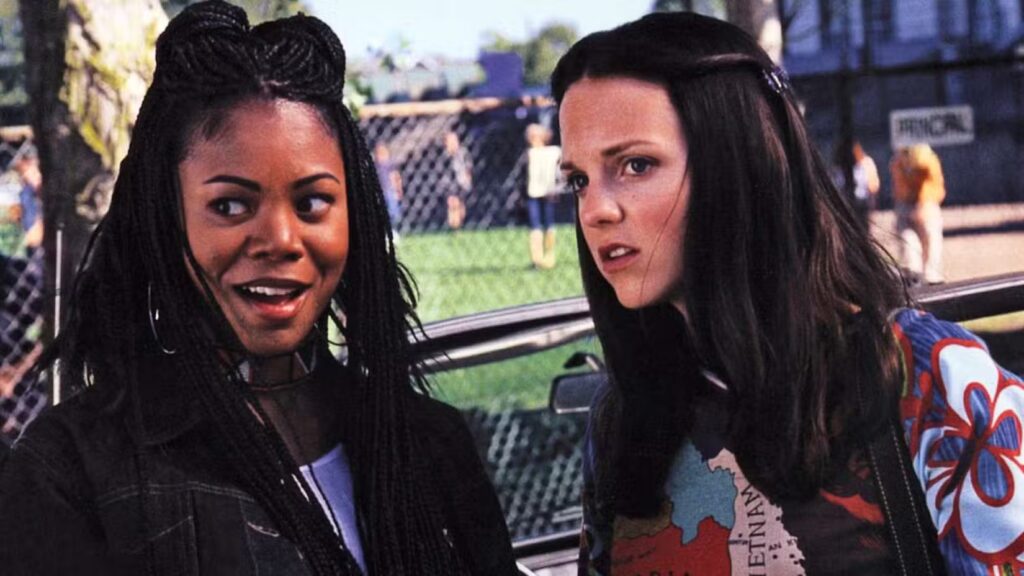
ZAZ’s own David Zucker stepped in to direct Scary Movie 3 and 4 in the Wayans’ absence, creating a kind of ouroboros of spoof cinema history. On screen, Marlon and Shawn were essentially replaced by Simon Rex and Charlie Sheen. In a recent interview with GQ, Marlon Wayans likened the experience to “watching your child become a crackhead.” It is a disappointingly familiar cycle for many Black filmmakers who have been deemed expendable by the industry. But perhaps, with the latest installment of Scary Movie bringing in a global box office of $172 million in its first two weeks, all but ensuring the series will continue, this particular story will get the happy ending it deserves.
Townsend once got a chance to meet Sidney Poitier. He asked the legend how he was able to retain his dignity in Hollywood at a time when respect wasn’t commonly afforded to Black actors. “I said no,” Poitier told him. “I made sacrifices to do it, but I had the power to say no.” During Townsend and Keenen’s respective bids for creative freedom, they tried their hands at any number of projects, but always drifted back to the spoof, a form that gave them a voice to say things about American culture that made us laugh, and might have even made a difference. Last year, Ryan Coogler’s Sinners, a Black scary movie about artistic freedom and the white exploitation of Black art, made $370m and earned the most Oscar nominations in film history. Maybe this has nothing to do with the Wayans’ critiques and their journey through the industry. Or maybe Hollywood is finally getting the message.