Cinematography
Filmmaking - Cinematography
-
Watch: What Does a Camera Operator Do?

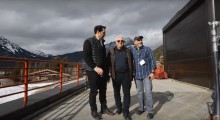
A reader, Dylan Toombs, passes along this video shot earlier this month at the The Banff Centre for Story Summit 2016 and featuring his interviews with three top Hollywood camera operators: Mitch Dubin (Saving Private Ryan, Bridge of Spies), Steve Fracol (Songs of Anarchy, Scandal), and Dave Thompson (American Hustle, Silver Linings Playbook). At the head of the video, Dubin offers perhaps the most concise description of the camera operator’s job that I’ve every heard, and the rest of the short, four-minutes-and-change interview contains other perceptive insights into how these three men view the nature and definition of their job. […]
-
“Time, and How to Manage It”: Miss Stevens DP Sebastian Winterø
Building on eight years of pedagogical experience, Julia Hart’s debut feature Miss Stevens tracks a troubled teacher (Lily Rabe) and three of her high school students as they attend a statewide acting competition. Victory means possibly forestalling the closing of their cash-strapped school’s fine arts division, but Hart focuses equally on the complicated relationship between the teacher and her charges. Here, DP Sebastian Winterø (who recently shot Sia’s “Umbrella” video) discusses the importance of making sure the director has enough time, being fascinated by California’s light as a European, and how much work should be done for the DI. Filmmaker: How and why […]
-
The Witch DP Jarin Blaschke’s Lens Tests (With Stills)
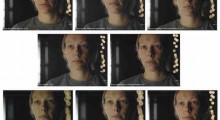
In conjunction with his interview regarding The Witch, cinematographer Jarin Blaschke shared with Filmmaker a series of frames taken from his preproduction lens tests. Here’s Blaschke’s thoughts on the tests, which were conducted at Panavision Hollywood with an Arri Alexa: I had used Cooke Panchro Series 2s [from the 1950s] on a couple smaller pieces and Super Baltars on the last short film with [The Witch] director Rob Eggers, Brothers. I liked them both for certain things, but never compared them side by side or alongside other vintage glass. I asked Panavision [Hollywood] about everything available pre-Panavised Zeiss and made a […]
-
DP Caleb Heymann on Evoking the Early ’90s in Sundance Winner As You Are
The first feature film from writer/director Miles Joris-Peyrafitte, As You Are unfolds as the story of three teenage friends in the early 1990s. Joris-Peyrafitte hired Caleb Heymann, a fellow newcomer to feature filmmaking, to shoot the film. Heymann spoke with Filmmaker about shifting aspect ratios, vintage anamorphic lenses and the execution of a tricky long take. As You Are premiered at Sundance 2016 in the U.S. Dramatic program. Filmmaker: How and why did you wind up being the cinematographer of your film? What were the factors and attributes that led to your being hired for this job? Heymann: Producer Sean Patrick Burke had seen […]
-
“No One Slept for 30 Hours Straight”: DP Siddhartha Nuni on Shooting Brahman Naman
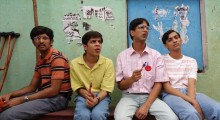
Styled in the vein of American slacker and teen comedies, Brahman Naman is the newest film from Indian indie filmmaker Qaushiq “Q” Mukherjee. DP Siddhartha Nuni shot the film in 23 days in the city of Bangalore. Filmmaker spoke with Nuni about his love of Trainspotting, recreating ’80s-era India and capturing the “confused teenage mind visually.” Filmmaker: How and why did you wind up being the cinematographer of your film? What were the factors and attributes that led to your being hired for this job? Nuni: The director of the film Q was looking for a cinematographer who had an experience of working under the constraints with which […]
-
Ely Dagher on Blending Animation, Photography and Video in Sundance Short Waves ’98
Winner of the Palme d’Or for Best Short Film at the 2015 Cannes Film Festival, Waves ’98 is the debut film from writer/director/animator Ely Dagher. The film is set in Beirut – Dagher’s hometown – and concerns a young man who becomes isolated from reality. Filmmaker spoke with Dagher about the film’s blend of video footage, still photography and animation. The Sundance Film Festival presented Waves ’98 in 2016 as part of its Animation Spotlight shorts program. Filmmaker: How and why did you wind up being the cinematographer of your film? What were the factors and attributes that led to your being […]
-
Cinematographer Richard Henkels on Sundance Doc Author: The JT LeRoy Story
From the director of The Devil and Daniel Johnston, Author: The JT LeRoy Story charts the literary universe created by writer Laura Albert. LeRoy, her literary alter ego, has enraptured and enraged readers since the 1990s. Filmmaker spoke with DP Richard Henkels about he sought to have the documentary “feel like a feature film, not a TV doc.” Author had its world premiere at the 2016 Sundance Film Festival. Filmmaker: How and why did you wind up being the cinematographer of your film? What were the factors and attributes that led to your being hired for this job? Henkels: I was on a […]
-
DP Nick Higgins on the Nearly Eight Hour Documentary O.J.: Made in America
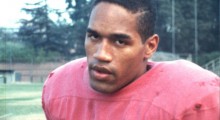
The producers of ESPN’s acclaimed 30-for-30 documentary series deliver a nearly eight-hour opus with O.J.: Made in America. The film was shot by Nick Higgins, a seasoned cinematographer behind more than 30 non-fiction shorts and features. Below, Higgins speaks to the visual ideas of a film that’s 90 percent talking heads. He also discusses shooting “eight hour mega monster marathon interviews,” his love of classical portraits and working with a crew of two. Filmmaker: How and why did you wind up being the cinematographer of your film? What were the factors and attributes that led to your being hired for this job? Higgins: In the […]
-
Director Dawn Porter and DP Chris Hilleke on “Abortion Clinic Fluorescent Lighting” and Trapped
Documentary filmmaker Dawn Porter first entered the Sundance arena in 2013 with Gideon’s Army, a paean to the work of public defenders. She returns to the festival in 2016 with Trapped, her film about abortion in America. Porter and co-cinematographer Chris Hilleke speak with Filmmaker below about the many hurdles – both aesthetic and ethical – of filming a documentary in an abortion clinic. Filmmaker: How and why did you wind up being the cinematographer of your film? What were the factors and attributes that led to your being hired for this job? Porter: It was really crucial that everyone who shot on this film […]
-
David “Daps” Reinert on Filming His “Early Idols” in Sundance Doc Film Hawk
American indie film champion Bob Hawk has, to date, 28 “special thanks” credits to his name. An early friend and supporter of Kevin Smith, Ed Burns, the Duplass brothers and many others, Hawk has served as a consultant, producer and promoter for many Sundance regulars. In 2016, Hawk gets a Sundance film his own with Film Hawk, a documentary on the man and his influence. Below, Film Hawk DP David “Daps” Reinert discusses the film’s visual style and the stress of filming your idols. Filmmaker: How and why did you wind up being the cinematographer of your film? What were the factors and […]