Filmmaker Videos
-
Five Questions with God Bless the Child Directors Robert Machoian and Rodrigo Ojeda-Beck

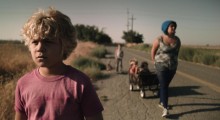
Winner of the Best Narrative Feature award at the Atlanta Film Festival over the weekend, Robert Machoian and Rodrigo Ojeda-Beck’s God Bless the Child is a naturalistic, quotidian portrait of five children roaming the streets and marshes of Davis, California after their mother skips town. Machoian and Ojeda-Beck capture their characters with both formal remove and striking intimacy, as their interplay suggests the nature of young bodies left to their own devices. Though the Grahams — Harper, Elias, Arri, Ezra, and Jonah — exist in the film without any parental supervision, all five happen to belong to co-director Machoian, a relation which the pair were […]
-
Watch: A Guide to Stanley Kubrick’s Lenses
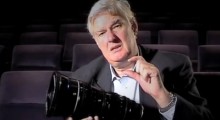
April 3: 2015: EDITOR’S NOTE. We apologize, but this video is no longer viewable on YouTube. In this 12-minute video, legendary British camera innovator Joe Dunton (you can read up on him here) identifies every lens used by Stanley Kubrick and how they work. Learn about the Angénieux zoom lens that was the most popular in the world from 1966 to the early ’70s, more about the difficulties of shooting natural light on Barry Lyndon and many other aspects of the director’s technically meticulous productions.
-
Trailer Watch: Julius Onah’s The Girl is Trouble
Executive producer Spike Lee’s name is all over this trailer, but I’m excited to finally see The Girl is Trouble because of its writer/director, Julius Onah, who I selected as one of our 25 New Faces way back in 2010. At the time of his selection, Onah was prepping this movie, and since its shooting, he became attached to a David Koepp-scripted thriller starring Jared Leto. The trailer seems a bit of a standard issue “guns and a girl” thriller, but I read the original script, which married a film noir storyline with a smart take on the Lower East […]
-
Short Film: Run the Jewels/A.G. Rojas Collaboration, “Close Your Eyes (And Count to F*ck)”
A.G. Rojas, who two years ago we put in our 25 New Faces list, directs this provocative video from Run the Jewels depicting a prolonged, punch-drunk, balletic street fight between a cop (Shea Whigham) and a young black man (Keith Stanfield). Without dialogue, and just through the subtleties of their choreographed movement, the piece moves away from realism and towards a theatrical space, adding new levels of complex meaning to the track’s outraged aggression. If you start watching, then make sure to watch until the end. From The Skinny: Explaining the clip, Rojas said: “When Run The Jewels sent me […]
-
Trailer Watch: Rick Famuyiwa’s Dope
Here is a bizarre entry in the contemporary trailer cannon: a one minute plus edit that gives almost no insight into the narrative happenings of the film it depicts, jettisoning specificity for internet topicality. The argument, I guess, is you can glean something about Rick Famuyiwa’s Dope from the execution on display, but I’m inclined to think that with all the memes involved, this is an eye-grabbing attempt more than anything else. The film, which earned raves at Sundance — with the notable exception of Wesley Morris — opens June 19 from Open Road.
-
Watch: 16mm Behind-the-Scenes Footage of Fellini Directing Amarcord
It’s not clear where this video uploaded by Eyes on Cinema derives from, and there’s no English subtitles, but here’s eight-plus minutes of rare footage of Federico Fellini directing 1974’s Amarcord. There’s fake snow to be packed together and set up, a typically Felliniesque array walking through it (a priest, a nun and a bull) and lots of Fellini slowly and decisively delivering directions on set.
-
Why Kurosawa Was a Master of Movement
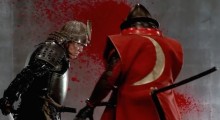
Here’s another masterful film essay by Tony Zhou, this time on Akira Kurosawa’s use of movement in his films. Movement, you ask? Aren’t movies motion pictures and, thus, constructed around movement? Well, as a comparison scene from The Avengers shows, there is movement in the form of listless dolly moves and diffident head tilts, and then there is movement — elegant, multi-point master shots, vibrant background elements like wind and rain, and outsized expressions from actors that can replace pedantic dialogue. I especially like Zhou’s discussion of how Kurosawa cuts from stillness to movement. His appreciation here of Kurosawa has […]
-
Watch: “You and I and You” by Terence Nance
Though Terence Nance has been quiet on the feature front since An Oversimplification of Her Beauty, he’s been regularly churning out short films and music videos. Brandon Harris called his recent “magic-realist-tinged” Rotterdam entry Swimming in Your Skin Again “astoundingly beautiful” and “sublime,” and his latest music video, for Oversimplification collaborators The Dig, conveys a similar conflation of the concrete and surreal. It opens with a young family being trailed by a collective of dancers, and only takes off from there. Watch it above.
-
Watch: 55 Films’ First and Final Shots Side by Side
This video by Jacob T. Swinney is exactly what it sounds like: the first and last shots from 55 films paired side by side in splitscreen. There are obviously deliberate parallels (Rosamund Pike, before and after the discovery of Amazing Amy’s true nature in Gone Girl), color scheme parallels indicative of overall palette obsessiveness (Her), and shots which have no real connection but which trigger a lot of memories of the films involved. The music, regrettably, is from Thomas Newman’s American Beauty score.
-
Watch: Breaking Down A Hard Day’s Night Opening Sequence
Simple and effective: Kevin B. Lee breaks down the opening credits sequence of A Hard Day’s Night into four separate editorial strands. The main two are the “Beatles cam” trained on the running band and the “fan cam” following their screaming admirers; runners up are the “milk cam” (a guy eating in front of a milk ad) and the “Paul cam” (Paul in fake facial hair disguise, sitting out the pursuit). Each segment is timed with stopwatch precision, with all four parts arranged in a quadrant formation reminiscent of a security system, suggesting the surveillance that comes with celebrity. Very neat.