Interviews
Interviews
-
Alone Inside: Kristi Jacobson on Her Penetrating Documentary about Solitary Confinement, Solitary
Kristi Jacobson was nominated for the Truer than Fiction Spirit Award for her artful and incisive documentary on solitary confinement, Solitary. The film plays this month on HBO, and filmmaker Alix Lambert interviewed Jacobson for our Winter issue. With Solitary, filmmaker Kristi Jacobson offers her audience an experience both visceral and intimate inside the notorious Red Onion supermax prison in Wise County, Virginia. Jacobson, who spent a year filming at the prison, examines the devastating effects of solitary confinement by introducing us to the men who are incarcerated as well as to the guards and others who work at the […]
-
Strategies for Sharing
“I’m the only one of these directors with a @twitter account. Am I doing it wrong?!” tweeted, tongue-in-cheek, Moonlight helmer Barry Jenkins last November. Good question: Jenkins had just been announced as one of the Best Director nominees for the Film Independent Spirit Awards (the others were Andrea Arnold, for American Honey; Pablo Larraín, for Jackie; Jeff Nichols, for Loving; and Kelly Reichardt, for Certain Women), and among such esteemed company he was the sole denizen of the Twittersphere. Was Jenkins boosting his chances during awards season by maintaining an active presence on Twitter? Or does a social media identity […]
-
The Terror of the Text: Olivier Assayas and Kristen Stewart on Personal Shopper

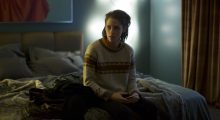
Personal Shopper, Olivier Assayas’s latest feature, begins with a classic horror movie trope: an evening spent in a haunted house. Kristen Stewart plays expat Maureen — not a paranormalist or twentysomething thrill-seeker but a personal clothes buyer and stylist to Kyra, a celebrity socialite and member of the Davos set. Something of a savant, Maureen does this job with an instinctual certainty but little evident pleasure. Whether that’s due to her preternatural cool or an overlay of mourning is unclear. But several months earlier, her brother, with whom she shares a congenital heart condition, died in a drafty mansion somewhere […]
-
Meat is Murder: Julia Ducournau On Her Wildly Creative Female Cannibal Film, Raw
Julia Ducournau’s debut feature film Raw is an earnest, sincere work with a clean pop sensibility that also happens to be about cannibalism. When mild-mannered vegetarian college freshman Justine (Garance Marillier) joins her older sister Alexia (Ella Rumpf) at veterinary school, she discovers an appetite for human flesh that she didn’t know she had. Raw is first and foremost their story, and the plot hinges entirely on whether or not their relationship is tearing itself apart or stitching itself back together. Like all siblings, they understand each other better than anyone else, simultaneously totally devoted and flippantly cruel. Marillier and Rumpf’s […]
-
Listen: Walter Murch in Conversation (Part Two)
Yesterday we shared part one of a podcast conducted with Walter Murch conducted by Glenn Kiser for the Dolby Institute Conversations with Sound Artists series. In this second part, Murch discusses how Apocalypse Now changed the state of film sound, why going to film school could be a good idea, and using sound effects to express a character’s emotional state.
-
Listen: Walter Murch in Conversation (Part One)
We’re pleased to be sharing this podcast conversation with legendary editor Walter Murch, conducted by Glenn Kiser and including questions from other leading sound designers including Randy Thom, Gary Rydstrom, and Ren Klyce, for the Dolby Institute Conversations with Sound Artists series. In this first part, he discusses documentaries’ effects on contemporary films, as well as aspects of his work on four of his most famous films: Apocalypse Now, The Conversation, The Godfather and The English Patient. We’ll post part two of the podcast tomorrow.
-
Jon Vogl on Budgeting for Post Production Sound, Transitioning From Film to Digital Dubbers, and Con Air‘s Place in Sound History
On a shady street in New Orleans’ Lower Garden District you’ll find Second Line Stages’ annex building, where Apex Post Production is located. Depending on the day you arrive, you might witness an ADR session for Antoine Fuqua’s The Magnificent Seven or Ava DuVernay’s new TV show Queen Sugar. The man running the ADR session is Jon Vogl, a Los Angeles transplant and studio veteran who moved to New Orleans to take advantage of increased film and TV production in the state. In this sit-down we discuss the technological changes that he’s witnessed in his twenty-plus years working in post-sound […]
-
Activist Resistance and Organization in Portland and Elsewhere: Penny Allen on Her Career
This weekend, Metrograph hosts a bona fide repertory first for New York City: a retrospective of four films by activist-director Penny Allen, who grew up in Portland and is currently based in Paris. I was one of a relative handful lucky enough to see Allen’s 1978 gentrification satire-docudrama Property at a packed Light Industry screening in 2014: the film was an anthropological curio concerning a handful of Portland hipsters — a clique a far more “Dogpatch,” to use Allen’s term, than the upscale suburbanites currently associated with that particular epithet — who band together to save their neighborhood from gentrification by buying […]
-
Choosing the Alexa 65 over Film and Finding the Right Format: DP Greig Fraser on Lion and Rogue One: A Star Wars Story
It’s fair to say that 2015 was a pretty good year for Greig Fraser. The cinematographer globetrotted to London, Jordan, Iceland, the Maldives, India, and his native Australia while lensing two movies. One of them (Lion) has Fraser in the Oscar conversation and the other (Rogue One: A Star Wars Story) is a blockbuster prequel to his favorite childhood films. The two movies seemingly couldn’t be any more different. Rogue One is a space adventure with a $200 million budget and a small country’s GDP worth of merchandising revenue in which the final half is basically one intense battle sequence. […]
-
Do You Need to Premiere at a Major Festival to Qualify your Doc for an Oscar? Roger Ross Williams on the Shortlist Process
One of the most intriguing aspects of this year’s Savannah Film Festival’s Docs to Watch Roundtable, which I wrote about a couple months back, was the lively back-and-forth that occurred when the subject of the Oscar shortlist came up. From all appearances it seems that a documentarian’s chances of making that Holy Grail cut are “predetermined” — i.e., if your film didn’t debut at one of a narrow number of A-list fests, well, forget about it. However, Roger Ross Williams, a member of the Documentary Branch of the AMPAS board of governors, took vigorous issue with that assessment. Which intrigued […]