Back to selection
So You Want To Rule the Indie Film World (Redux)
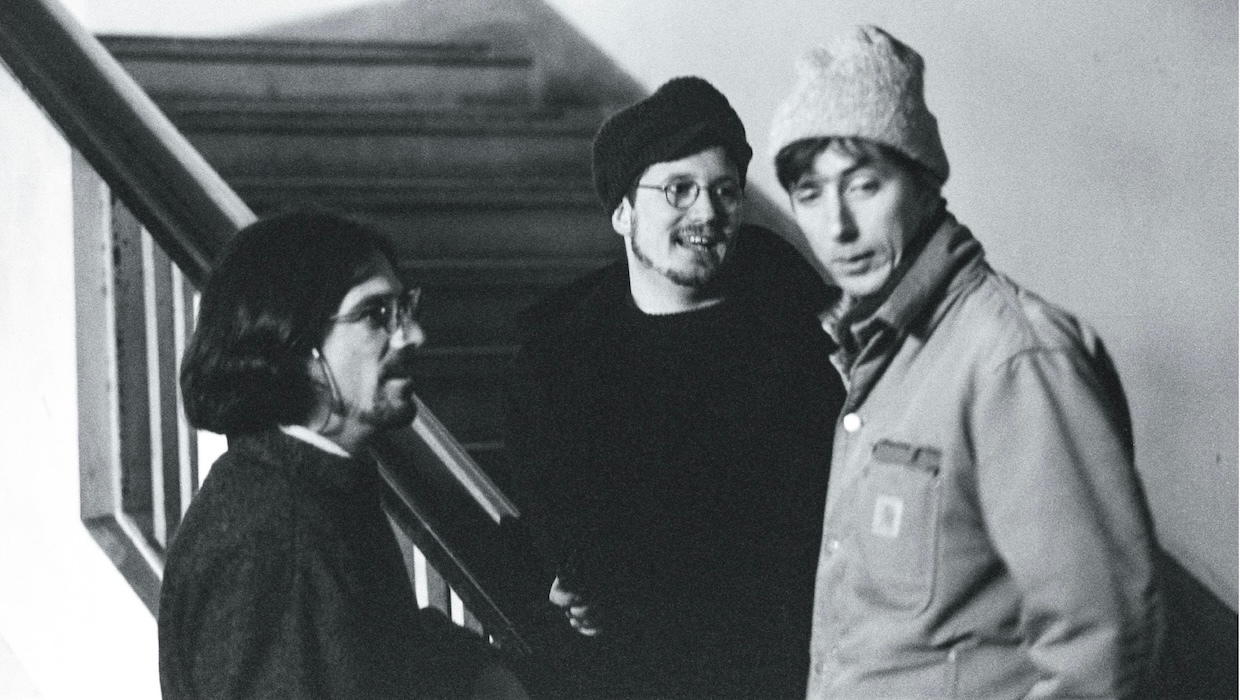 Mike Spiller, Ted Hope and Hal Hartley on the set of Flirt, photo by Mark Higashino
 In Filmmaker’s fall 1995 edition, producer Ted Hope’s two-part “Indie Film is Dead/Long Live Indie Film” offered a blunt critique of the independent film business coupled with a more optimistic call for a better future. (The former contained lines like, “Back-end is bullshit,” and “the IFPs and Sundance are the lone beacons, but even these not-for-profit groups are reliant on corporate dollars from the distributors for survival”; the latter, “Form an independent producers association.”) Running with a rejoinder from his Good Machine business partner James Schamus (“‘Develop a specialized film database?’ We already have one—it’s called gossip”), it was an extraordinary dialogue that challenged so many independent orthodoxies, and with its punchy, bullet-point style a precursor to the writing about “NonDē filmmaking” Hope now posts at his HopeForFilm Substack.
Shortly after Hope wrote his “Indie Film is Dead” piece, he faxed me a Swift-ian (Jonathan, not Taylor) follow-up, “So You Want to Rule the Indie Film World,” from the production office where he was producing Ed Burns’s latest, She’s the One. I never ran it; I don’t remember why because I don’t have a record of my response. During an apartment move two-plus decades later, I came across the document and scanned it. It then sat on my hard drive for several more years until, just recently, I re-discovered it, again. Reading it took me back to those 1990s dialogues about the industry we thought we were building, and I asked Hope if he’d place his 1995 critique alongside his thoughts today for this final issue of mine. So, from initial submission to publication, it’s had the longest gestation of any piece in Filmmaker’s history: 30 years! — Scott Macaulay
Hypothetically speaking, let’s say you wanted to create a company to control the domestic specialized film production, sales and distribution business. For the sake of example, let’s also say you had unlimited capital to invest or squander. What sort of strategy would you pursue? Consider this time-tested approach.
Control the Talent Pool
• Develop talent cheaply. Essentially, this means acquiring the cream of the indie crop and financing their second ventures. Do not finance first features.
• Hold directors to multi-film obligations. If you produce a film, instead of letting your work earn their loyalty, sign and bind them. Even if you end up disliking them or their work, you’ll control an asset, and you’ll keep the competition from making a good film.
Control the Product Pool
• Limit the competitor’s ability to acquire product. Who really cares what the film is as long as others want it? Acquisitions no longer occur at festivals; distributors try to buy ahead regardless of the price.
• Distributors need films to survive. If a company had the capital to acquire everything, it would be a good strategy. Who cares about release schedules? Let the films sit on the shelf. Who cares about release strategies? If a film fails, just ship out the next one on the shelf. The only thing that matters is that competitors have nothing but shit to release.
• Practice the time-tested policy of predatory pricing. If you are willing to spend vast sums for any and all films, the competitors will all eventually go out of business owing to a lack of money or their inability to acquire product. Once the competitors are kaput, you can drop your acquisition prices because you’ll be the only game in town. Filmmakers won’t have any options other than to sell to you.
Compete with Strategy, Not Product
• Make the competition risk increasingly large amounts of capital. If the business moved away from an acquisition business toward a production business, competitors would have to risk more and more funds on productions without ever knowing the quality of the final product. Only the capitalized companies could survive. This is the current state of the industry.
• Limit competitors’ ability to make money on the films they acquire. If a company is capitalized, better to drive out the competition than to compete fairly. If one distributor stopped demanding full payments from the exhibitors (i.e., got sloppy on their collections) but kept on supplying films regardless, the exhibitors would not see the logic of paying full splits to the other distributors, and only the highly capitalized companies would survive.
• Make the competitors pay inflated prices. Who cares if you actually want the film or have a slot on your release schedule for it? This is poker, isn’t it? It’s about bluffing. If every acquisition turns into a bidding war, the competition will have to spend to acquire. In the end, it will require that they only acquire films of mass appeal. The more they spend on acquisitions, the more attractive production financing becomes and, once again, only the strong will survive.
Control the Delivery System
• Limit competitors’ ability to get screens, particularly key screens. Exhibitors control the screens. Sure, they want the good films, but it’s not the only way to make money. If an exhibitor has to pay less for a film, they need fewer ticket sales to make back their nut. If a distributor lowers the split with the exhibitor, they have a better chance at controlling the screens.
• Create a method to force exhibitors to take all your films. If they want one film, they’ve got to take all. Who cares whether your contract with the filmmakers limits your ability to “cross” films? There are many ways to cross pictures without any records. It may be well worth overpaying for a film because it’s great publicity, and exhibitors will crave that film and will do anything to get it—even agree to play your dogs.
Maximize Your Profits While Minimizing Your Payouts
• Forget about the film’s profit: the fee is the thing. Because most distributors work on a percentage basis, there is no incentive to figure out how much P&A is most financially appropriate for the film’s release. If spending $2 will gross $6, of which rental is $3, and of which you get 33 percent, you’ll get $1 in fees and $2 in recoupment—you’ve made money, and the filmmaker gets none. If spending $1 would’ve grossed $5 that returned from theaters $2.50, you’d get 83 cents plus the $1 in recoupment, leaving the filmmaker 67 cents, but you with a lower fee—so why bother?
Besides, the real way to make money is to sell out—to sell your independent company to some giant conglomerate—and to do that you have to make your company look good. So, boost the gross even if it reduces profitability, publicize the company out the wazoo so everyone won’t forget you, and don’t worry about cash flow as long as the ledger looks good.—July 1995
I haven’t really changed that much, have I? With a few updates, the above could pass as a HopeForFilm post today—now that I no longer need to depend on others to publish me! (But seriously, give me a chance to poke the bear, and how can I resist?)
If memory holds, I wrote this in response to some of what was emerging as the common business practices of Harvey Weinstein, Miramax and others in the day—practices that no one seemed adequately up in arms about. I felt such practices would upend the efforts of what we were calling “indie film” and was concerned. We see some of these “indie domination” strategies now implemented by the global streaming platforms and talent agencies. Sure, I injected a bit of obvious snark to the article, and yeah, even then I brainstormed a bit by giving myself (and others) “challenges”—you know, what would I do to address X if I had endless supplies of cash to squander? Indeed, if it was only money that could solve problems.
This original article reveals my bias at the time toward a business-based cinema ecosystem. I was not yet able to see or ideate an ecosystem that prioritized ambitiously authored work or those who made it and loved it—let alone conceive of how doing so would prove to be critical to the sustainability of cinema of the sort I’ve focused on in my career.
And the original article captures my never-diminishing concern about making art in the lopsided world of corporate domination, particularly the kind of domination that never seems to get regulated anymore. Seven years later, I was to meet my wife-to-be, Vanessa Hope, when I sued the MPA (then the MPAA) on anti-trust violations. We won, and I got a true partner. That all hits home for me now. As great as the growing cinema rebellion is, it may require due process of the law (or instigation of greater regulation) to survive. FilmStack and NonDē are on a roll, but can we establish the lasting change that is needed? [FilmStack is the loose confederation of Substacks on that platform.—Editor.] Fuck indie domination. We need something totally new.
Today, 30 years later, the power balance between the corporate state and bold creators of all sorts is the worst it’s been in my 40 years in the industry. The unregulated anti-competitive practices of the global streaming platforms have aligned with unrestrained greedy tactics of Wall Street–dominated corporate suites. Coupled with a refusal to address either issue by our industry’s leaders or trade papers, these affairs have led not to the logical rushing for the barricades but instead, to mainstream apathy—crickets. Sad.
Back then, I was worried about the powerful not treating talent fairly. Those practices have today been fully institutionalized. Now, I worry that talent will never get a chance to make their work and get it seen. Sure, we’ve made some progress in helping to demystify filmmaking processes so artists better understand how to make their films, but we’ve ignored distribution completely. We maybe had sort of an indie ecosystem, and although it was far from independent, it wasn’t reliant on corporate financing. Now, we’ve destroyed our private equity system and the success-based bonuses that rewarded it, leaving all bold work close to being unfinanceable.
But there is hope for film. If I were to counsel that same punk-ass 33-year-old kid today to write a similar column, I think it would end up being something like this.
So You Want to Start a Non-Dependent Cinema Ecosystem
Hypothetically speaking, let’s say you have finally recognized that to rely on the global specialized cinema production, sales and distribution businesses is a dead end that will not allow you to make the work you want, ever share in the ownership of it or reap the rewards that you deserve. In fact, to engage in it will likely expedite the demise of much of what you hold dear while furthering the stability of that which you despise.
For example, let’s also say you had unlimited capital to invest or squander. What sort of strategy would you pursue? You know what? You can take that money and shove it because we don’t need your stinking money. Instead, let’s consider the type of strategy that the so-called indie-film industry has chosen to ignore for 40 years, the sort that is fully filmmaker-driven.
Recognize the Historic Failures That Are Both Ours and Theirs
• Indie film failed to stand for anything other than what wasn’t fully the corporate voice. It never was committed to the sustainability of anything—not the art, not the artist, not the audience and certainly not the ecosystem.
• We settled for “good enough” and neglected the necessary operational improvements to the product and process that could have elevated all and made what we once enjoyed sustainable.
• Because Hollywood only beat indie at the Oscars when James Cameron had a movie in the race, the studios basically realized that they could skim all the so-called indie cream to give themselves a veneer of legitimacy—and no one resisted.
• Both sides got played by the collusion of the global streaming platforms and the talent agencies to forever cloak viewership and business data and thus allow the removal of the success-based bonuses that enable artists to earn a living without being dependent on the corporate dole.
• We took something that occasionally drifted into the awe-inspiring realm of ambitious art and reduced it all down to extracting “value” and prioritizing the transactional.
Recognize Their Unfair Practices
• There is no such thing as an Artist Bill of Rights or even a conversation about the need for it (other than on FilmStack, that is). All aspects of the industry, from the agents to the platforms to the trade press, unions and support organizations, deliberately ignore utopian ideation so that the business is “not disrupted” and those that actually create value (versus extract it) remain ignorant of what they truly deserve.
• There exists a differential of at least 40 percent between the “perceived” value of the market and the “actual” value cinema generates that remains cloaked through “proprietary” business practices and data, denying creators a fair share of all their work generates.
• Wall Street runs our corporate cultural industries and rewards not who and what generates engagement, but those that keep the stock prices up. The CEOs have been “looting the store” on a regular basis. The film business is not broken, it is fixed—in that it is rigged to turn us into compliant serfs.
• Artists are deprived of the product of their labor, unable to get access to the data it generates or share in the lifetime value of the new customers they attract.
Build Your Own Talent Pool
• Develop your talent inexpensively and help others do the same. Essentially, this means encouraging a practice of production as development, where the artists and their supporters prioritize the process over the product by using microbudgets to move fast and explore aesthetics, form and technique. Will to fail and learn to fail better. Eventually, we will get there.
• Encourage all to stop thinking about the film as a product and instead focus on how it can build community and careers.
• You are not in competition with anyone; work in cooperation with everyone. Collaborate across multiple films sharing what you know. Package your films with theirs. Share your secrets and dine on theirs.
• Stop thinking either “one film at a time” or “build it, and they will come.” Those are strategies employed by the sellers and buyers to push your work into the merely transactional.
Build Your Own Audience
• We are experiencing the disintermediation of all cultural industries. Cinema has been the last to be hit because, for the most part, we have been dependent on excessive budgets and corporate dollars. To get funded, we had to rely on their release pipeline. When you own your own audience, you have your own release pipeline. Taylor Swift did not need their system because she had everyone’s email. The same goes for Louis C.K. or Robert Reich. Ditto YouTube stars, and now the documentary filmmakers who are building a system and playbook for all of NonDē.
• Recognize the best method of owning an audience is building a mailing list, and the best way to do that is through a newsletter.
Be Your Own Agency, Distributor, Aggregator and Delivery System
• Or at least drive such entities. New services are required, and those that are most capable of delivering them are the ones that have already gone on the journey themselves. When you have cast and shot your feature, you will have spotted some talent that you will want to promote to others. You should help those who helped you get their next job; everyone will benefit from it. When you have led the distribution of your film, you will know new best practices to recommend—as well as some vendors to avoid. Let it all be known. When you are part of something bigger than yourself (or bigger than your one film), we all will benefit. Don’t stop helping others. We can get there much faster when you are ruthless with your compassion and dedication.
• The old Plan B must be your Plan A. If you are set up from the start to go NonDē, you will not be satisfied with the unfair deal most distributors offer.
Change Your Mind and Change Our World
• You are not looking for their praise or acceptance. You do not need them. They are not going to help you. Your priority is to improve your work, your life, your community, your industry and your world. You know best. Find new ways to work together.