Back to selection
On “Filmmaker”‘s First Decade: A Dialogue Between Scott Macaulay, Karol Martesko-Fenster and Holly Willis
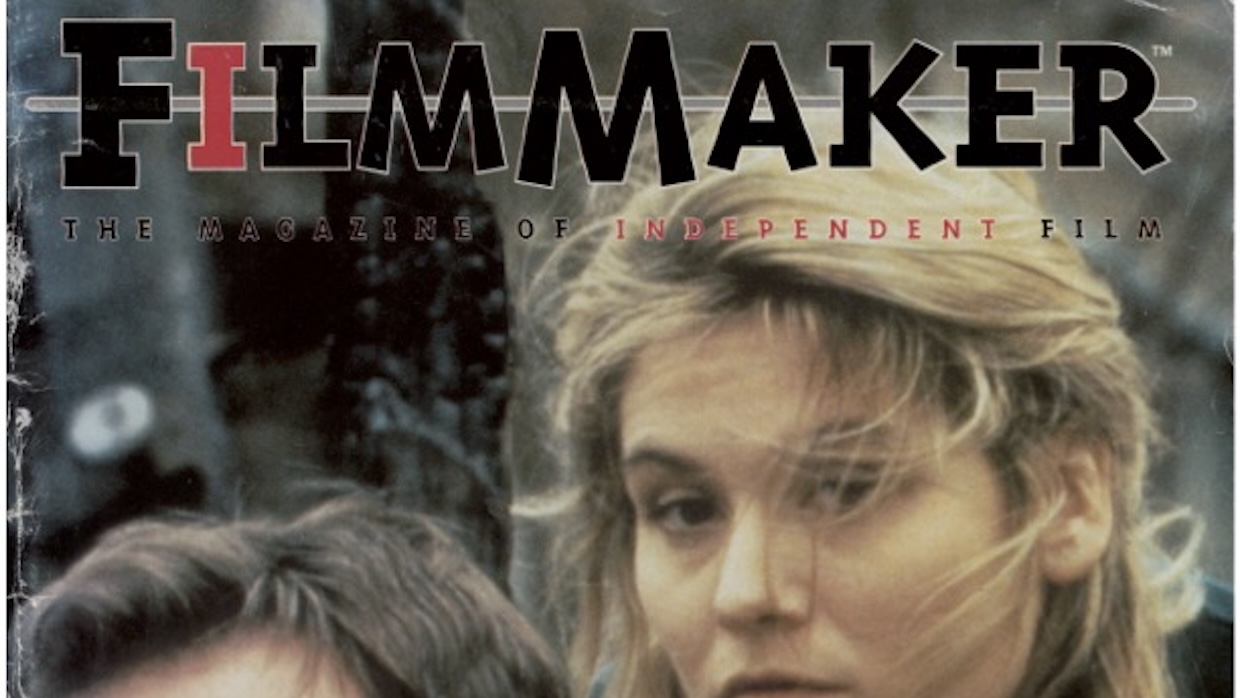
Curious as to what it would say, I recently asked ChatGPT for a history of Filmmaker. It returned a biography that incorrectly listed one of our longest-running occasional contributors as a founder, which made me realize how very little of Filmmaker’s origin story is online, available to be scraped by LLMs. To put some of that history officially on the record, and to salute my original co-founding partners, I sat down via Zoom with founding publisher Karol Martesko-Fenster and founding west coast editor Holly Willis to discuss our earliest days, before the internet succeeded in fully disrupting the arts publishing industry along with everything else. — Scott Macaulay
Macaulay: To go back to the very beginning: I was programming director of The Kitchen, New York’s non-profit video and performance space. After associate producing his first feature, Raúl Ruiz’s The Golden Boat, James Schamus hired me as the freelance co-editor of The Off-Hollywood Report, IFP’s small magazine. This was pre-internet and social media, where you could have a kind of secret second job. James came in wanting to widen the scope of what a magazine published by a non-profit could include. His first issue had a still from a Roger Corman film on the cover and his own essay on B-movies inside. We did two issues together, then his production company—Good Machine with Ted Hope—took off, and he kicked himself upstairs, becoming the executive editor, and I became the editor. At the time, Holly, you were editing Montage for IFP/West. I did three or four more issues of The Off-Hollywood Report, and then, Karol, I remember you returning from Sundance and saying that there was a joint board meeting between IFP (now The Gotham, our publisher) and IFP West (now Film Independent) where board members said there should be one joint magazine. Then, we created Filmmaker, launching in fall 1992 with the intention of expanding the vision and scope further.
Martesko-Fenster: Yes. Ray Silver, the IFP’s board chair, asked me to be the acting executive director and help them with the search for a new [editorial director] after Karen Arikian left the IFP. John Spence, who ran Kodak, and Irwin Young, who ran DuArt, always took out full-page ads in The Off-Hollywood Report and Montage, and they stood up at that Sundance meeting and said they didn’t understand why they had to do both. And they were asking about the readership because the readerships were just internal to each of the two organizations. I was charged with coming up with a business plan for the magazine.
Macaulay: I came up with the name. As a teenager, I was very into music and would buy a magazine called Musician. I still have its Brian Eno issue. But it was similar to Filmmaker because it straddled the line between consumer and trade.
Martesko-Fenster: Yes! I remember when you said “Filmmaker.” We liked that it would be so direct and simple, and we were surprised to see that there wasn’t an existing magazine named Filmmaker. Anyway, the two IFPs’ memberships were our initial subscriber base—8,000 right off the bat. I hooked up with John Lafranier of Disticor, the distributor, so we were on newsstands, and we got an ISBN number. We had subscriber cards wedged in each issue and started getting new subscribers relatively quickly. The other thing we did was bonus distribution at film festivals, which would up our print run. So, we had subscribers—both internal and external—newsstand and bonus distribution, and those three things drove the magazine’s circulation. I would send boxes to theaters like the Angelika in New York to put out for free because they had subscription cards in them. We made over $250,000 in merchandise sales in those early years—shirts, letterman jackets, hats. I used to wear those letterman jackets; there was an electric yellow one you could see for miles. Then, newsstand sales started to pick up. We sent 300 copies to St. Mark’s Bookshop in New York’s East Village, and they sold out in two weeks. That’s when Disticor started to put the magazine in more places.
Macaulay: What do you remember about our early conversations around content, tone and style?
Martesko-Fenster: We talked a lot about the demystification of the filmmaking process, and you guys did a tremendous job in finding writers who could do that. That really hit a nerve because there was no other publication doing that. I mean, there was Premiere.
Macaulay: American Film was just ending its run as we were launching, and there was Film Comment.
Willis: Which was more criticism focused. But there were small publications, too, like AIVF’s The Independent, Release Print from the Film Arts Foundation and Afterimage, which was doing a more critical take on media broadly and is still running.
Macaulay: We owe a lot to The Independent. The vision of Filmmaker was to cover independent arthouse pictures alongside DIY and microbudget work and films coming out of the non-profit world, ITVS, etc. We always mixed it up. The first issue had Hal Hartley’s Simple Men on the cover, interviews with directors Paul Schrader and Allison Anders, experimental filmmaker Craig Baldwin and color timer Don Ciana. Producer Andrea Sperling wrote an article called “Freeway Filmmaking” about how to make a microbudget movie in Los Angeles, and Holly, you wrote about Jonas Mekas. What are your recollections of the beginning of Filmmaker, but also with what you were doing earlier with Montage?
Willis: I was getting my Ph.D. and was halfway through the program when I came on board to help Ralph Rugoff, who was editing Montage. My first assignment was to go to the printer and pick up the issue that had just been printed and bring it back to the office. I drove to somewhere in Glendale, picked up the boxes, came back, went inside to get some help unloading, and when we got outside, my Toyota Corolla was gone. Stolen. This was my first job, and I was like, “I’m screwed.” They asked, “Well, can you pay for those magazines?” “Are you kidding? I’m a graduate student!” I can’t remember how it worked out, but I continued to work for Montage.
Macaulay: Did you get your car back?
Willis: No, it was totally gone. Then, Ralph went on a trip to Europe. He was curating and writing, and when he was away, people at IFP/West were somewhat glad because he was feisty and wouldn’t do what the board wanted. They asked if I wanted to interview to be the temporary editor. I sat down with Dawn Hudson, the executive director, and her final question was, “What’s your sign?” I said “Leo.” “Oh, that’s perfect, I think this is going to work out.” So, I stepped in, and in those early issues that I did on my own, we had things like an interview with experimental filmmaker Greta Snyder and an article on hand-processing film in your bathtub—stuff that I always wanted to write about. I was curious about mixing different practices and audiences together, handmade DIY filmmakers and the more L.A.-based independent scene. I was really proud of those three issues of Montage. Then, word came that we were thinking about this merger, and at first I was hesitant because I was having so much fun having that control. But when we all met, I was like, “Oh, this actually would be amazing.”
Macaulay: And what did you think we were doing at Filmmaker in those early days?
Willis: In my Ph.D. program, I was doing very theoretical writing for a tiny audience of other scholars. But with Montage, I felt like we were beginning to craft a sense of community by making a set of terms, a set of practices and ways of interacting. There was such a hunger for this kind of material, a sense of energy across the spectrum from DIY experimental work to queer filmmaking to higher-budget independent filmmaking. It felt like we were naming something and giving it a history. I was learning more outside the academy than I was in my Ph.D. program. I had been told that I needed to publish, so I thought I was doing the right thing, but my Ph.D. advisor said, “You’re never going to work in the academy working on a magazine like Filmmaker. It’s going to ruin your career.” And I said, “Good. Ruin my career.”
Macaulay: That mix of content you are talking about was so important, and I think it’s what made us not feel like a non-profit house organ. We had Abel Ferrara’s Bad Lieutenant on our second cover. Abel got a Gotham Award three years later, but at the time he was not someone non-profits wanted to claim as one of their own. I remember we did a piece on two adult filmmakers, Candida Royalle and John Stagliano. It was a broader idea of what independent film was.
Willis: Absolutely. We were open to anything that fit under this larger umbrella, and with articles like Peter Broderick’s microbudget breakdowns, we were sharing information that wasn’t normally shared. That was core. I remember how ballsy we were in those early issues. That Bad Lieutenant cover caused some consternation, but it made me happy to look at that. I hung it up on the wall. I loved the Go Fish cover, and I got to write the story.
Macaulay: That was our first original cover shoot.
Willis: Then, we did the Godard cover, which was so good. I mean, pictorially, it’s not a good cover. It doesn’t obey any of the rules that should make a cover great. But it’s an amazing cover. I thought the Pulp Fiction cover was beautiful.
Macaulay: That was an original illustration we commissioned from Mark Zingarelli.
Martesko-Fenster: It was important to me that Filmmaker would stand on its own as a brand, which was easy to do because of your guys’ editorial, which was distinct from what the organizations were doing.
Willis: Absolutely. There was a push and pull between us and the organizations. For a while, IFP understood us to be lucky to have them, then at a certain point it shifted, and I think we realized they were lucky to have us. The organizations were doing great things, but we were more nimble, flexible and eclectic in our understanding of what we could do under this umbrella.
Macaulay: Then, we developed a business plan to try to expand the magazine. Karol, this was mostly your work. I look back and wonder where we would be if that plan had been accepted by the IFPs. Would we still be around? Would we be bigger? Would we have cratered like so many other publications after the internet came along?
Martesko-Fenster: Look at the money Penske Media is making. We would have been a very solid media brand by now, 100 percent. Remember, we were the first film magazine on the internet. We had the website filmmag.com, and an 800 number, 1-800-FILMMAG. We incubated IndieWire’s prior incarnation, Iline, which was started on AOL. They had 2,500 subscribers and a separate section on Filmmag.com. Brian Clark and I created the IndieWire domain name.
Macaulay: We all had day jobs. By this point, I was downtown at my Forensic Films office producing movies with Robin O’Hara. Senior editor Peter Bowen had his own office working with designer Bill Sofield. We’d come in in the evenings to do Filmmaker on the office computers, and we’d bump Eugene Hernandez and Mark Rabinowitz off so we could design our issues.
Martesko-Fenster: Richard Miller worked on that plan with us.
Macaulay: He was a producer, too—he produced James Mangold’s first film, Heavy. And we worked with the investment firm Veronis Suhler, which had been involved with the big Hachette Filipacchi deal at the time. The founder’s son, Nick Veronis, was an independent filmmaker. He loved the magazine and connected us. The idea was that we’d go from quarterly to bi-monthly to 10 issues a year.
Martesko-Fenster: Veronis Suhler had done some research. They felt that there was a market opening for a film entertainment magazine that was for a combination of consumers and actual artisans. They thought it would have international appeal. It was a robust business plan with multiyear projections, but it required a severing from the IFPs, who were 501(c)(3)s. I was only interested in running Filmmaker as a for-profit enterprise, and we did make it clear to IFP executive directors at the time that a robust Filmmaker LLC with multiple brand extensions—including award shows—could generate a significant amount of ongoing revenue as a business entity.
Macaulay: We needed tiered investment, and the first round was $300,000.
Martesko-Fenster: Correct, but we would have perpetually thrown off money to the non-profits. When that didn’t happen, I left immediately and started working with Jason Calacanis and started Silicon Alley Reporter.
Macaulay: Jason Calacanis who co-hosts the All-In podcast with Trump AI czar David Sacks?
Martesko-Fenster: Correct. It grew to a 300-page magazine, we almost sold it for $40 million and Jason decided not to. Two weeks later, the internet bubble popped, and we had to lay off 80 people.
Macaulay: Holly, after leaving Filmmaker you went over to RES, right? I think that magazine was ahead of its time.
Willis: Yes, I left Filmmaker in 1997 and started working with RES in 2000.
Martesko-Fenster: Why did you leave Filmmaker, by the way?
Willis: I was burnt out. My dad was sick, I was trying to do a one-year residency at Cal Arts and also working at The Criterion Collection editing the liner notes for their LaserDiscs. I met a whole bunch of new writers and went on the shoots for the extras material. They were working on those things called “expanded books,” which were CD-ROMs. I found these new technologies really interesting. All of this was at the same time as I was working with Filmmaker, and I just thought, “This is too much.” Then, I got offered a job at the internet short film distributor iFilm. They paid me $70,000. I’d never had a salary, never had “one job” and never had that kind of money. So, my husband and I were immediately able to buy a place to live. But RES was, again, a five-year arc, then I was totally burnt out and had to leave. But I learned so much in being able to contribute to Filmmaker and think about the larger cultural conversation, and about advocacy as a form of criticism—how to champion something, celebrate it, but sustain a critical edge.
Macaulay: Advocacy for films, filmmakers and the field was always a big part of the magazine, but we always set ourselves apart from critic-driven publications. Until Brandon Harris’s stint as a weekly reviewer, we only did reviews out of festivals, with Noah Cowan and Howard Feinstein—both of whom have passed—attending all the major ones. We tried to get filmmakers writing about process as much as possible. I always thought of our criticism as being expressed through the selections we made about what to cover, the questions we were asking and, of course, in our introductions.
Willis: Right now, everything is so quiet and muted. Back then, there was a sense that pushing back, outrage and refusal were all strategic and powerful. Pre-internet, it felt like you were part of a community.
Martesko-Fenster: It was truly a team effort. We were all doing other things, but we came together—Peter and then, after me as publisher, Steve Gallagher, and Holly, your team on the west coast. And the community, from the festivals to the filmmakers, was great to us. Scott, I can’t believe you stayed so long.
Macaulay: I can’t believe I stayed for 33 years either! I certainly didn’t imagine I’d be doing that when we started. You both have put punctuation marks on your time at Filmmaker earlier than [I have], but finally placing my own punctuation mark has allowed me to put everything in perspective and think about the magazine in the way we’re talking about it right now: a magazine covering independent film that has been independent itself and has remained in print for over three decades. That’s an achievement, I’m realizing, so thank you both.