Back to selection
Revisiting the Neoliberal Echo Chamber
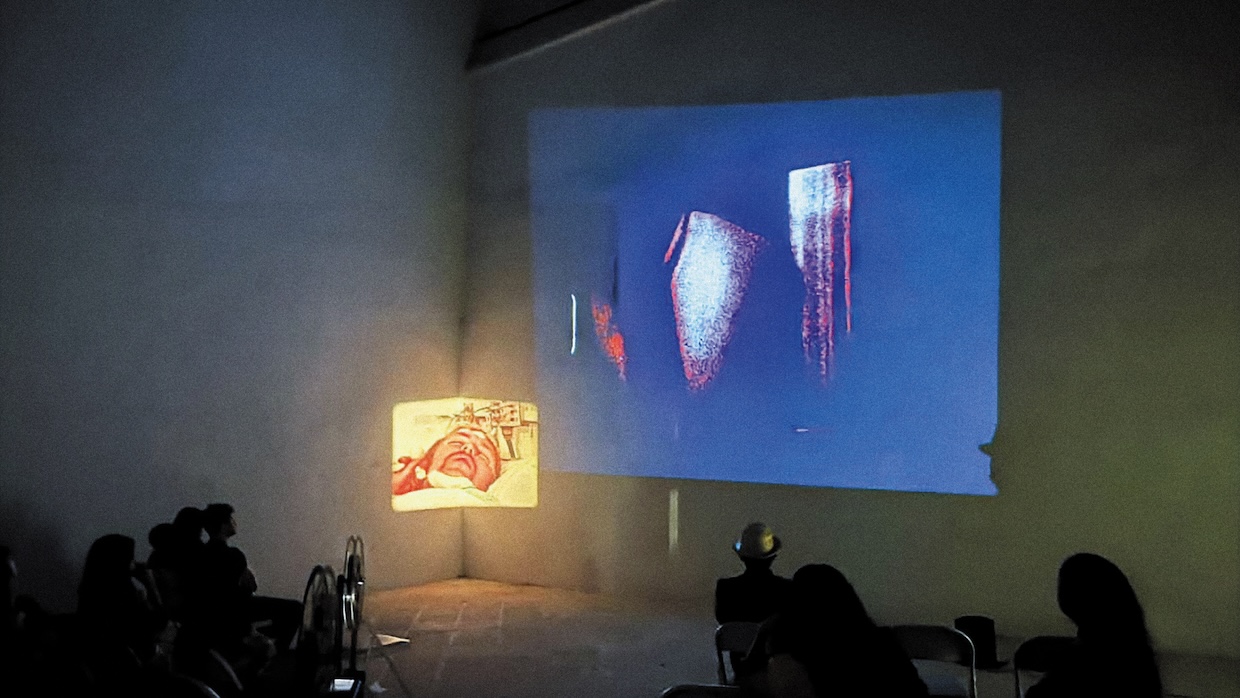 Salón de Cines Multiples (SACIMU); picture by Viridiana Martínez Marín
 Of the millions of words we have published in thousands of articles, one sentence continues to haunt me, so trenchant and unsparing is its critique of the system undergirding so much of the work we champion here at Filmmaker. In a 2023 article titled, “Rebelling Against the Independent Film Industrial Complex,” Keisha Nicole Knight and Sophia Haid wrote, “In general, the U.S. A-list film festival circuit, where independent voices used to be able to thrive in more ragtag and aesthetically diverse ways, is now mostly a self-reflexive bourgeois echo chamber of sanctimonious gatekeepers serving corporate interests and neoliberal logics.” With the line still ringing in my ears three years later, I decided to ask them how they feel about that critique today, and where hope lies for the future.
Perhaps our comment was a bit mean because, in the years that followed, one of us did a stint as a sanctimonious gatekeeper. It seems quaint to attack film festivals now. In fact, to attack anything seems a bit beside the point, a distraction, part of a three-ring circus of critique and consumption that has the distinct hangover of a sugar high. The focus of our struggle is different now, or at least the stakes have been further clarified.
After much trying and much disappointment, we’ve pivoted since the quote above. We talk less and build more. We eschew the didactic for the plural, and when faced with hypocrisy, we clock it, pray never to become that person and get back to work. Maintaining ecosystems of care is a more-than-full-time job that requires presence and fortitude. In this practice, time is better spent filtering what gets in rather than attacking everything wrong with everyone else. It’s time to hunker down.
In our experiments as distributors with Sentient. Art. Film (SAF), what was most exciting was not the possibility of circulating a single film or program but the sociality and creative force enacted by communities moving and shifting in conversation with/around film. Through SAF we were able to create an architecture with partner theaters that brought together supporters of independent film, likewise building an allied conversation around this circulation through our monthly SAF online bulletin. These ideas carry us forward into infrastructural work and media organizing that builds from a network of relationships rather than a framework of profit and bottom lines—educating, bringing others along and being educated by those with lived experiences different from our own as we go.
Despite widespread corporatism and careerism at all levels of the industry, we still believe in cinema and filmmaking that persists in the desire for collectivity. New and revived exhibition and circulation practices are unfolding as we speak—whether in the form of mobile/pop-up cinemas, cineclubs or microcinemas, to name a few—and these practices deserve serious engagement and reflection. Some of these groups function in relative obscurity or only at the hyper-local scale, and we have something to learn from that, too. Here, we’re thinking about groups like Sunshine Cinema in South Africa, Aflamuna and REEF in Lebanon, MissVideo4u in New York, Salón de Cines Múltiples in Mexico, Ajabu Ajabu in Tanzania and so many others that work to circulate media, engage audiences and explore new modes of economic organization. We’re also thinking of our former partners like EPFC Collective in Los Angeles, Laredo (Texas) Film Society and the Rio Grande Valley’s Entre Film Center, an artist-run community screening space and archive. Most recently, we’ve participated in Filmlab Palestine’s Palestine Cinema Days, an experiment in collective circulation and cinephile culture.
The lingering question revolves around how these practices can (and do) hold and create space for alternative forms of gathering, belonging and forging new material realities beyond the carceral state. As the space for public discourse, political participation and local community gathering continues to be destroyed under a new wave of enclosures, attending to independent cinema exhibition as a practice with distinct strengths and weaknesses is as urgent as ever. Building relationships and networks that can mutually sustain cinemas and their audiences will take time, but it’s worth all the effort we can muster.