Cinematography
Filmmaking - Cinematography
-
Panavision’s Dan Sasaki on their Large Format Digital Lenses, the Primo 70
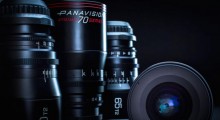
Late last year Panavision introduced a new lens line, the Primo 70. These lenses are specifically designed for use on larger sensor digital cameras and, according to Panavision, cannot be used on film cameras. We spoke with Dan Sasaki, VP of Optical Engineering at Panavision, about the development of these lenses, and how they differ from film lenses. Filmmaker: What was the impetus for developing digital lenses? Sasaki: Our Primo 35 lenses have been around since the late ’80s, early ’90s, and they are designed to work with film cameras. The Primo lenses have what’s called the blue line shift on […]
-
Shooting Romance in NYC with the iPhone 6

Here’s a nifty behind-the-scenes featurette on the iPhone 6 shooting of Tristan Pope‘s short film, Romance in NYC. The film is shot entirely from the first-person perspective, like Lady in the Lake and Enter the Void, and the mobility of the iPhone enabled the director/camera operator to play the role of the first-person protagonist. As you’ll see in the video, Pope lets his own hands and arms enter and exit frame, aided by variety of gear — including a Gorillapod — as well as well-choreographed production assistants.
-
Filmmakers, Learn How the FAA Plans to Regulate Drone Filmmaking

For over a year the FAA has been fighting a rearguard action against the proliferation of drones. The agency has had regulations in place stating that unmanned aircraft systems (UAS) — also called unmanned aerial vehicles (UAV), or drones — can’t be used for commercial purposes, and they have mostly pursued a policy of “educational chats” for people who have caught their attention (typically videos on YouTube that get picked up by the media). Their bark hasn’t been without some bite, too. In one case they fined a pilot $10,000 for flying a drone through the University of Virginia. Interestingly, […]
-
Quyen Tran on Shooting Frankie Shaw’s Sundance-Winning SMILF

Frankie Shaw’s short film SMILF won the Short Film Jury Award at this year’s Sundance Film Festival. It’s a funny and revealing comedy about a young mom struggling to connect to her old sexual self while being homebound caring for her young son. L.A.-based cinematographer Quyen Tran shot the film, and below she discusses shooting coverage with only one actor, working with one light and filming while nearly nine months pregnant. Filmmaker: How and why did you wind up being the cinematographer of your film? What were the factors and attributes that led to your being hired for this job? […]
-
Cinematographers Jimmy Chin and Renan Ozturk on Shooting the Sundance-Winning Doc, Meru

Over a period of years, three climbers — Conrad Anker, Jimmy Chin, and Renan Ozturk — make repeated efforts to scale a 21,000 foot peak in Northern India, Mount Meru. Jimmy Chin and Elizabeth Chai Vasarhelyi’s Meru is the chronicle of that quest, a story of not just mountain-climbing athleticism but also friendship and camaraderie. The winner of the U.S. Documentary Audience Award at the Sundance Film Festival, Meru, strikingly, was lensed by two of the film’s three climbers, with one of them suffering severe injuries on the climb — an accident that is part of the film’s story. Below, […]
-
Director/Cinematographer Matthew Heineman on Shooting Sundance Award-Winning Doc Cartel Land
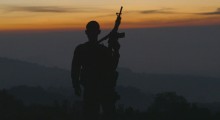
A tense, cinematically-styled verite documentary about the Mexican drug wars, Matthew Heineman’s Cartel Land was one of the big winners at Sundance this year, nabbing both the Directing and Cinematography Awards. Strikingly, both positions were filled by the same person: Matthew Heineman, who also produced and edited. (For Cartel Land, Heineman shares the d.p. credit with Matt Porwoll.) Below, the multi-hyphenate talks about why, for him, shooting isn’t entirely about the image; why being his own d.p. calmed him down during the tenser moments of production; and the benefits of capturing a flat image through Canon Log. Filmmaker: How and […]
-
Cinematographer Ben Lichty on Shooting the Greenpeace Doc, How to Change the World
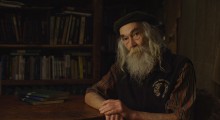
A “hippie heist movie-turned-high sea adventure” is how Sundance describes Jerry Rothwell’s Sundance award-winning documentary How to Change the World, about the early days of the Greenpeace movement. Below, cinematographer Ben Lichty describes mixing interview with archival footage, creating “visual variety” and shooting with the RED Epic. Filmmaker: How and why did you wind up being the cinematographer of your film? What were the factors and attributes that led to your being hired for this job? Lichty: When I first heard about How to Change the World and the story the film would explore, I really wanted to be a […]
-
Kit: 10 Favorite Tech Innovations of 2014 (And Perhaps 2015)

I fall into that category of independent filmmaker who, as the need exists, writes, produces, directs, shoots, records sound, edits, even grades their own footage. (What we used to call color correction.) Then again, often times I’m “just” the DP. 2014 was my busiest year ever, and at some point I found myself taking on each of these basic roles. As a result, the scope of my “kit” is necessarily broad, encompassing both production and post. (Kit is a Britishism for one’s working collection of gear, a name I intend to lend to a series of brief tech reviews in […]
-
Film Emulation: Behind the Scenes of the Short Old/New
Red Giant has released a new short from Seth Worley called Old/New. Over the past few years Worley has produced a number of imaginative short films on a limited budget that tell a great story and also – somehow – manage to demonstrate the use of Red Giant’s software. Cue the announcement of new software from Red Giant. Red Giant has also released Magic Bullet Suite 12, their collection of color correction and finishing tools. This release brings new features to the applications that make up the suite, as well as a new product: Magic Bullet Film. One of the focuses of this […]
-
How to Hack Google Cardboard VR into a DSLR or Phone Lens

Google Cardboard was a hot piece of Sundance sort-of-swag at Sundance this year. (“Can you get me Google Cardboard,” several friends emailed me during the fest.) I happened to check out one of the pieces designed for Cardboard, Chris Milk’s Evolution of Verse, a beautifully disorienting lakeside mountain-scape with an enveloping, 2001-ish finale. But, if you’re like Slamdance co-founder Dan Mirvish, and “the whole virtual reality thing gives you an aneurysm,” you can hack Google Cardboard into a rather arty-in-a-low-fi way 35mm lens. Check it out above.