Back to selection
Who Wants to Be White Famous?
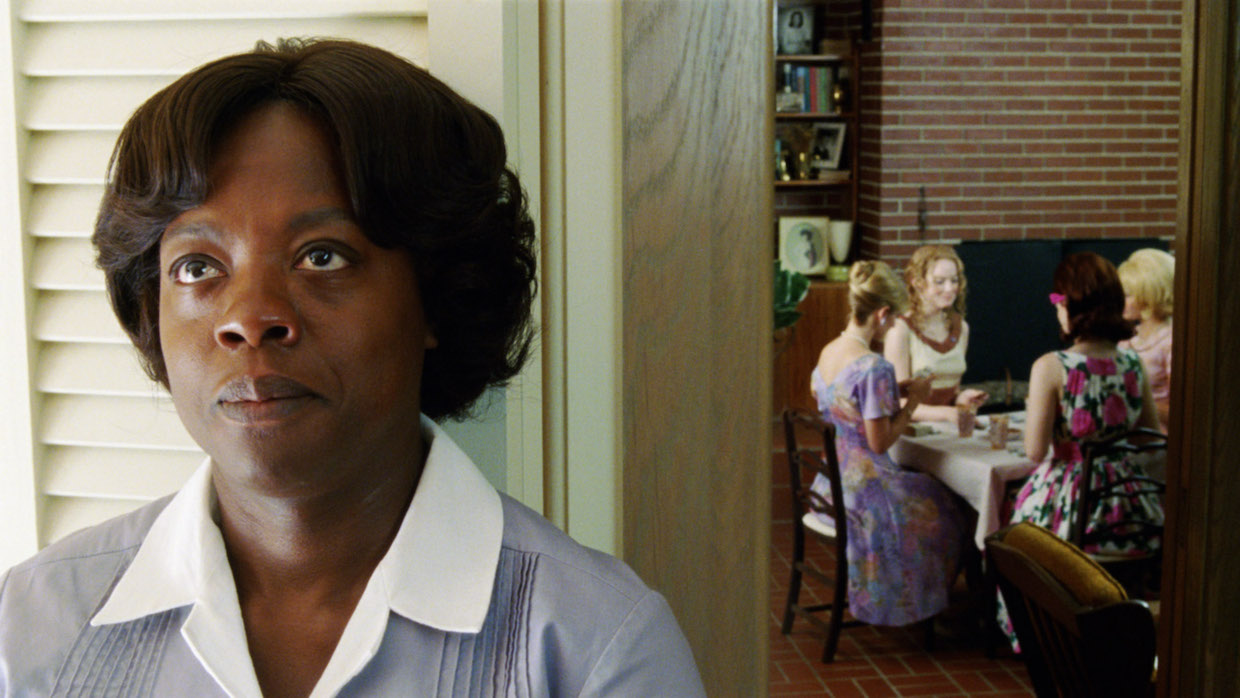 Viola Davis in The Help. Courtesy of Walt Disney Co./Everett Collection
 After covering film and TV for more than 25 years, I’m still surprised at how long it takes some Black artists to become White Famous. What’s White Famous, you ask? It’s the state of being recognized by the mainstream media, something many Black performers experience long after first coming to the attention of Black audiences. Being White Famous has its benefits. Your IMDb ranking goes up, as does your salary quote for your next project. Your agents, managers, and publicists will be thrilled. “You’ve crossed over,” they’ll say, and they’ll mean it as a good thing. But White Fame can be tricky, too. You can’t let it get the better of you.
There are several ways to become White Famous. Usually, it happens when someone who is White Known, which is a whole different category, stars in a worldwide box-office hit, like Black Panther or Sinners; or lands a regular role in a TV show popular with white audiences, like Severance; or scores nominations at a big awards show, like the Emmys (Black-ish), the Golden Globes (Atlanta), or the Oscars (Precious).
For Black artists, this kind of recognition does not arrive overnight. Far from it. When you think of current Black legends such as Denzel Washington, Jamie Foxx, Viola Davis, and Forest Whitaker, none were widely recognized until at least a decade or two into their show business careers. If I’m being honest, Denzel probably wasn’t properly White Famous until he was Oscar-nominated for best actor for Malcolm X in 1993 and lost the actual award to Al Pacino for Scent of a Woman. Yes, he had previously been nominated for Biko and even won best supporting actor for Glory, but the box-office numbers for that film weren’t heavenly enough to get him past the pearly-white gates.
Viola Davis was already a name in the theater world with a couple of Tony Awards on her mantle when she finally got her first taste of White Fame with Doubt in 2008. Then, she cinched it with The Help three years later. By then, she had credits in four Steven Soderbergh films, and the Black community cherished her roles in the films Antwone Fisher, Get Rich or Die Tryin’, and Tyler Perry’s Madea Goes To Jail. And by the time she became the first Black woman to win Best Actress at the Emmys, for her role as Annalise Keating in How to Get Away with Murder, she had been working for more than 20 years.
Some shows and films have directly confronted the issue of crossing over. In 2017, Showtime even aired a short-lived series titled White Famous. It was loosely based on the career of Jamie Foxx, who ascended from clowning in a blond wig on In Living Color to winning the Oscar for Ray in a mere 13 years.
In some ways, it’s easier than ever to become White Famous. In the old days, many films or shows featured a mostly white cast alongside a single OBP, or Obligatory Black Person. OBPs often found it difficult to get any media coverage at all. Now, there’s a whole ecosystem of Black media—TV, radio, podcasts, newsletters—that can help generate buzz for rising talent. Of course, everyone still wants to be in the trades. There’s nothing quite like a story in Variety, The Hollywood Reporter, or Deadline to make you feel seen and validated. Unfortunately, the trades often have no idea what projects a rising Black actor is known for within the Black community. Often, when the trades mention a Black artist in a casting announcement, they’ll name-drop some title no one—at least no one Black—associates with that person. Once it’s written and published, it’s repeated by other outlets, and soon, important early work that shows the person’s range is all but forgotten.
Just this year, I witnessed this dynamic in action during a Q&A with the cast of One Battle After Another. The moderator introduced Regina Hall as the award-winning star of Support the Girls, a 2018 indie comedy that never really registered in the Black community. I found myself exchanging glances with other Black journalists in the audience. Support the Girls? What about Scary Movie, Girls Trip, The Best Man, even the Best Man sequels? Nothing against Support the Girls, but I’d have namechecked The Best Man Holiday before I ever thought to bring that movie up.
It is possible, under certain circumstances, to become White Famous without being Black Known. I remember a pair of panels at the 2019 Split Screens Festival in New York that drove this point home. The first panel featured Sanaa Lathan talking about her role in an episode of The Twilight Zone, and the audience was packed with Black folks. Walking out after it ended, I noticed a long line full of white people waiting in line for the next panel. Who are they so excited about, I wondered? Turns out it was a panel with William Jackson Harper from The Good Place. Ted Danson wasn’t even on the bill, but the show’s fans turned out in force all the same.
In a perfect world, everyone would be celebrated any time they put in a great performance in a great project. But we do not live in a perfect world. Over the past year, actor Omar Benson Miller has been justifiably celebrated for his work in Sinners, which broke the record for Oscar nominations with 16. It’s great to see Miller recognized for his supporting work in the film, but how about some recognition for his roles in 8 Mile, Spike Lee’s Miracle at St. Anna, CSI: Miami, and Ballers? Those are not small projects.
Colman Domingo had already enjoyed a stellar career as a stage actor and playwright, as well as a featured performer in films such as Selma, If Beale Street Could Talk, and Zola, when he finally got White Famous for his Emmy-winning work in HBO’s Euphoria. Once awards voters became aware of his existence, they couldn’t get enough, handing him back-to-back Oscar nominations for best actor. (It doesn’t hurt that he’s reliably the one of the best-dressed men on the circuit.)
Let’s hope the same thing happens to Teyana Taylor, who has well over a decade of music and film experience to her name. Black audiences know her as a musician and a familiar face from such films as Stomp the Yard 2: Homecoming, Madea’s Big Happy Family, and Brotherly Love. She established herself as an award-winning dramatic actress three years ago in A.V. Rockwell’s directorial debut, A Thousand and One, earning accolades everywhere, from the NAACP Image and Black Reel Awards to the Gotham and Independent Spirit Awards. But it’s her performance in Paul Thomas Anderson’s One Battle After Another that’s earned her a Golden Globe award and an Oscar nomination—and put her firmly on the White Famous map.
Then, there’s Delroy Lindo. At age 73, he’s White Famous at last. That’s not to take anything away from his long and illustrious career. His roles for Spike Lee alone—Malcolm X, Crooklyn, and Clockers, to name a few—make him a towering figure, and he should have been Oscar-nominated for Da 5 Bloods. But he’s a nominee now, for Ryan Coogler’s Sinners, and enjoying some long-overdue mainstream adulation. My only fear is that he only became truly White Famous in the wake of the disastrous BAFTA Awards broadcast, when an audience member with Tourette syndrome blurted out the N-word while Lindo and Michael B. Jordan were onstage.
That’s the trouble with White Fame—it’s not about talent. It’s about something else: luck, notoriety, the fickleness of the industry. Call it what you will. To their credit, most Black artists aren’t looking to be White Famous. They are looking to be noticed and recognized for the quality of their work. Whether the project is big or small, it’s a matter of who’s watching, who’s talking, who’s writing, and who’s reading. The landscape is bigger and improving, but there’s more work to be done to make sure every worthy performance gets the attention it deserves.