Distribution
Filmmaking - Distribution
-
Start Showing Movies: A Call to Arms
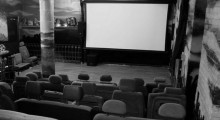
Filmmaker and cinematographer Nandan Rao co-founded Simple Machine, an online distribution platform that connects filmmakers with non-theatrical exhibition venues. In this guest editorial, he advocates that we stop looking to others for our exhibition opportunities and invent them ourselves. — SM We Don’t Fit Into Their Business Model “The arthouse theater” is a business like any other and right now it obviously can’t afford to promote new and challenging independent cinema, not in the face of made-up fees and conversion expenses implemented by bigger, sneakier businesses. Their primary concern is getting bodies into seats and keeping the silver-haired donors happy […]
-
Crowdfunding a Transmedia Phenomenon: Director Nicolás Alcalá on The Cosmonaut

With all the discussion about the future of Kickstarter in recent weeks, it may be appropriate that a film that began its campaign at the beginning of the crowdfunding movement is finally coming out this Saturday. The Cosmonaut — a Spanish-made English-language film directed by Nicolás Alcalá and produced by Carola Rodriguez and Bruno Teixidor — raised over €300,000 from 5,000 contributors. It was the first crowdfunded film in Spain and helped pave the way for the foundation of Lánzanos, Spain’s Kickstarter equivalent. The Cosmonaut will be available to watch for free on Saturday on the film’s website; the DVD, theatrical […]
-
Will Tom Wheeler Kill Net Neutrality?

“I am in this race to tell the corporate lobbyists in Washington that their days of setting the agenda are over.” Guess who said these memorable words? In November 2007, then-presidential candidate Barack Obama uttered this now all-but-forgotten campaign promise. The president recently announced his plan to appoint Tom Wheeler (above), a true industry insider, to head of the Federal Communications Commission (FCC). Wheeler is a career water carrier for corporate interests. He served as head of the National Cable Television Association (NCTA) from 1979 and 1984, and ran the Cellular Telecom and Internet Association (CTIA) from 1992 through 2004. […]
-
A Plea for Standards and Interoperability

This is a plea, of sorts, to the growing number of online platforms that wish to become a lasting link in the indie film value chain: please consider the interoperability of your systems. Increasingly, platforms do not require exclusivity, which is fantastic and frees filmmakers to release their films on multiple online/digital outlets at the same time. However, with the ever-increasing number of platforms comes more work for the filmmaker. Codecs, formats, resolutions, subtitles, audio specs, frame rates, aspect ratios — all of these are defined in platform requirements to ensure your video is compatible with their system. Then there […]
-
Ted Hope Offers 17 Facts About the Film Business
At his Hope for Film blog, producer and San Francisco Film Society executive director identifies and speculates on 17 current conditions of the film business, prompting us to consider how we’ll consequently evolve our own practices to take them into account. The post accompanies the launch of the SFFS’s A2E (Artist 2 Entrepreneur) program, a new pilot program “designed to give filmmakers the necessary entrepreneurial skills to achieve a sustainable creative life amidst this changing paradigm.” (It was this weekend, but you can read the schedule here.) I’m particularly interested in Hope’s point number four, below, in which he writes […]
-
Talking with Michael Di Jiacomo and John Turturro about 1-900-Tonight
One of the most frustrating things about covering film festivals is making discoveries that few movie lovers will ever see. Filmmaking is an industry after all, and as such, artistry will always play second fiddle to marketability. Even so, I was quite surprised to learn that one of my favorite films from the 2011 edition of the prestigious Karlovy Vary International Film Festival never found U.S. theatrical distribution. Surely someone could have figured a way to sell a John Turturro-starring, NYC-set story about two lost souls on opposite ends of an adult chat line? (Especially considering Turturro last year appeared […]
-
Just How Healthy Is Independent Film Distribution?
Louise Levison, a longtime movie industry watcher, found that 2012 was a deceptively good year for indies. Writing at Baseline Intelligence, she noted “independent box office in North America in 2012 was $4.5 billion and 41.7% of the $10.8 billion total.” She warns, “the one film that I feel made the 2012 indie percentage an anomaly is The Hunger Game.” It grossed $408 million in domestic sales and, without it, the indie share would be 37 percent, in line with what she calculates as the historical annual average of indie films of 35 percent for the period of 2000 to 2011. […]
-
How to Choose a Crowdsourced Theatrical Platform
Since I co-founded the distribution platform OpenIndie in 2009, the direct-to-fan model has matured into an attractive alternative to traditional distribution deals. Theatrical options in particular have increased dramatically, and success stories have grown from the few to the many. Having moved on from OpenIndie earlier this year, I will be writing a series of articles for Filmmaker on the new ways in which technology can enable distribution for independent filmmakers. In this first post, I’ll reflect on the theatrical space, highlight a range of the available crowdsourced theatrical platforms, and discuss their differences and the opportunities they present for filmmakers. The […]
-
Ornana’s euphonia Now Free to Watch on Vimeo
Though the film only debuted at SXSW last month, Ornana’s euphonia is already out in the world, with the six-man collective we selected for our 2012 “25 New Faces” opting to generously stream it for free on Vimeo. I’ve been a huge fan of the film since I saw it in rough cut last summer, and it solidified my conviction that director Danny Madden and his collaborators — wh0 had previously made the charming animated short (notes on) biology — were on to something special. To further whet you appetitite, here’s Scott’s take on the film from SXSW: A real […]
-
Why Filmmaking is Like Software Design
Before becoming a filmmaker I spent 15 years designing software. Started out as a Mac OS programmer and then moved to Microsoft Windows. My endeavors included all things visual—from icon design and screen layout, to the more abstract design patterns found in system architecture and coding. What I discovered along the way was that the most elegant solutions—the products that worked best, most reliably, and resonated strongly with their user base—were always the most simple and minimalist in design. And there was always room for improvement via testing, focus groups, and refactoring (a techie word for the iterative process of […]