Interviews
Interviews
-
“We Didn’t Edit to the Script; We Edited Only With the Material”: Editor Lívia Serpa on Dos Estaciones

Dos Estaciones pulls equally from documentary and fictional aesthetics to tell its story of a tequila factory in the highlands of Jalisco. It devotes time not just to its protagonist, but also to the process of making tequila, the landscape and other inhabitants. Editor Lívia Serpa recounts how the edit was always based on the material at hand rather than the script and the emphasis on the overarching structure of the film. Filmmaker: How and why did you wind up being the editor of your film? What were the factors and attributes that led to your being hired for this job? […]
-
“This Film Expanded the Way I Think About Beauty and Form”: Editor Todd Chandler on I Didn’t See You There
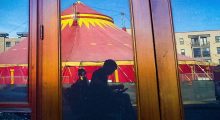
When a circus tent appeared outside the window of Reid Davenport, a visibly disabled filmmaker, he began to contemplate the history of the “freak show” and its relationship to his own aesthetics. This inquiry formed the backbone of I Didn’t See You There, for which Davenport captured images from his wheelchair and sought to make a film about how he sees the world. Below, editor Todd Chandler explains his desire to work on a film so aesthetically different from his own and why he likes to watch other films with his collaborators. Filmmaker: How and why did you wind up […]
-
“In Each Location I Knew How and When the Sun Would Hit”: Gerardo Guerra on Dos Estaciones
Red dirt, blue sky and green agave mark the landscape of Jalisco’s highlands, and they also form the basis of Juan Pablo González’s Dos Estaciones, which follows the heir to a struggling tequila factory as she attempts to reinvigorate the business in the face of plagues and floods. The film was shot by Gerardo Guerra, who discusses executing complicated setups with limited personnel, learning the finest details of the shooting locations and walking the line between documentary and fiction. Filmmaker: How and why did you wind up being the cinematographer of your film? What were the factors and attributes that led […]
-
“Who Does Visibility Serve and Who Does it Harm?”: Chase Joynt and Morgan M. Page on Their Sundance Doc Framing Agnes
Framing Agnes, the title of Chase Joynt’s (No Ordinary Man) latest genre-queering film – world premiering in the Next section at this year’s Sundance – refers to a controversial trans woman who, in the 1960s, participated in a groundbreaking gender health research study at UCLA. It also refers to the fact that, historically, trans people have never been allowed to leave the frame. Or, paradoxically, enter the frame (if not a blond beauty like Agnes or Christine Jorgensen). So how does Joynt place Agnes in his cinematic frame without framing her? The answer is with an abundance of artistic ingenuity […]
-
“We Wanted to Avoid the Cold and Automated Artifice of Fiction Filmmaking”: DP Jarmo Kiuru on Girl Picture
Alli Haapasalo’s Girl Picture follows two teen girls who work together after school at a food court smoothie kiosk. As the best friends swap stories about love, sex and life, the film emerges as both a coming-of-age story and a depiction of unrestricted feminine vitality. Director of photography Jarmo Kiuru describes how she concocted the film’s look and the difficulties of shooting with a reduced budget and amid Finland’s second wave of COVID infections. Filmmaker: How and why did you wind up being the cinematographer of your film? What were the factors and attributes that led to your being hired for this job? […]
-
I Wanted To Go Deeper Than Just a Portrait of a Band”: Rita Baghdadi on her Sundance-Premiering doc Sirens
Trying to make it as a twenty-something in a band is hard enough. But when that band is Slave to Sirens, the Middle East’s first all-female metal group, the stakes and the obstacles can seem off the charts. Which is exactly what makes Moroccan-American director and cinematographer Rita Baghdadi’s Sirens, world-premiering in the World Cinema Documentary Competition at this year’s Sundance, so engrossing. The film focuses on the band’s co-founders and guitarists Lilas and Shery, who over the course of a brisk 78 minutes navigate friendship and sexuality, artistic vision and international fame – all within the explosive confines of […]
-
“No Idea Was Out of the Realm of Possibility”: Editor Michael Felker on Something in the Dirt
Something in the Dirt is the fifth feature by Justin Benson and Aaron Moorhead, indie multi-hyphenates who directed, wrote, shot, co-edited, and produced the story about a pair of fast friends who attempt to turn an encounter with the supernatural into fast money. Co-editor Michael Felker discusses how the film’s form enabled him to take risks and creatively approach the editing process. Filmmaker: How and why did you wind up being the editor of your film? What were the factors and attributes that led to your being hired for this job? Felker: I’ve been the editor for Benson and Moorhead’s […]
-
“Being Overwhelmed Doesn’t Have to Lead to Cynicism”: Rachel Lears on Her Climate Change Sundance Doc, To The End

Cynicism is the dramatic foil in To the End, Rachel Lears’s Sundance Documentary Competition follow-up to her 2020 Sundance picture Knock Down the House. In that film she followed four women — political newcomers hailing from diverse walks of life, all motivated to action by the Trump presidency — as they mounted underdog campaigns to win House seats. That one of the women was New York candidate Alexandria Ocasio-Cortez gave the film a rousingly satisfying ending, even as other women’s losses made clear the forces opposing progressive generational change. Employing a similar structure, To the End follows three young activists […]
-
“The Shelter Radiated Human Warmth and Closeness”: DP Simon Lereng Wilmont on A House Made of Splinters
The war in eastern Ukraine has left countless children as orphans, and in the face of systemic failure, the burden to care for them falls mostly on caretakers at overburdened orphanages. Simon Lereng Wilmont made one such orphanage the subject of his latest film, A House Made of Splinters. Wilmont both directed and shot the film, and below he discusses the paradoxes of shooting in an isolated orphanage during COVID and recounts the most difficult scene he has ever filmed. Filmmaker: How and why did you wind up being the cinematographer of your film? What were the factors and attributes that […]
-
“The Best Scenes Tend to Land in the First Pass”: Editor Michael Aaglund on A House Made of Splinters
A House Made of Splinters, the second film by director Simon Lereng Wilmont after The Distant Barking of Dogs, takes place in an orphanage in eastern Ukraine, not far from the front lines. The film focuses on the impact war has on the development of the children as well as on the system that has failed to help war orphans. Michael Aaglund, who served as the film’s editor, discusses how he develops a scene in the cutting room and why he aims for simplicity. Filmmaker: How and why did you wind up being the editor of your film? What were the […]