Interviews
Interviews
-
Mark Burnett and Nick Emerson on Editing Aubrey Plaza Comedy An Evening with Beverly Luff Linn

Writer/director Jim Hosking premiered his short Renegades at Sundance in 2010 and returned to the festival in 2016 with his debut feature The Greasy Strangler. His second feature, An Evening with Beverly Luff Linn, premieres in the NEXT program at Sundance 2018. Luff Lin unites Hosking with a cast of comedy luminaries: Aubrey Plaza, Jemaine Clement and Craig Robinson, among others. The film was edited by Mark Burnett, who also edited Greasy Strangler, and Nick Emerson (Lady Macbeth, Starred Up). Filmmaker spoke with the film’s editing team about the film’s tricky tone, which teeters between absurdist and romantic comedy, ahead of Luff Linn‘s premiere […]
-
“The Big Cameras Get Stopped in Security”: Alexandria Bombach on Shooting and Directing On Her Shoulders
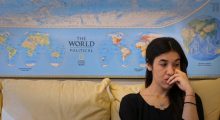
Documentary filmmaker Alexandria Bombach released her debut feature, Frame by Frame, in 2015 to major acclaim on the festival circuit. The film screened at more than 30 festivals, including SWSX, Hot Docs, AFI Docs and the Camden International Film Festival, where it won the award for Best Documentary Feature. Bombach debuts her second feature, On Her Shoulders, in the U.S. Documentary Competition lineup at Sundance 2018. Below she discusses acting as her own cinematographer, the influence of Errol Morris’ Interrotron and filming in the “impossible heat” of a refugee camp in Athens. Filmmaker: How and why did you wind up being […]
-
DP Noah Greenberg on Chloë Sevigny and Kristen Stewart-Starring Lizzie Borden Drama Lizzie
The 1892 murder of Lizzie Borden’s father and stepmother has inspired numerous books, TV movies and even stage musicals but few feature films. That changes with the arrival of Lizzie from director Craig William Macneill. His film pairs two of the leading actresses of American independent cinema: Chloë Sevigny as Borden and Kristen Stewart as Bridget, her live-in maid and kindred spirit. Lizzie debuts in competition at the 2018 Sundance Film Festival. Prior to its premiere, Filmmaker spoke with cinematographer Noah Greenberg (Most Beautiful Island) about the film’s naturalistic (and claustrophobic) visual palette. Filmmaker: How and why did you wind up being […]
-
“Modern-Day Slavery is Happening in our Neighborhood….”: Bernadett Tuza-Ritter on her Sundance Debut Feature, A Woman Captured
Making its U.S. premiere at Sundance in the World Cinema Documentary Competition, A Woman Captured is the remarkable debut feature doc from Hungarian filmmaker Bernadett Tuza-Ritter, who stumbled upon a horrifying story in her native country hidden in plain sight. Marish is a housekeeper in her early 50s, though her hard-knock life has aged her considerably. She has spent over a decade cooking, cleaning and serving, mostly as a human punching bag, both verbally and physically, to a mystery woman of indeterminate wealth who remains off-screen. That woman, Eta, who we hear but never see, has allowed Tuza-Ritter access to […]
-
Documentary DP Tim Cragg on the Sensational Family Saga of Three Identical Strangers
Three men make a remarkable discovery in Three Identical Strangers, a new documentary premiering at Sundance from Tim Wardle. The men, all strangers, learn that they are in fact identical triplets separated at birth. Wardle chronicles this real-life saga through dramatizations from the ’70s and ’80s, present-day documentary footage and studio interviews. To shoot the film, Wardle hired Tim Cragg, a DP with more than 40 credits as a documentary cinematographer. Cragg spoke with Filmmaker ahead of the film’s six screenings at Sundance about the challenges of filming Three Identical Strangers. Filmmaker: How and why did you wind up being […]
-
Kamau Bilal on Serving as Director and DP for Documentary Short Baby Brother
Missouri-based filmmaker Kamau Bilal chronicles his brother’s move back home to his parents’ house in Baby Brother, a documentary short that premiered at the 2018 Sundance Film Festival. A documentary DP, editor and director, Bilal’s recent work includes shooting Abortion: Stories Women Tell for HBO. Below, Bilal discusses the traits of a “cinematic film,” the influence of Ramin Bahrani’s Chop Shop and his concerns on exploiting a documentary subject. Filmmaker: How and why did you wind up being the cinematographer of your film? What were the factors and attributes that led to your being hired for this job? Bilal: For this film I operated […]
-
Stop-Motion DP Tristan Oliver on Creating a Behind-the-Scenes VR Short for Wes Anderson’s Isle of Dogs
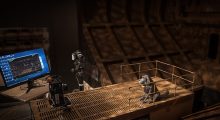
UK-based cinematographer Tristan Oliver has worked on stop-motion features, shorts, music videos and commercials for more than 20 years. Oliver served as DP on Fantastic Mr. Fox, Chicken Run and Wes Anderson’s forthcoming Isle of Dogs. For that last feature, Anderson also tapped Oliver to shoot a VR short on the making of the film, which enters theaters on March 23. Oliver spoke with Filmmaker about the cameras used on the film, translating Anderson’s aesthetic to stop-motion and the film as “an homage to Japanese cinema.” The short will screen as part of Sundance’s New Frontier program. Filmmaker: How and why […]
-
“The Art of Silently Weeping While Pulling Focus at the Same Time”: DP Nick Higgins on Shooting Robin Williams: Come Inside My Head?
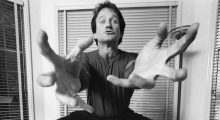
Following Water & Power: A California Heist in 2017 and Roman Polanski: Wanted and Desired in 2008, Marina Zenovich returns to Sundance for a third time with Robin Williams: Come Inside My Mind, her documentary on the late comedic maestro. Documentary DP Nick Higgins served as one of four cinematographers on the project. Higgins was the sole DP on O.J.: Made in America and has more than 50 cinematography credits to his name. Below, he shares his thoughts on lighting documentary subjects and why he prefers to shoot interviews with a single camera. Robin Williams: Come Inside My Mind screens four times at Sundance 2018. Filmmaker: […]
-
“I Was Watching Russian TV More than My Entire Family in Russia”: Maxim Pozdorovkin and Matvey Kulakov on Editing Our New President
Maxim Pozdorovkin entered the documentary film world in 2013 with Pussy Riot: A Punk Prayer, a film that earned him top prizes at Sundance, Cinema Eye Honors and the British Independent Film Awards. He returned to Sundance in 2014 with The Notorious Mr. Bout. Now, he returns to the World Cinema Documentary Competition once again with Our New President, a doc on Russia’s propagandistic state-run news networks. Below, Pozdorovkin and co-editor Matvey Kulakov discuss how they crafted a feature film from such surreal archival footage. Filmmaker: How and why did you wind up being the editor of your film? What were the factors and attributes […]
-
“Documentaries Are Less an Act of Creation and More an Act of Discovery”: DP Bob Richman on The Price of Everything
Brooklyn-born DP Bob Richman began his career as a production assistant for Albert and David Maysles. He’s since gone on to shoot some of the most widely seen documentaries of the past 20 years: An Inconvenient Truth, Waiting for ‘Superman’, the Paradise Lost trilogy and Metallica: Some Kind of Monster, to name a few. His latest feature, The Price of Everything, is a vérité doc on the puzzlingly astronomical price of fine art. Richman spoke with Filmmaker ahead of the film’s Sundance premiere about his preferred camera for vérité filmmaking, reuniting with director Nathaniel Kahn (My Architect) and the essential importance of a good […]